Cat Adoption Form Template
Match cats with the right homes — not just the first person who applies.



A cat adoption form does two things well: it screens for genuine readiness and it sets expectations before the cat goes home. Many returns happen not because of the cat's behavior, but because the adopter wasn't prepared for what owning a cat actually involves. A good application surfaces that gap before the adoption happens.
This template collects the applicant's household information, whether they own or rent (and require landlord permission if renting), other pets in the home, the applicant's experience with cats, how much time they're home daily, their plan for veterinary care, and their reasons for adopting. For kittens, it also asks about prior experience with young animals. The responses give staff a clear picture of the home environment without requiring a home visit for every applicant.
The form can be completed online before the applicant visits the shelter, so staff can review it in advance and focus the conversation on any areas that need clarification. Approved applications are stored in your system for follow-up when a suitable match becomes available.
Household composition, housing type and permission status if renting, existing pets, the applicant's experience with cats, time at home during the day, planned veterinary provider, and the specific cat or type of cat they're looking for. For cats with known behavioral needs, add questions about the adopter's experience with those specific traits.
Focus on fit, not idealism. A studio apartment isn't inherently wrong for a cat — the question is whether the applicant understands what that environment means for the animal and has thought through enrichment and stimulation. Screening is about surfacing knowledge gaps, not eliminating everyone who doesn't have a yard.
Home visits add time and resource demands that can slow adoptions significantly. An application with specific questions about home environment, combined with a conversation with shelter staff, is sufficient for most adoptions. Reserve home visits for special cases — cats with high behavioral needs or applicants whose applications raise specific concerns.
First-time owners can make excellent adopters — experience isn't the only predictor of success. Look for thoughtfulness, willingness to learn, and realistic expectations. Someone who has done research, asked good questions, and thought through the commitment is often a better match than an experienced owner who's approaching it casually.
Add a specific field asking whether the applicant is open to adopting two cats. For bonded pairs, make clear in the listing that they're not available separately — filtering for this in the application avoids conversations where the applicant falls in love with one of the pair and expects a negotiation.
Get inspired by relevant templates and categories
3200+ Templates, 300+ Integrations
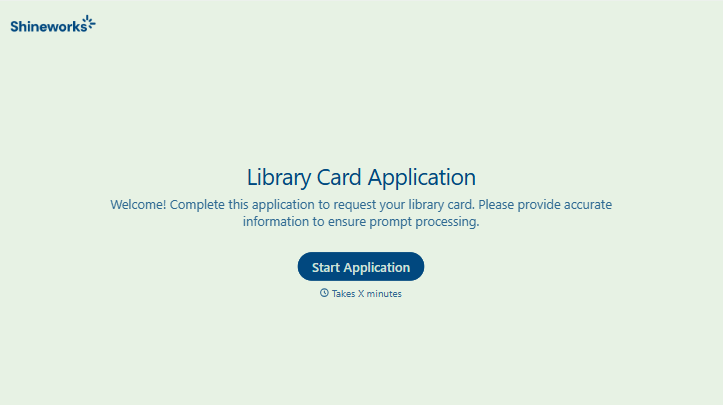
Library Card Application Form
Move past a quick sign-up sheet that just grabs a name and an address. Screen for who actually needs a parent or guardian to co-sign, confirm proof of residency, and keep a record of exactly what each cardholder agreed to before you hand over a card that comes with real financial responsibility attached.
View template

With Typeform, you can customize everything
Change text, colors, and even logos to match the look and feel of your brand. Then embed forms smoothly onto web and email.
Make forms feel effortless to fill out. Pace questions, call people by their name, and adapt the flow based on the data they share.
Stay efficient by connecting forms to your workflow. Typeform integrates with 300+ tools including Slack, Zapier, and HubSpot.