Anonymous Feedback Form Template
Create a safe space for honest feedback by removing the pressure of attribution.



People don't always say what they really think when they know their name is attached. In team environments, this means real concerns go unvoiced, problems persist longer than they should, and leaders get a filtered version of what's actually happening.
An anonymous feedback form removes that barrier. Typeform's conversational format feels less clinical than a formal survey, and knowing their identity is protected encourages people to be more direct and specific. You can use conditional logic to guide respondents through follow-up questions based on the topic they raise, surfacing more useful detail. Responses aggregate without any identifying information, so you see patterns rather than individuals.
Customize the form for your specific feedback context — team retrospectives, organizational culture, product feedback, or leadership effectiveness. Share it as a standing link so people can submit feedback whenever they have something to say, not just during formal review cycles.
An anonymous feedback form is a survey that collects responses without capturing the respondent's identity. It's designed to encourage honest, candid feedback that people might hold back if they knew their name was attached to their response.
In environments where there's a power imbalance — between employees and managers, students and teachers, or customers and service providers — anonymous feedback surfaces issues that would otherwise stay invisible. It gives leaders a more accurate picture of sentiment and a better foundation for making improvements.
Tailor these to your context, but strong starting points include:
- What's one thing that's working well and should continue?
- What's one thing that's not working and should change?
- How would you describe the current culture or environment in 3 words?
- What do you wish leadership knew?
- Is there anything specific you'd like us to address?
Avoid collecting IP addresses or any identifying metadata, and don't ask questions that would narrow down respondent identity (like department and seniority combined). Be transparent with respondents about exactly what data is and isn't collected, and where responses are stored. Trust in the anonymity of the process directly affects response quality.
Read it, take it seriously, and communicate back to the group about what you heard and what you're doing about it. Closing the feedback loop — even with a high-level summary — demonstrates that the process has value. People who see their feedback acted on are far more likely to provide it again.
Get inspired by relevant templates and categories
3200+ Templates, 300+ Integrations
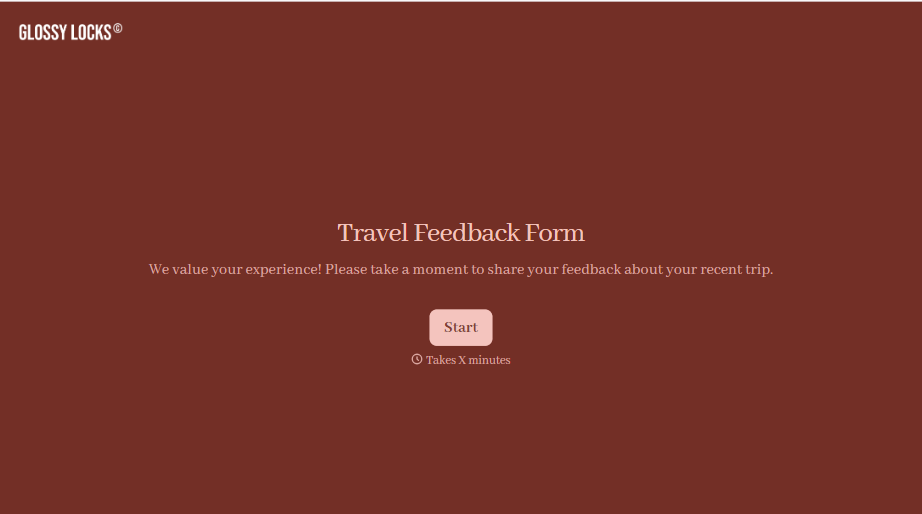
Travel Feedback Form
A quick "so, how was the trip?" when someone's back in the office doesn't tell your travel team which hotel to stop booking or which flight change actually caused the headache. Collect what your team actually needs, trip details, what worked, and what didn't, once the traveler's had a minute to think about it.
View template
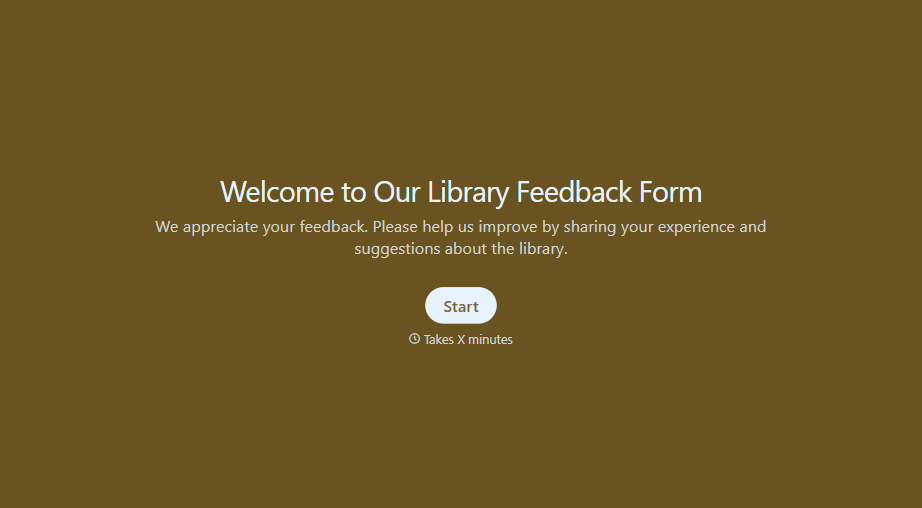
Library Feedback Form
A comment card dropped in a suggestion box isn't a channel your staff can act on quickly, especially when nobody can tell if it's about a broken chair or a request for more audiobooks. Collect the specific feedback, which branch and department it concerns, and a way to follow up before the card gets buried under next week's stack.
View template
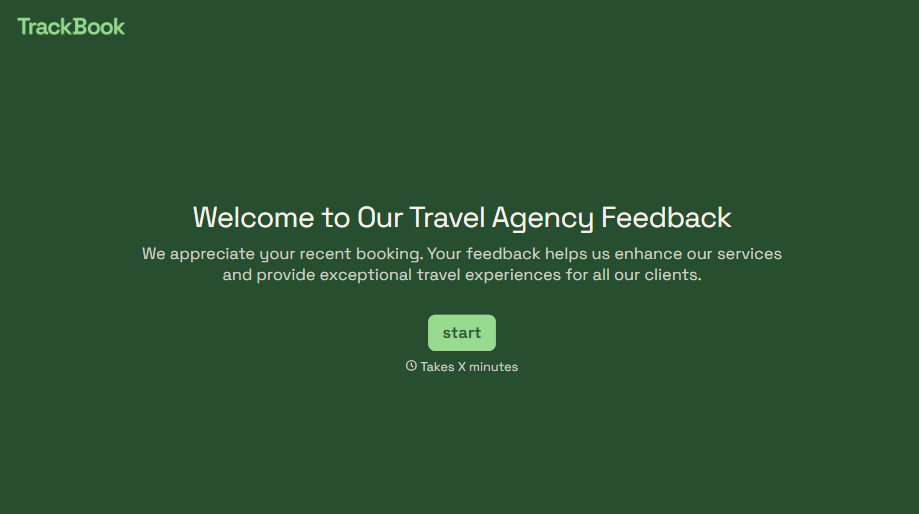
Travel Agency Feedback Form
A generic satisfaction survey emailed three weeks after a trip isn't the kind of feedback an agency can act on, especially once the specifics of a rough hotel transfer have faded. Collect feedback on the specific parts of a trip while it's still fresh, so a complaint that needs immediate follow-up doesn't sit behind a stack of routine responses.
View template
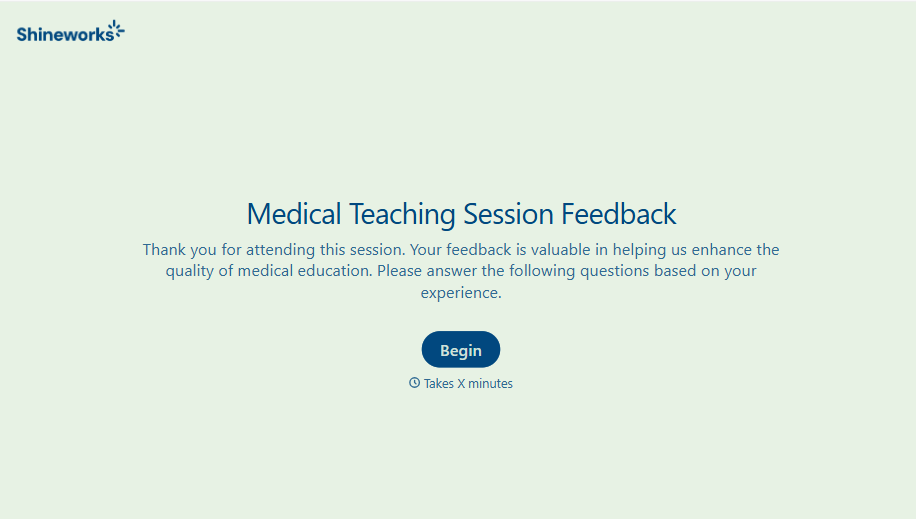
Medical Teaching Feedback Form
An evaluation handed out on the last day of a rotation, filled out in the hallway before everyone scatters, isn't the kind of feedback that helps a program improve teaching quality. Collect specific, timely feedback on teaching encounters before it fades into a generic "good rotation" comment.
View template
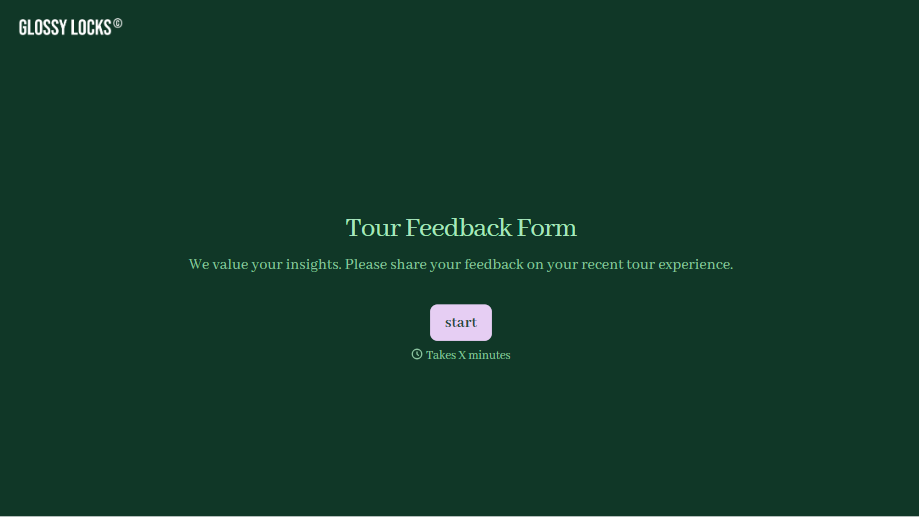
Tour Feedback Form
"How was it?" asked by the guide standing right there at the end of the tour gets a polite "great, thanks" whether the tour actually was great or not. Collect what your team actually needs, which tour and guide, and honest feedback, after the group's already walked away.
View template
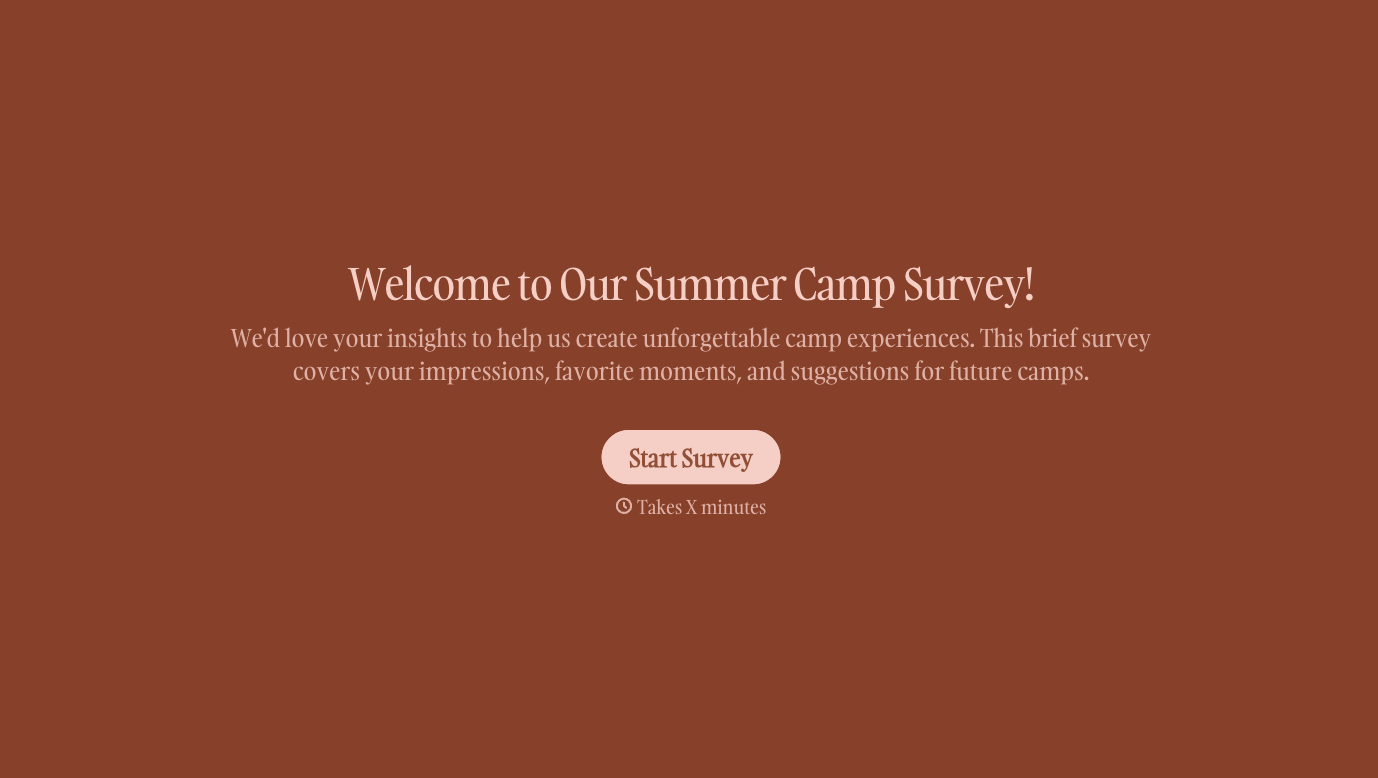
With Typeform, you can customize everything
Change text, colors, and even logos to match the look and feel of your brand. Then embed forms smoothly onto web and email.
Make forms feel effortless to fill out. Pace questions, call people by their name, and adapt the flow based on the data they share.
Stay efficient by connecting forms to your workflow. Typeform integrates with 300+ tools including Slack, Zapier, and HubSpot.