Counselor Request Form Template
Give students a private, low-pressure way to reach out, and make sure no request for counselor support slips through the cracks.



A student who needs to talk to a counselor shouldn't have to navigate a busy front office or catch someone in the hallway. The barrier to asking for help is often the thing that stops a student from asking at all, even when they really do need help. Typeform's counselor request form template gives schools a consistent, private way for students to request time with a counselor, so students get help without having to jump through hoops.
The form captures the student's name and grade, the reason for the request, urgency level, preferred meeting time, and whether they'd prefer to talk privately. Questions appear one at a time, so students can share at their own pace without feeling exposed. Conditional logic adapts the form based on the request type. For example, an academic concern shows different follow-up questions than a personal or urgent one. The form also flags high-urgency requests that require immediate attention.
Embed the form on the student portal, share it via a QR code in classrooms, or link it from the school app. Responses route to the right counselor via email or your student information system through Zapier, and urgent requests surface immediately. A simple, private counselor request process means students reach out sooner, and no one waits too long for support.
A counselor request form is a structured intake tool that lets students request a meeting with a school counselor. It captures the student's details, the reason for the request, the urgency, and scheduling preferences. It functions as a private, low-barrier entry point to support, replacing the awkward in-person requests with a process students can do quietly and on their own time.
Walk-ins depend on a student feeling comfortable approaching the office in person, and many never do. A counselor request form removes that barrier and lets students reach out privately, when they're ready. It also gives counselors a clear queue of who needs support and how urgently, instead of a reactive flow of hallway conversations. Lower barriers to counselor support mean more students get help before a problem escalates.
Collect what counselors need to respond appropriately without overwhelming the student:
- Student's name, grade, and contact or homeroom
- Reason for the request (academic, personal, college planning, etc.)
- Urgency level
- Preferred meeting time or availability
- Whether the student prefers an in-person or virtual meeting
- Anything the student wants the counselor to know in advance
- Whether the request is confidential
Use conditional logic to flag any request marked high-urgency, and trigger an instant email or Slack notification to the counseling team via Zapier. The most pressing requests rise to the top, instead of waiting in a general queue. Make clear in the form's intro that students in crisis should also contact a trusted adult or emergency line directly. The form supports outreach, but doesn't replace immediate help.
Restrict response access to counseling staff only and store submissions in a system that meets your school's privacy requirements. Make clear in the form's intro who sees the request and how the information is used. For sensitive requests, a confidentiality checkbox reassures students that their submission goes only to the counselor, which makes them far more likely to be honest about what they're dealing with.
Get inspired by relevant templates and categories
3200+ Templates, 300+ Integrations
Work From Home Request Form
A Slack message asking to work from home on Thursday isn't a request anyone can track, especially once the same employee has asked five different ways over a month. Collect the request type, dates or schedule, and manager approval in one place, so HR isn't reconstructing who's working where from a scattered inbox.
View template
Return of Property Form
A property checklist stapled to an exit interview packet isn't a record anyone can rely on when a laptop turns up missing three weeks later. Collect itemized equipment details, condition at return, and a signed acknowledgment before an employee's last day, so IT isn't chasing down a laptop that already walked out the door.
View template
Early Retirement Form
A retirement mentioned to a manager in conversation doesn't give HR anything to actually process, and if there's an incentive deadline attached, the date that conversation happened can matter more than anyone realized at the time. Collect what your HR team actually needs, employee information, requested date, and benefit elections, before a window closes.
View template
Library Book Request Form
A book request scrawled on a sticky note at the front desk doesn't make it into any queue, and it definitely doesn't get anyone a call when the book actually arrives. Collect what your library actually needs, the title, patron information, and how they'd like to be notified, before the note gets buried under the next stack of returns.
View template
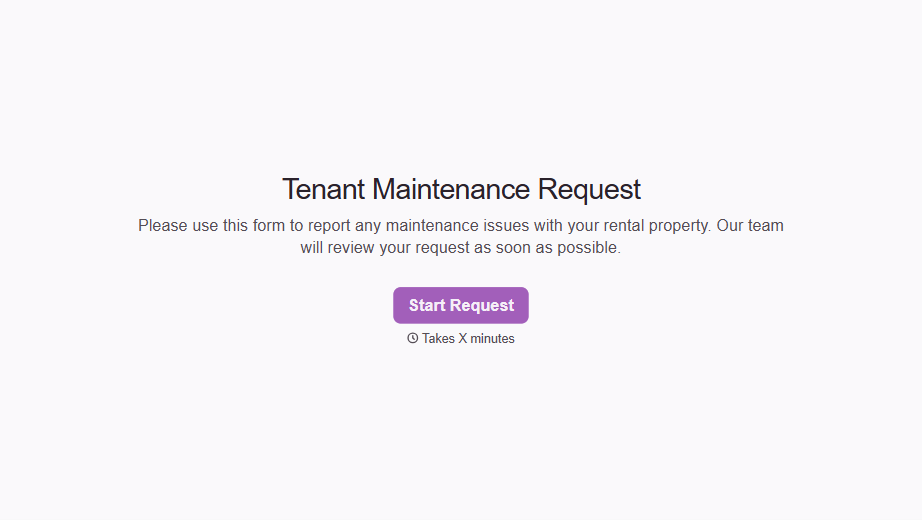
Tenant Repair Request Form
A text message about a leaky faucet sent at 11pm isn't a work order your maintenance team can act on efficiently, especially without a photo or a unit number attached. Collect the property, the issue, and how urgent it is before the request lands in someone's texts, so a repair doesn't wait on a landlord scrolling back through old messages.
View template
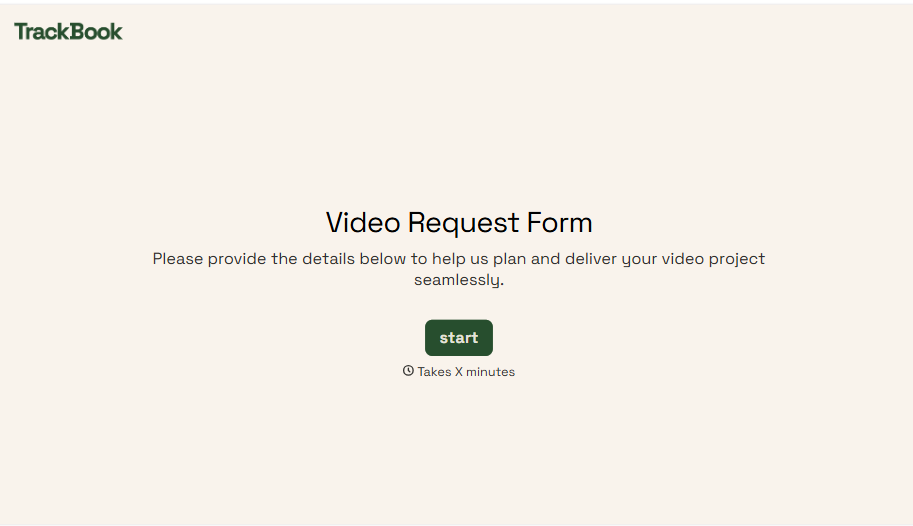
Video Request Form
A Slack message asking for "a quick video for the launch" isn't a creative brief your video team can actually start from. Collect the project purpose, deadline, and deliverable specs before the request lands in a queue, so your team isn't reworking a video built on assumptions the requester never actually stated.
View template
With Typeform, you can customize everything
Change text, colors, and even logos to match the look and feel of your brand. Then embed forms smoothly onto web and email.
Make forms feel effortless to fill out. Pace questions, call people by their name, and adapt the flow based on the data they share.
Stay efficient by connecting forms to your workflow. Typeform integrates with 300+ tools including Slack, Zapier, and HubSpot.