Mortgage Application Form Template
Collect complete borrower information to begin the mortgage origination process. This template covers the standard fields lenders need in a guided, section-by-section format.



The mortgage application is often the first real interaction a borrower has with your lending process. When it's confusing, exhausting, or requires calling for help, it sets a negative tone for a months-long relationship. On the other side, incomplete applications create processing delays that frustrate both borrowers and your team.
A well-structured digital mortgage application addresses both problems. The one-question-at-a-time format makes a complex form feel manageable, and conditional logic handles the branching logic that different borrower situations require — self-employed income, co-borrowers, investment properties — without confusing applicants who don't have those situations.
Customize the form to your loan products and regulatory requirements, connect it to your loan origination system, and provide a better application experience across the board.
A mortgage loan application form collects the personal, financial, and property information a lender needs to evaluate a borrower's eligibility for a home loan. In the US, most applications follow the Uniform Residential Loan Application (URLA/Fannie Mae Form 1003) structure. It covers employment, income, assets, liabilities, and the subject property.
A standardized application ensures every borrower provides the same foundational information — which speeds up processing, reduces requests for missing documents, and keeps you compliant with regulatory requirements. A well-designed digital form also improves borrower satisfaction at what is often an anxious point in the homebuying process.
A standard mortgage application covers several major sections. Key areas include:
- Borrower personal information (name, SSN, DOB, contact details)
- Employment history (current and prior employers, income)
- Monthly income breakdown (base, overtime, bonuses, other)
- Assets (checking, savings, retirement, other)
- Liabilities and monthly payments
- Property address and intended use
- Loan amount and type requested
- Government monitoring information (demographic data)
- Declarations (bankruptcy history, prior foreclosures, ownership status)
The terms refer to the same type of document. "Mortgage application" and "home loan application" are used interchangeably to describe the formal document a borrower submits to begin the loan origination process. The content, structure, and regulatory requirements are the same regardless of the label used.
The Uniform Residential Loan Application has specific required fields and formatting standards set by Fannie Mae and Freddie Mac. If your digital application needs to produce a URLA-compliant output, ensure that your form fields map directly to the URLA data points and that your LOS integration captures them correctly. Work with your compliance team to confirm that your digital application process meets all applicable regulatory requirements, including ECOA adverse action notice requirements.
Get inspired by relevant templates and categories
3200+ Templates, 300+ Integrations
Musical Audition Form
A name scrawled on a sign-up sheet taped near the rehearsal room doesn't tell a director what role someone's after, or whether they can actually make callbacks next Tuesday. Collect what your production actually needs, contact information, role interest, and availability, before audition day arrives.
View template
Unemployment Insurance Application Form
A stack of pay stubs gathered the morning of a filing deadline isn't the kind of preparation that gets a claim processed without delay. Collect employment history, separation details, and supporting documents before you sit down at your state's unemployment portal, so a claim doesn't stall over a missing detail.
View template
Nationality Verification Form
A self-certification buried in a stack of new account paperwork isn't the kind of record a compliance team can rely on for a regulatory filing. Collect nationality, tax residency, and a signed declaration before an account opens, so compliance isn't chasing down a customer's citizenship status after the fact.
View template
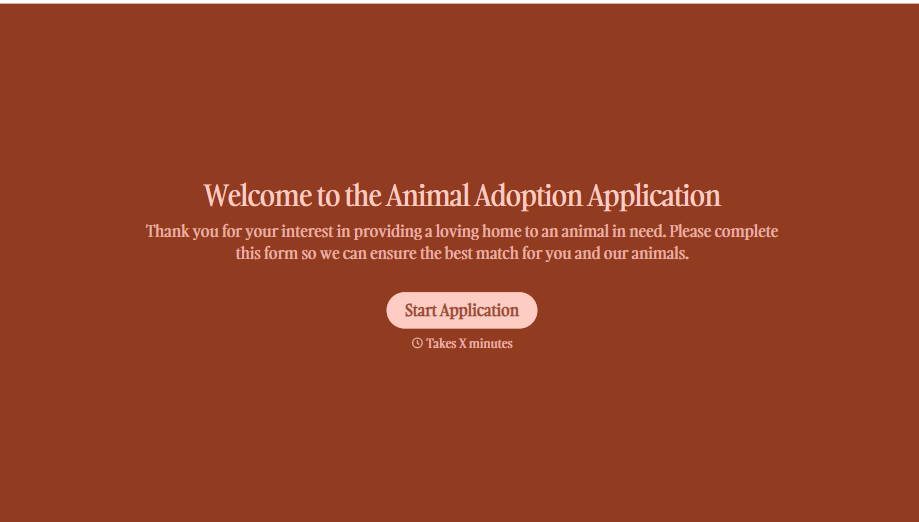
Animal Adoption Application Form
A paper application filled out at the counter while a dog's watching through the window isn't enough information to place an animal in a home that'll actually work. Collect household information, pet experience, and references before adoption day, so your staff aren't approving a placement on a rushed form.
View template
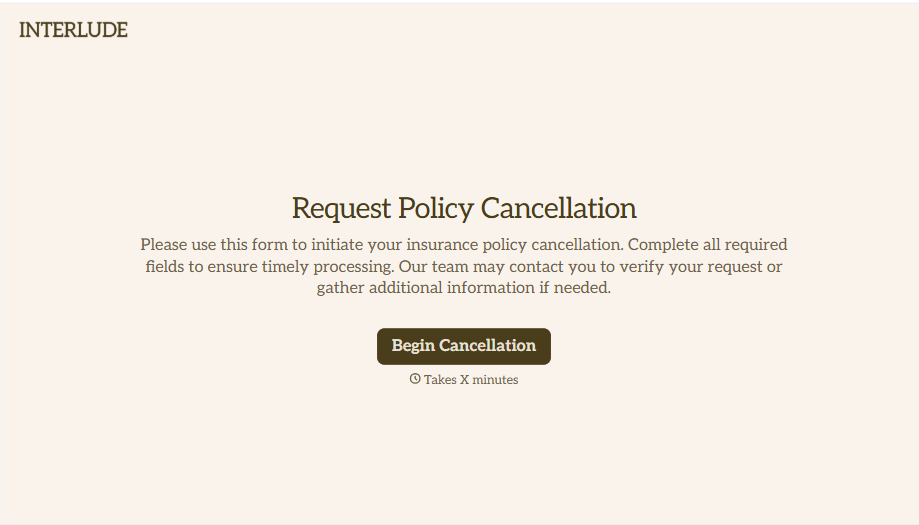
Policy Cancellation Form
A cancellation requested over the phone doesn't leave a clear record of exactly what date the policyholder actually asked for, and that date matters more than it sounds like it should. Collect what your agency actually needs, policy details, identity verification, and the requested effective date, before coverage actually ends.
View template
With Typeform, you can customize everything
Change text, colors, and even logos to match the look and feel of your brand. Then embed forms smoothly onto web and email.
Make forms feel effortless to fill out. Pace questions, call people by their name, and adapt the flow based on the data they share.
Stay efficient by connecting forms to your workflow. Typeform integrates with 300+ tools including Slack, Zapier, and HubSpot.