Police Job Application Form
Collect complete, consistent applications from every police officer candidate, and give your hiring team the organized data they need to move fast.



When police job applications arrive on paper forms or inconsistent digital submissions, HR teams spend more time chasing missing information than evaluating candidates—and qualified applicants slip through the cracks. Typeform's police job application form template gives law enforcement HR departments and recruiting units a structured way to collect everything they need from candidates before the review process begins.
Typeform walks applicants through one question at a time, so completing an application feels less like filling out government paperwork and more like a conversation. Conditional logic branches questions based on an applicant's background—a candidate with prior law enforcement experience sees different follow-up questions than someone entering the field for the first time. This keeps the application relevant to each candidate's specific situation.
Connect submissions to Google Sheets, Airtable, or your HR management system via Zapier—applications arrive organized and ready for the personnel department to review. The form takes minutes to set up, works on any device, and is easy to customize for different roles or department requirements, so you receive more complete applications and a stronger candidate pool.
A police job application form is a structured document that law enforcement agencies use to collect information from candidates applying for police officer positions. It captures personal details, educational background, employment history, relevant certifications (firearms training, first aid, etc.), and any prior criminal or disciplinary history. It's the first step in the law enforcement recruiting process.
Paper applications are easy to misplace, inconsistent in format, and slower to process than most hiring timelines allow. An online application gives HR departments a consistent, organized record for every candidate from the moment they apply, so the personnel team spends less time chasing paperwork and more time evaluating people. Recruiting units use it to screen candidates at scale, and department heads use it to confirm every application meets the minimum requirements before moving to the next stage.
A complete police application typically covers:
- Full legal name, contact information, and date of birth
- Residency status and eligibility to work in the jurisdiction
- Education history and relevant certifications (e.g., POST, CPR, firearms)
- Prior law enforcement or military experience
- Employment history for the past 5–10 years
- Disclosure of prior criminal history or disciplinary records
- Acknowledgment of background check and polygraph consent
Collect enough applications to establish a baseline before filtering candidates out. Review responses by position type and experience level—entry-level applicants shouldn't compete against lateral transfers on the same criteria. Share application summaries with the full hiring panel regularly, not just at the final interview stage. Focus follow-up conversations on gaps in the data—not gut instinct. Over time, the data tells you what to look for—update your criteria when the patterns are clear.
Define your criteria before applications come in, not while you're reviewing them. Train every reviewer the same way, use fixed-choice fields wherever possible, and assign reviewers to applicant pools they have no prior connection to. Check your process after each cycle — if certain questions produce inconsistent or unusable answers, fix them before the next one.
Get inspired by relevant templates and categories
3200+ Templates, 300+ Integrations
Nursing Job Application Form
A generic job application that doesn't ask for a license number isn't a nursing application, it's a formality a recruiter has to follow up on before they can even screen the candidate. Collect license and certification details, specialty experience, and availability before the resume gets reviewed, so recruiters aren't chasing down credentials mid-process.
View template
Work From Home Request Form
A Slack message asking to work from home on Thursday isn't a request anyone can track, especially once the same employee has asked five different ways over a month. Collect the request type, dates or schedule, and manager approval in one place, so HR isn't reconstructing who's working where from a scattered inbox.
View template
Return of Property Form
A property checklist stapled to an exit interview packet isn't a record anyone can rely on when a laptop turns up missing three weeks later. Collect itemized equipment details, condition at return, and a signed acknowledgment before an employee's last day, so IT isn't chasing down a laptop that already walked out the door.
View template
Early Retirement Form
A retirement mentioned to a manager in conversation doesn't give HR anything to actually process, and if there's an incentive deadline attached, the date that conversation happened can matter more than anyone realized at the time. Collect what your HR team actually needs, employee information, requested date, and benefit elections, before a window closes.
View template
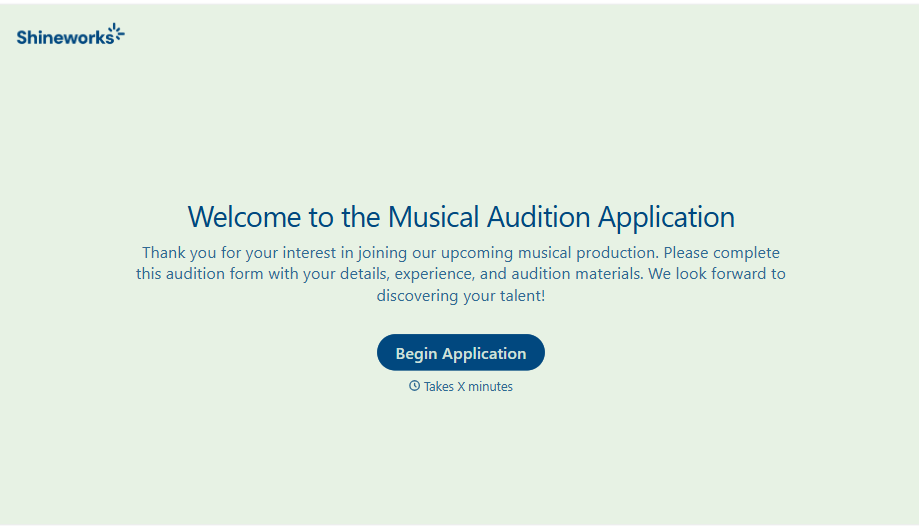
Musical Audition Form
A name scrawled on a sign-up sheet taped near the rehearsal room doesn't tell a director what role someone's after, or whether they can actually make callbacks next Tuesday. Collect what your production actually needs, contact information, role interest, and availability, before audition day arrives.
View template
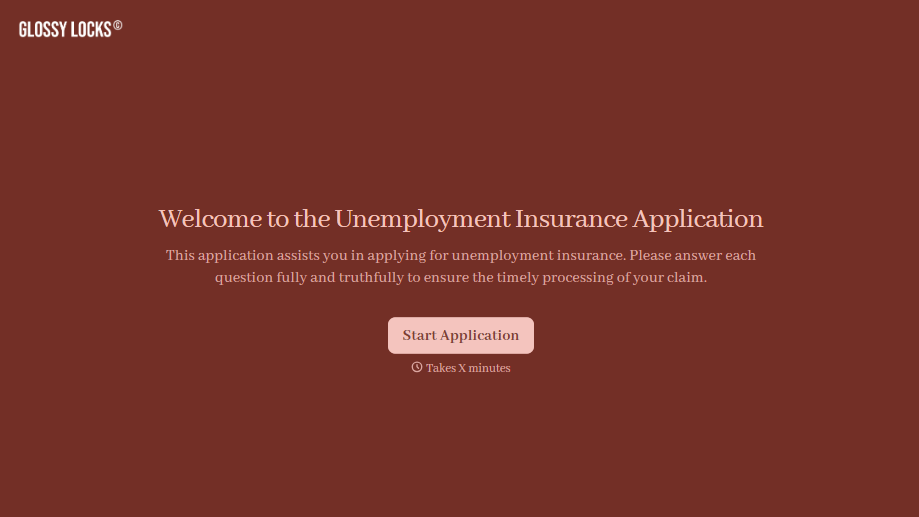
Unemployment Insurance Application Form
A stack of pay stubs gathered the morning of a filing deadline isn't the kind of preparation that gets a claim processed without delay. Collect employment history, separation details, and supporting documents before you sit down at your state's unemployment portal, so a claim doesn't stall over a missing detail.
View template
With Typeform, you can customize everything
Change text, colors, and even logos to match the look and feel of your brand. Then embed forms smoothly onto web and email.
Make forms feel effortless to fill out. Pace questions, call people by their name, and adapt the flow based on the data they share.
Stay efficient by connecting forms to your workflow. Typeform integrates with 300+ tools including Slack, Zapier, and HubSpot.