Work Satisfaction Survey Form Template
You can't improve what you don't measure. A work satisfaction survey gives employees a real channel to share how they're feeling — if you design it right.



Employees who feel their feedback goes nowhere stop giving it. That's the core problem with most work satisfaction surveys: they're sent infrequently, the results are vague, and nothing visibly changes afterward. Over time, participation drops and the data you do collect becomes less representative.
This work satisfaction survey template is built to get honest responses. A conversational format and one question at a time make it feel less like a HR compliance exercise and more like a genuine check-in. Conditional logic lets you follow up on critical responses — if someone rates their satisfaction low in a category, you can surface a follow-up question to understand why, without asking that of everyone.
Connect responses to your HR analytics tools, track changes over time, and use the data to inform real decisions about team structure, leadership, and culture.
A work satisfaction survey form is a questionnaire that measures how employees feel about their job, their team, their manager, and their organization. It captures sentiment across dimensions like role clarity, workload, recognition, development opportunities, and overall wellbeing.
Satisfaction surveys give you a structured way to identify problems before they become turnover. They also signal to employees that you care about their experience — which itself has an effect on engagement, even before any changes are made.
A multi-dimensional satisfaction survey covers both the practical and emotional aspects of work. Consider including:
- Overall satisfaction with the role and responsibilities
- Clarity of expectations and access to necessary resources
- Relationship quality with manager and team
- Opportunities for growth and development
- Sense of recognition and feeling valued
- Work-life balance and sustainability of current workload
It depends on your team size and how quickly your environment changes, but quarterly pulse surveys tend to outperform annual surveys in terms of actionability. More frequent, shorter surveys give you trending data and help you respond faster when satisfaction dips in a particular area.
Ask for demographic context (department, tenure, role level) at the start of the survey without asking for names. This lets you segment responses by team or function without identifying individuals — which is essential for getting honest answers, particularly on questions about management.
Get inspired by relevant templates and categories
3200+ Templates, 300+ Integrations
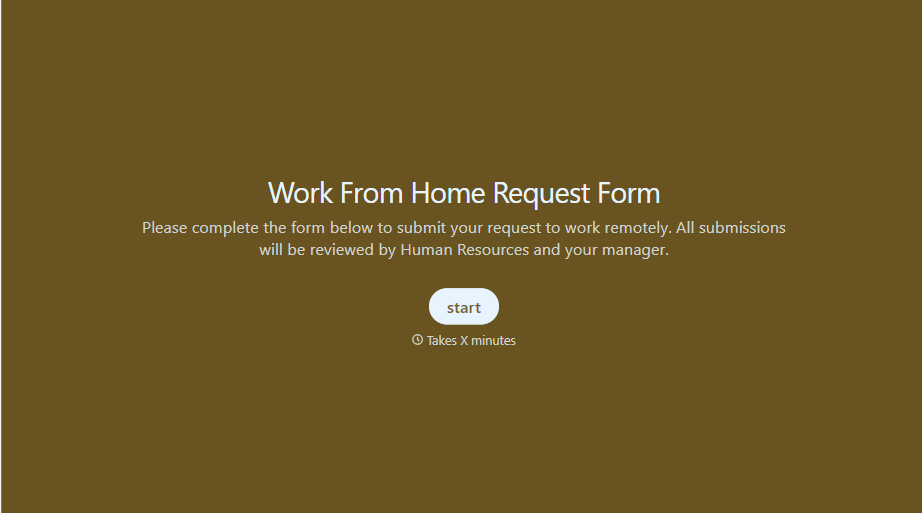
Work From Home Request Form
A Slack message asking to work from home on Thursday isn't a request anyone can track, especially once the same employee has asked five different ways over a month. Collect the request type, dates or schedule, and manager approval in one place, so HR isn't reconstructing who's working where from a scattered inbox.
View template
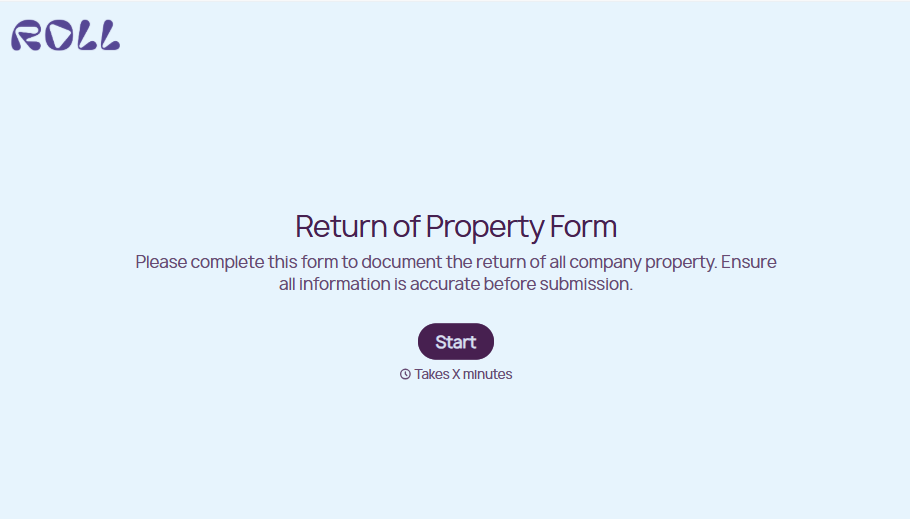
Return of Property Form
A property checklist stapled to an exit interview packet isn't a record anyone can rely on when a laptop turns up missing three weeks later. Collect itemized equipment details, condition at return, and a signed acknowledgment before an employee's last day, so IT isn't chasing down a laptop that already walked out the door.
View template
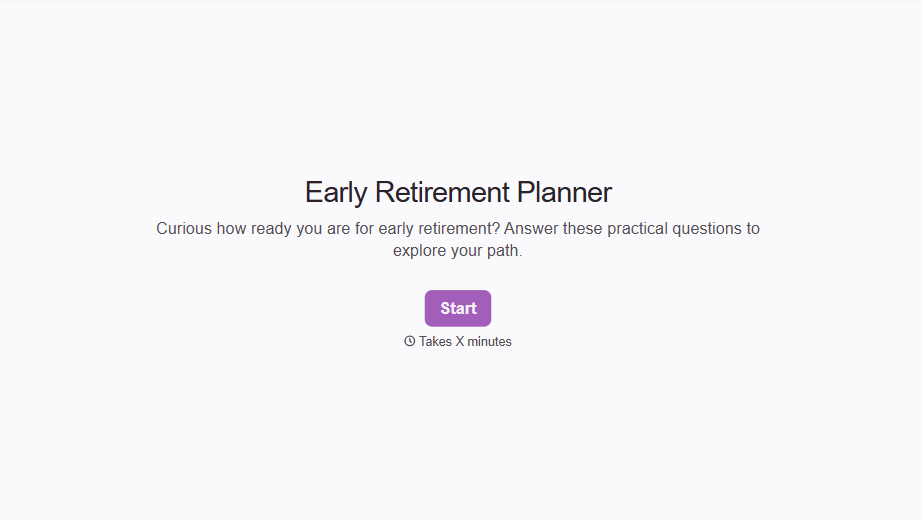
Early Retirement Form
A retirement mentioned to a manager in conversation doesn't give HR anything to actually process, and if there's an incentive deadline attached, the date that conversation happened can matter more than anyone realized at the time. Collect what your HR team actually needs, employee information, requested date, and benefit elections, before a window closes.
View template
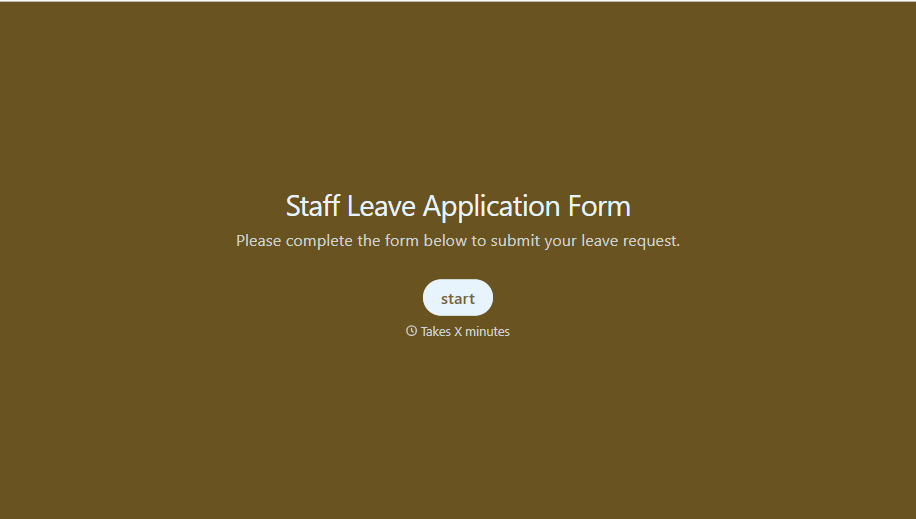
Staff Leave Application Form
A vacation request approved with a thumbs-up emoji in Slack isn't the kind of record payroll can work from when it's time to reconcile someone's leave balance. Collect the leave type, dates, and manager approval in one place, so a team doesn't accidentally double-book someone's time off.
View template
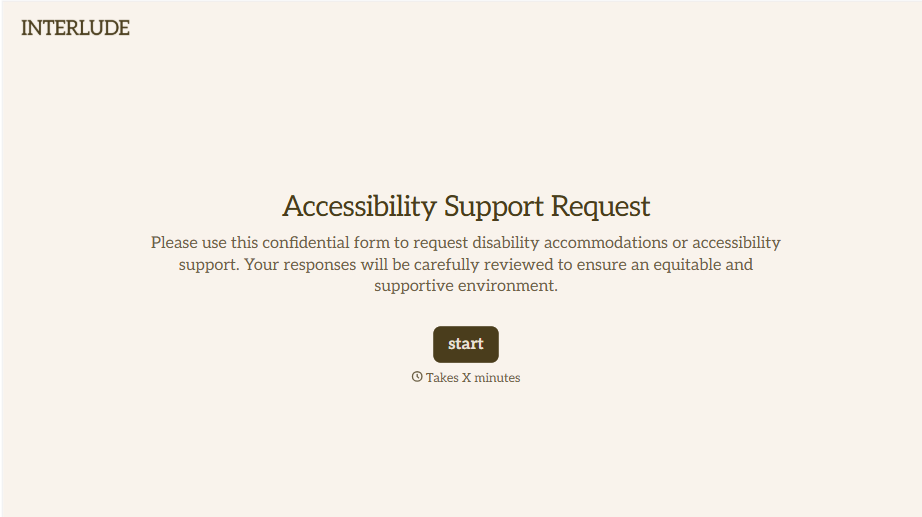
Disability Accommodation Request Form
A quiet word to a manager about needing a different desk setup isn't the kind of request that starts a documented process. Collect the specific accommodation needed and any supporting information before a decision gets made informally, so a request doesn't get lost between a hallway conversation and HR's desk.
View template
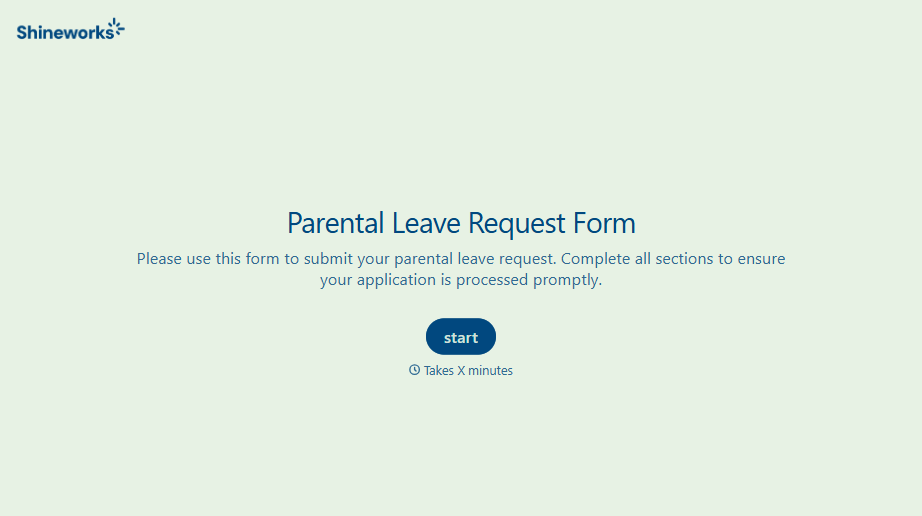
With Typeform, you can customize everything
Change text, colors, and even logos to match the look and feel of your brand. Then embed forms smoothly onto web and email.
Make forms feel effortless to fill out. Pace questions, call people by their name, and adapt the flow based on the data they share.
Stay efficient by connecting forms to your workflow. Typeform integrates with 300+ tools including Slack, Zapier, and HubSpot.