Business Survey Questionnaire
Big decisions made on gut feel rarely show cracks until the money is already spent. Collect input on customer needs, market demand, and priorities before you commit.



Every business makes bets: which features to build, what price to set, which market to enter next. Yet most companies place those bets blind, testing nothing until a product launches or a budget clears. By then, these wrong assumptions have already cost real time and money. Typeform's business survey questionnaire template gives teams an organized way to gather evidence before they decide.
The questionnaire adapts to whatever you need to learn: customer priorities, employee sentiment, market demand, or pricing feedback. Questions appear one at a time, so respondents answer thoughtfully instead of skimming a long form. Conditional logic branches the questionnaire based on each respondent's answers. A customer sees questions about your product, while a potential partner sees questions about working together.
Customize the questions to fit your industry, your audience, and the decision in front of you. Share it by email, embed it on your website, or post the link on social media. Every response flows into Google Sheets or Airtable via Zapier, ready to sort and analyze. You make your next big call with evidence from the people it affects, not a boardroom hunch.
A business survey questionnaire is a structured set of questions used to gather input for a business decision. It collects feedback from customers, employees, partners, or the wider market on a specific topic. Companies that run business survey questionnaires consistently base business decisions on real evidence instead of assumptions.
Bad business data is worse than no data because it feels trustworthy, while actually pointing you in the wrong direction. A rushed or leading questionnaire produces answers that confirm what you already believed, not what is true. Teams then invest in products, markets, or hires based on a disillusion. A well-built business survey questionnaire asks neutral questions, so the answers reflect reality instead of what you hoped to hear.
Cover what the decision depends on:
- The specific question you need answered to move forward
- Who your respondents are and what they care about
- Neutral wording that avoids leading the answer
- A mix of rating scales and open comments
- Enough context for respondents to answer accurately
Write neutral questions that don't hint at the answer you want, since leading questions quietly corrupt your data. Use balanced rating scales and a genuine "no opinion" option, while reserving open text fields for the reasons behind a rating. Pilot the questionnaire with a few people first to catch any question that confuses or nudges them.
Target a specific group rather than blasting the questionnaire to everyone, since a focused sample gives clearer answers. Share the link where your intended respondents already are, whether that's a customer email list or an industry forum. A smaller, relevant response set beats a large, random one when a real decision is on the line.
Get inspired by relevant templates and categories
3200+ Templates, 300+ Integrations
Bank Reference Form
A reference request faxed to a bank branch and left sitting in a queue for weeks isn't the kind of turnaround a landlord or business can wait on. Collect the applicant's signed authorization and the specific details you need confirmed before the request even reaches the bank, so a decision isn't stuck behind a letter that hasn't come back yet.
View template
Bar Inventory Form
A bottle count eyeballed at the end of a shift and scrawled on a paper sheet doesn't hold up against a pour cost report that says something doesn't add up. Collect what your bar actually needs, item, count, and variance, on a schedule you can actually compare week to week.
View template
Equipment Inventory Form
Equipment that leaves a storage room in someone's arms, with no note about where it went, doesn't show up again until someone needs it and can't find it. Collect what your team actually needs, item details, condition, and who's got it, every time something moves.
View template
Maintenance Agreement Form
A maintenance plan agreed to over the phone isn't a contract your service team can actually work from, especially when nobody's sure whether the twice-a-year tune-up was part of the deal. Collect the equipment covered, service frequency, and a signed agreement before the first visit, so your team isn't guessing at scope once they're on-site.
View template
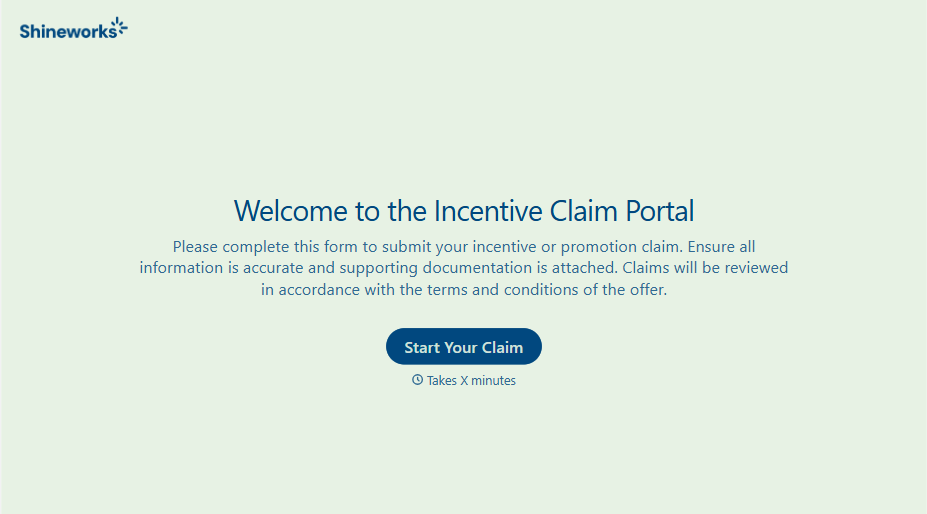
Incentive Claim Form
A rebate claim mailed in with a stapled stack of receipts isn't the kind of paperwork that gets processed quickly, especially when a required serial number turns out to be missing from page three. Collect proof of purchase, product details, and participant information upfront, so a claim doesn't bounce back for a missing document weeks later.
View template
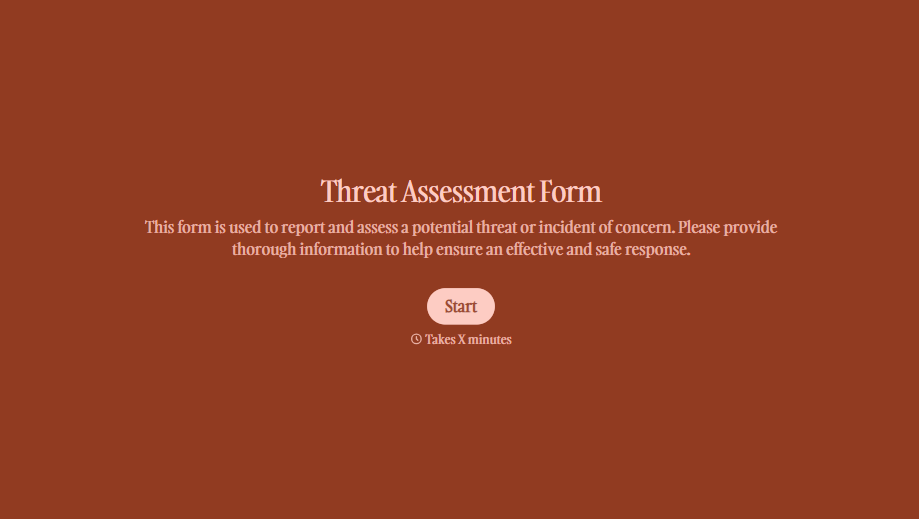
Threat Assessment Form
A concerning comment that gets passed from a teacher to a counselor to whoever's free that period loses detail with every retelling. Collect what your team actually needs, what was observed or reported, who was involved, and when, before an important detail gets dropped along the way.
View template
With Typeform, you can customize everything
Change text, colors, and even logos to match the look and feel of your brand. Then embed forms smoothly onto web and email.
Make forms feel effortless to fill out. Pace questions, call people by their name, and adapt the flow based on the data they share.
Stay efficient by connecting forms to your workflow. Typeform integrates with 300+ tools including Slack, Zapier, and HubSpot.