Academic Research Form Template
Collect structured data from participants, experts, or sources with a form built for research standards. This template supports surveys, interviews, and data collection across academic contexts.



Academic research depends on data quality. When survey instruments are poorly structured, participant instructions are unclear, or data comes back in inconsistent formats, analysis becomes difficult and findings become harder to defend. Poor research design wastes participants' time and researchers' effort.
This academic research form template gives researchers a professional, structured tool for data collection. Conditional logic routes participants through different question sets based on prior responses — a participant who indicates prior knowledge of the topic receives different follow-up questions than one encountering it for the first time. Responses are captured in a format that exports cleanly for statistical analysis or qualitative coding.
Configure the instrument to match your research design, add informed consent language at the start, and share the link with your participant pool.
An academic research form is a structured data collection instrument used in scholarly inquiry. It may take the form of a survey, questionnaire, or interview protocol, and is designed to gather consistent, analyzable data from participants, experts, or other sources in support of a research question or hypothesis.
Research validity depends on consistency. When every participant sees the same questions in the same format, responses are comparable and analysis is more defensible. A well-designed digital form also reduces respondent burden, which improves completion rates and data quality.
Structure your instrument around your research design, but common elements include:
- Informed consent statement and agreement
- Demographic or background questions relevant to the study
- Core research questions (Likert scale, multiple choice, or open-ended)
- Scenario or stimulus presentation (if applicable)
- Debriefing or follow-up questions
- Contact information for participants who wish to discuss the research
Include a clear informed consent statement at the beginning of the form, covering the study's purpose, how data will be used, participant rights, and contact information. A required acknowledgment checkbox that participants must select before proceeding creates a documented record of consent.
Yes. You can include structured response options for quantitative analysis alongside open-text fields for qualitative data. Conditional logic lets you adjust the question path based on earlier responses, which is useful for mixed-methods designs that probe quantitative patterns with qualitative follow-up.
Get inspired by relevant templates and categories
3200+ Templates, 300+ Integrations
School Photo Release Form
A photo consent checkbox buried on page 12 of an enrollment packet doesn't tell a teacher who's actually opted out before they post a class photo. Collect what your school actually needs, guardian consent, and exactly where a photo can be used, before the camera comes out.
View template
School Transfer Request Form
A transfer request dropped off at the district office isn't the kind of paperwork that gets processed before the semester it's meant for already started. Collect the student's information, reason for transfer, and supporting documentation upfront, so a request doesn't stall while the district follows up for a missing form.
View template
Student Recommendation Form
An email asking "can you write me a letter of recommendation" with no deadline attached isn't enough for a teacher to actually sit down and write one. Collect the program details, deadline, and what the student wants highlighted before the request lands in an inbox, so a letter doesn't get written in a rush the night it's due.
View template
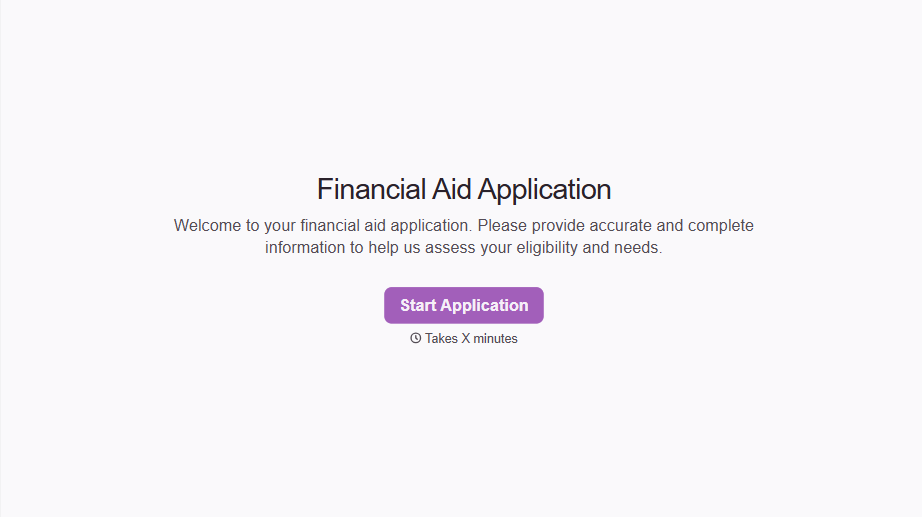
Financial Aid Application Form
A request for help with tuition mentioned to the front office in passing doesn't give your financial aid team anything to actually evaluate. Collect what your school actually needs, household information, income documentation, and need, before the deadline passes.
View template

Girl Scout Product Permission Form
A permission slip signed at a troop meeting while five other things are happening, snack time, a badge ceremony, a parent already halfway out the door, isn't informed consent, it's a signature. Get the money-handling responsibility, the supervision rules, and the online sales guidelines actually read and agreed to before a single box leaves the garage.
View template
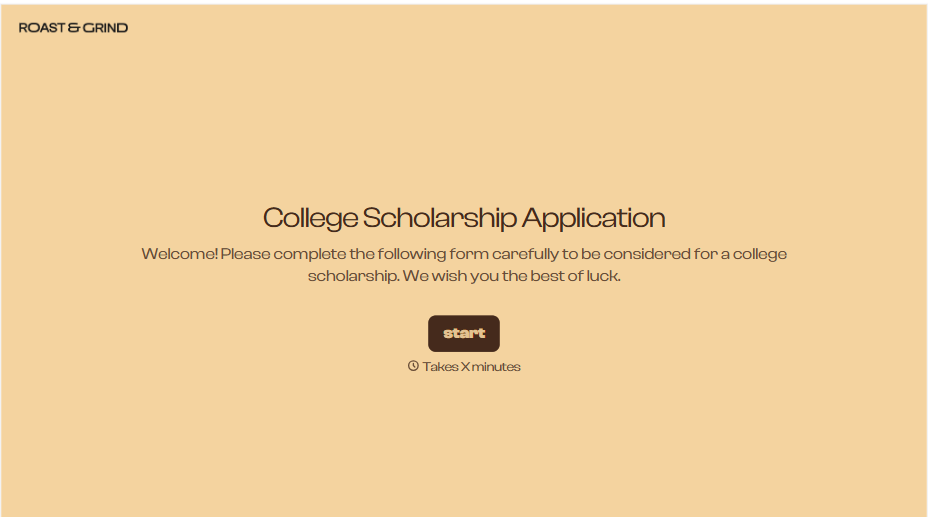
College Scholarship Application Form
An application submitted as a PDF from one student and a Google Doc link from another isn't a fair comparison, it's whichever format the committee finds easiest to skim that week. Put every applicant through the same form, and the decision comes down to what they actually wrote, not how they happened to turn it in.
View template
With Typeform, you can customize everything
Change text, colors, and even logos to match the look and feel of your brand. Then embed forms smoothly onto web and email.
Make forms feel effortless to fill out. Pace questions, call people by their name, and adapt the flow based on the data they share.
Stay efficient by connecting forms to your workflow. Typeform integrates with 300+ tools including Slack, Zapier, and HubSpot.