College Scholarship Application Form
An application submitted as a PDF from one student and a Google Doc link from another isn't a fair comparison, it's whichever format the committee finds easiest to skim that week. Put every applicant through the same form, and the decision comes down to what they actually wrote, not how they happened to turn it in.



Right now, scholarship applications come in the way students happen to send them, an emailed Word doc, a scanned transcript photographed at an angle, a recommendation letter that never showed up until someone follows up twice. It's not clear an application is even complete until a reviewer is already partway through reading it, and comparing essays formatted three different ways makes an already subjective process more inconsistent than it needs to be.
Typeform's college scholarship application collects personal and contact information, academic records, GPA, institution, a transcript upload, financial need documentation, essay or personal statement responses, extracurricular and community involvement, and a file upload for recommendation letters, all as required fields so an incomplete application can't get submitted in the first place. Conditional logic can route to different eligibility questions or essay prompts depending on which specific scholarship someone's applying for, instead of running every fund off one generic form.
Every submission lands in the same place, so a scoring rubric, points across merit, need, and essay quality, applies consistently whether an application came in on day one or at midnight before the deadline, and multiple reviewers can score independently against the same record instead of passing email attachments around. For merit-based awards, it's worth considering whether to strip identifying details, name, photo, sometimes institution, before reviewers see the essay, so the score reflects the writing and not who wrote it.
A college scholarship application form is an online form students use to apply for scholarship funding, collecting personal information, academic records, financial need details, an essay or personal statement, and supporting documents like transcripts and recommendation letters, all through one standardized process instead of scattered email submissions.
Ask for what your committee will actually need to make a decision:
- Personal and contact information
- Academic records, including GPA, institution, and a transcript upload
- Financial need documentation, if the award is need-based
- An essay or personal statement
- Extracurricular activities and community involvement
- Letters of recommendation, collected through a file upload
- Proof of enrollment or acceptance, if required
Define a scoring rubric before applications start coming in, assigning points across categories like merit, need, and essay quality, and have more than one reviewer score each application independently. Comparing scores after the fact catches the cases where one reviewer's "strong essay" is another's "average," instead of one person's read deciding the outcome alone.
Depends on the scholarship. A fund targeted at a specific group of students needs that information to confirm eligibility. A general merit-based award may benefit from the opposite, stripping identifying details before the first round of review, so the essay gets scored on its own. Either way, what you're required or permitted to ask for depends on your specific scholarship terms and applicable law, worth confirming with whoever handles compliance for the fund before finalizing the form.
A prompt that asks for a specific story, a challenge, a moment, a decision, tends to produce a more honest and more differentiated answer than a generic "why do you deserve this scholarship," which mostly produces the same handful of safe answers restated by every applicant.
Get inspired by relevant templates and categories
3200+ Templates, 300+ Integrations
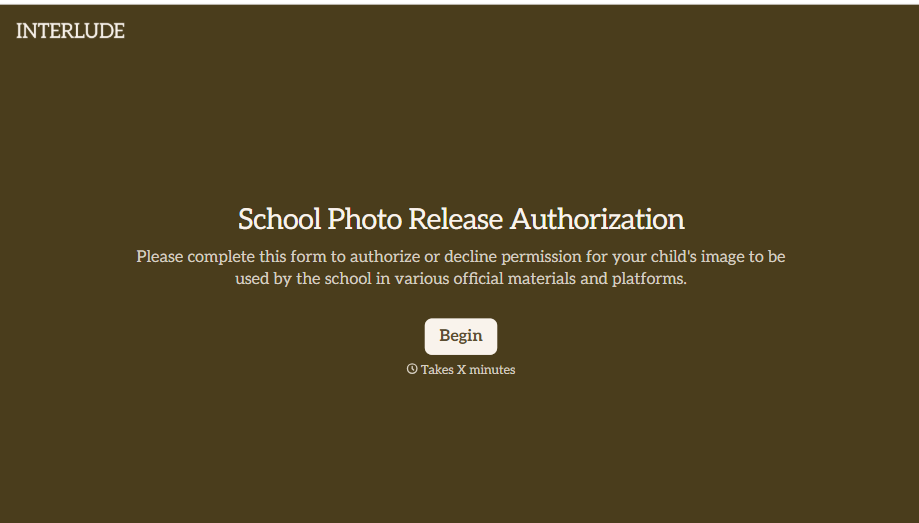
School Photo Release Form
A photo consent checkbox buried on page 12 of an enrollment packet doesn't tell a teacher who's actually opted out before they post a class photo. Collect what your school actually needs, guardian consent, and exactly where a photo can be used, before the camera comes out.
View template
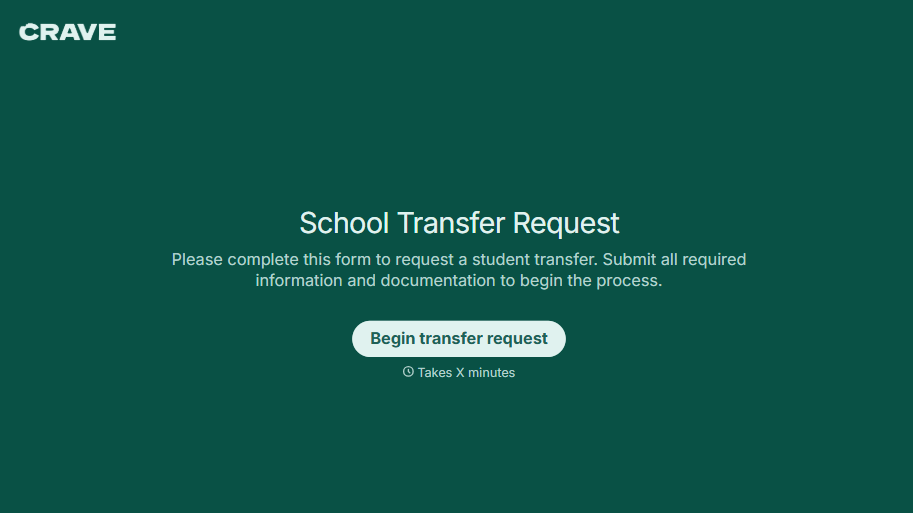
School Transfer Request Form
A transfer request dropped off at the district office isn't the kind of paperwork that gets processed before the semester it's meant for already started. Collect the student's information, reason for transfer, and supporting documentation upfront, so a request doesn't stall while the district follows up for a missing form.
View template
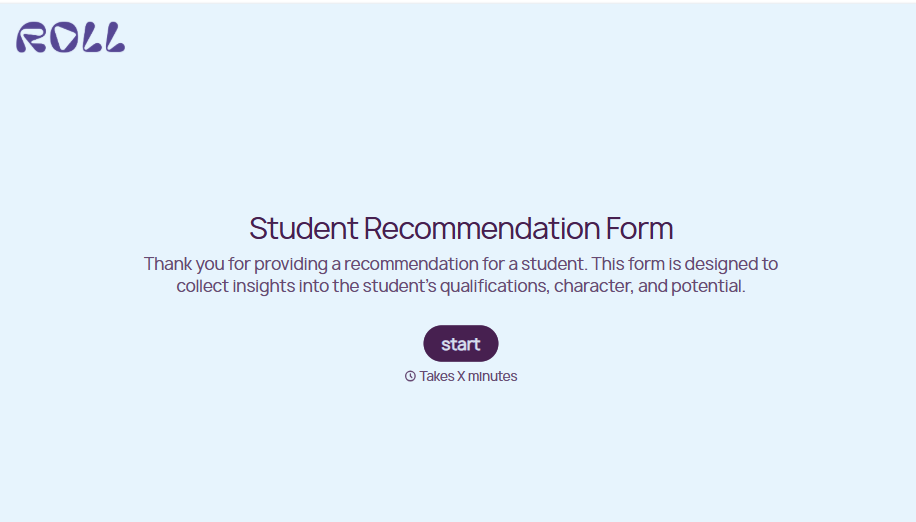
Student Recommendation Form
An email asking "can you write me a letter of recommendation" with no deadline attached isn't enough for a teacher to actually sit down and write one. Collect the program details, deadline, and what the student wants highlighted before the request lands in an inbox, so a letter doesn't get written in a rush the night it's due.
View template
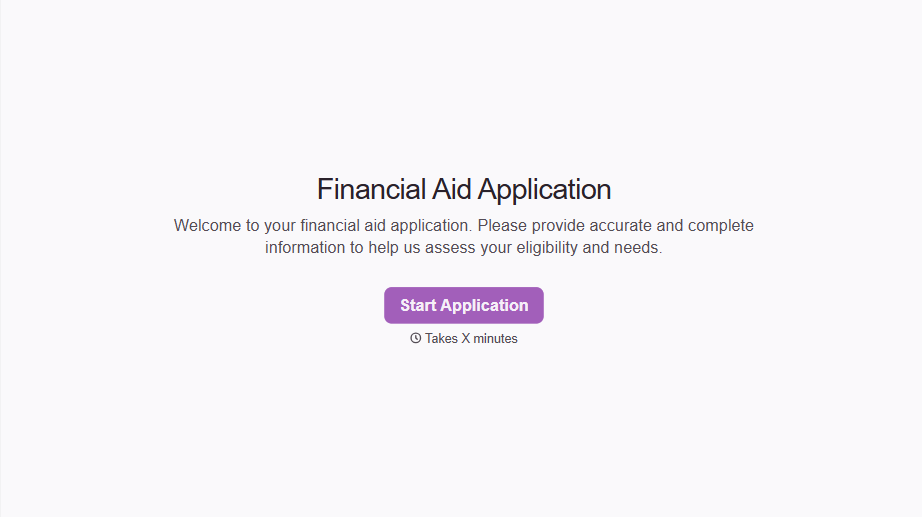
Financial Aid Application Form
A request for help with tuition mentioned to the front office in passing doesn't give your financial aid team anything to actually evaluate. Collect what your school actually needs, household information, income documentation, and need, before the deadline passes.
View template

Girl Scout Product Permission Form
A permission slip signed at a troop meeting while five other things are happening, snack time, a badge ceremony, a parent already halfway out the door, isn't informed consent, it's a signature. Get the money-handling responsibility, the supervision rules, and the online sales guidelines actually read and agreed to before a single box leaves the garage.
View template
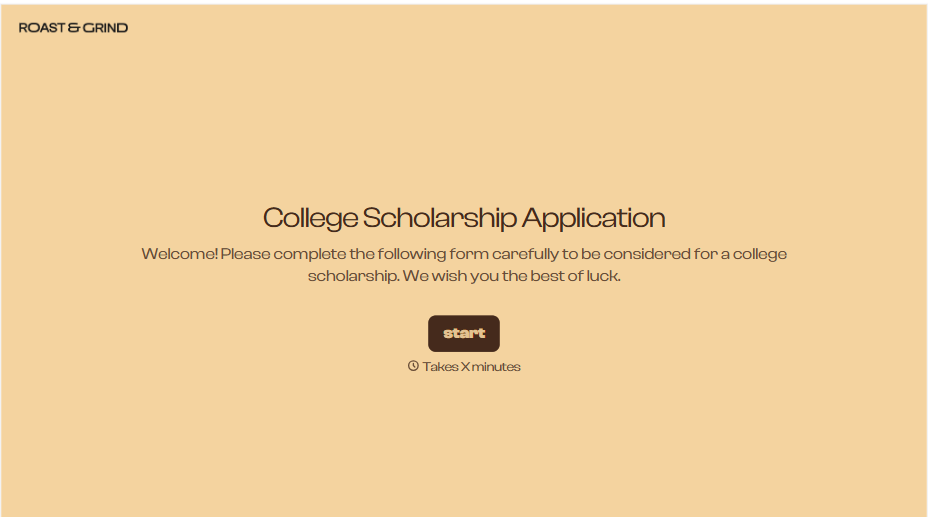
College Scholarship Application Form
An application submitted as a PDF from one student and a Google Doc link from another isn't a fair comparison, it's whichever format the committee finds easiest to skim that week. Put every applicant through the same form, and the decision comes down to what they actually wrote, not how they happened to turn it in.
View template
With Typeform, you can customize everything
Change text, colors, and even logos to match the look and feel of your brand. Then embed forms smoothly onto web and email.
Make forms feel effortless to fill out. Pace questions, call people by their name, and adapt the flow based on the data they share.
Stay efficient by connecting forms to your workflow. Typeform integrates with 300+ tools including Slack, Zapier, and HubSpot.