Emotional Support Animal Form Template
Documenting emotional support animal accommodation requests requires care and clarity. A well-structured form helps you handle these requests consistently and compliantly.



Emotional support animal requests put organizations in a delicate position — you need enough documentation to make a fair determination, but asking for too much or the wrong type of information creates legal risk. The line between reasonable verification and unlawful inquiry is narrower than most people realize.
This emotional support animal form template helps you collect the information you're permitted to request: confirmation of a qualifying disability and the therapeutic relationship between the individual and the animal. It keeps the process respectful and legally defensible. Conditional logic ensures follow-up questions are surfaced only when relevant to the individual's situation.
Customize for your organization's context — housing, travel, education, or workplace — and connect completed forms to your accommodation management process.
An emotional support animal form is a structured document used by individuals to request accommodation for an emotional support animal and provide supporting documentation. It's used by housing providers, employers, schools, and other organizations to manage ESA accommodation requests in a consistent way.
Without a standardized process, ESA requests are handled inconsistently, which creates both legal exposure and unfair outcomes for requestors. A clear form ensures you're collecting only the information you're permitted to request, treating all requests equally, and creating a documented record of each decision.
ESA documentation requirements vary by jurisdiction and context, but a general framework includes:
- Individual's full name and contact information
- Type of accommodation being requested and location (home address, workplace, etc.)
- Description of the emotional support animal (species, breed, name)
- Statement that the individual has a disability-related need for the animal
- Contact information for the supporting mental health professional
- Signature and date of submission
In most housing contexts under the Fair Housing Act, you can request confirmation that the individual has a disability and that the animal provides disability-related therapeutic benefit. You cannot require specific diagnosis details, demand a particular type of letter, or ask for extensive medical records. Consult your legal counsel for requirements specific to your jurisdiction and context.
Use Typeform's response notifications to alert your accommodation team when a new request comes in. If documentation is incomplete, reach out to the requestor with a specific, courteous request for the missing element. Keep a record of all communications and decisions related to each request.
Get inspired by relevant templates and categories
3200+ Templates, 300+ Integrations
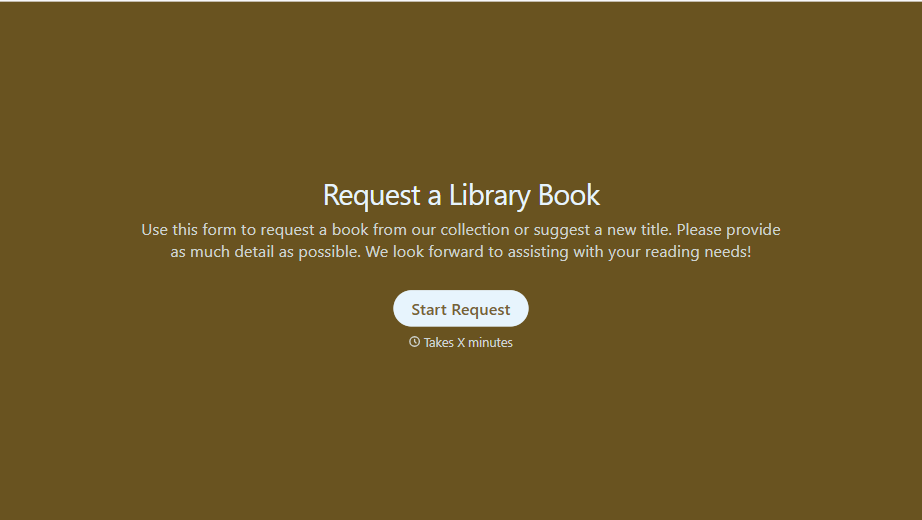
Library Book Request Form
A book request scrawled on a sticky note at the front desk doesn't make it into any queue, and it definitely doesn't get anyone a call when the book actually arrives. Collect what your library actually needs, the title, patron information, and how they'd like to be notified, before the note gets buried under the next stack of returns.
View template
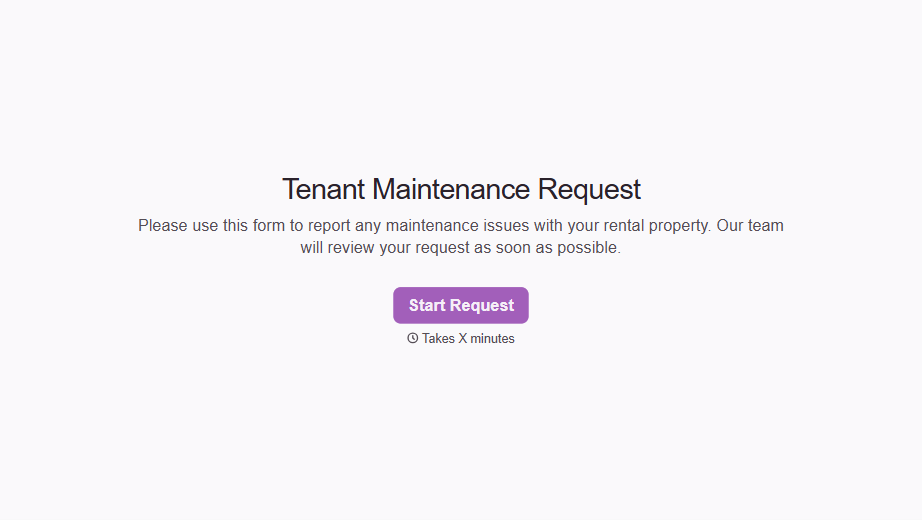
Tenant Repair Request Form
A text message about a leaky faucet sent at 11pm isn't a work order your maintenance team can act on efficiently, especially without a photo or a unit number attached. Collect the property, the issue, and how urgent it is before the request lands in someone's texts, so a repair doesn't wait on a landlord scrolling back through old messages.
View template
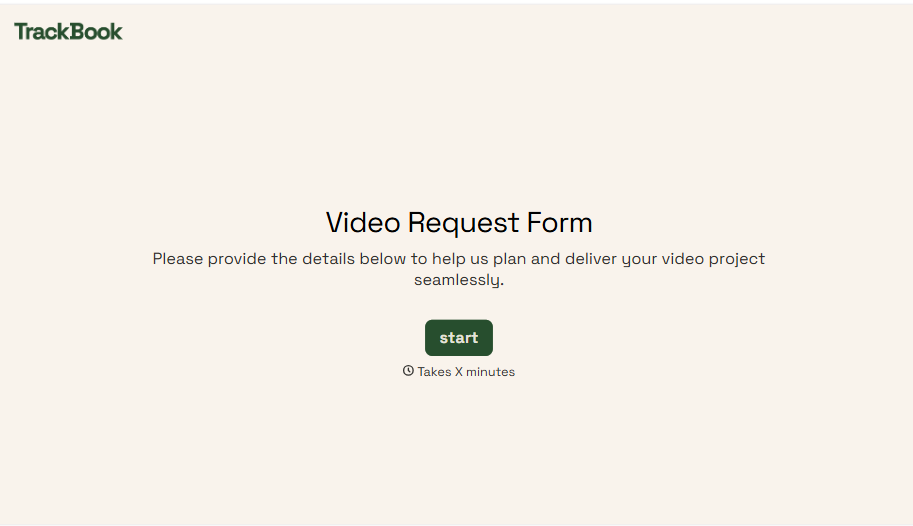
Video Request Form
A Slack message asking for "a quick video for the launch" isn't a creative brief your video team can actually start from. Collect the project purpose, deadline, and deliverable specs before the request lands in a queue, so your team isn't reworking a video built on assumptions the requester never actually stated.
View template
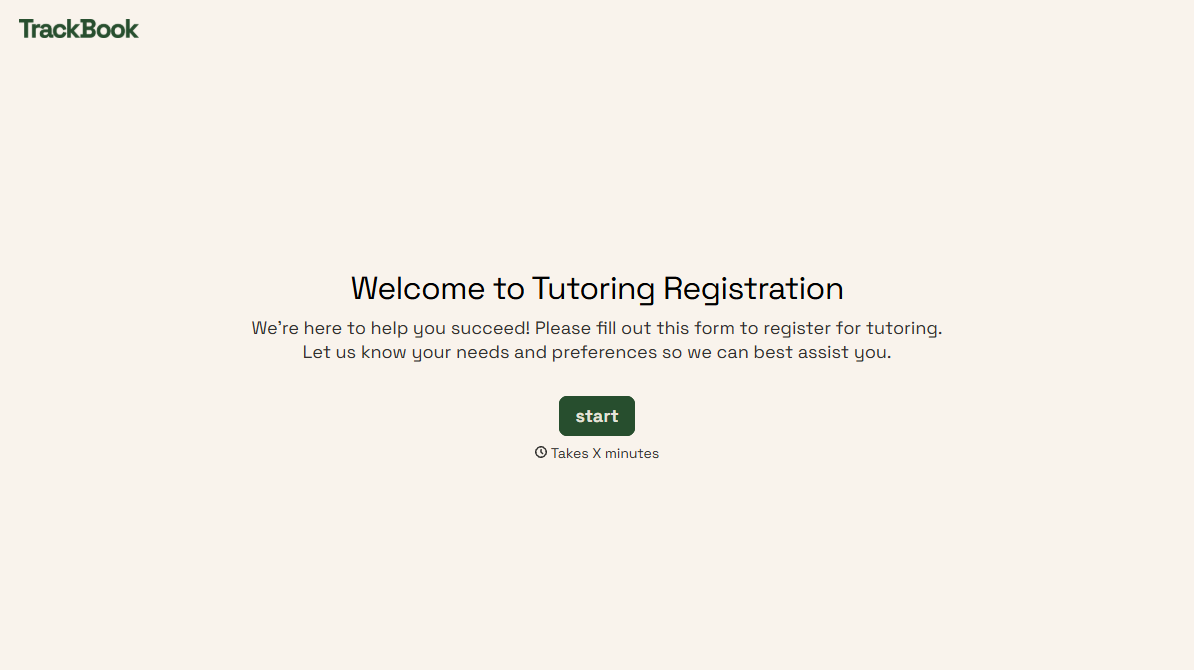
Tutoring Registration Form
A phone call to sign up for tutoring isn't the kind of information a tutor can build a first session around, especially without knowing which chapter of algebra is causing the trouble. Collect the student's subject needs, schedule, and goals before the first session, so a tutor isn't starting from scratch on day one.
View template
Product Enquiry Form
A generic "I'm interested in your product, can you tell me more?" email doesn't tell your sales team which product, what quantity, or what the customer's actually trying to do with it. Collect what your team actually needs, product interest, quantity, and use case, before you reply.
View template
With Typeform, you can customize everything
Change text, colors, and even logos to match the look and feel of your brand. Then embed forms smoothly onto web and email.
Make forms feel effortless to fill out. Pace questions, call people by their name, and adapt the flow based on the data they share.
Stay efficient by connecting forms to your workflow. Typeform integrates with 300+ tools including Slack, Zapier, and HubSpot.