In School Suspension Reflection Form
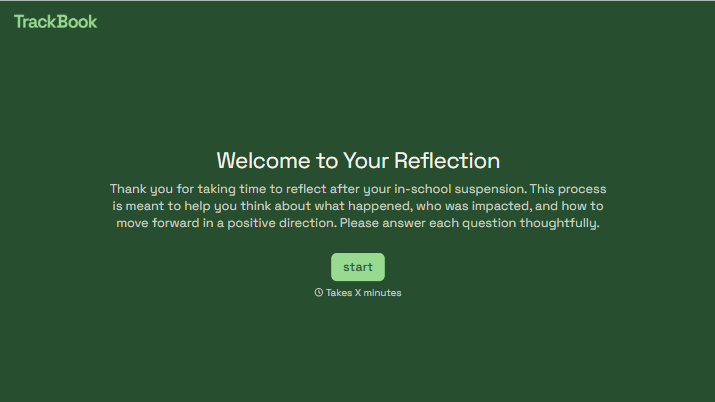
Give students a structured way to reflect on what happened and prepare to return to class. Ask about their perspective, the impact of their actions, and the support they need to make a practical plan.



A student can repeat the rule they broke without knowing what to do differently next time. Another disagrees with the account of the incident and needs a chance to explain. An in school suspension reflection form gives both conversations a place to begin.
Students describe what happened from their perspective, what they were thinking or feeling, and who may have been affected. You can ask what they could try in a similar situation and which adult they would approach for help. Keep the questions focused on understanding the incident and planning a return to learning.
Staff get a starting point for a follow-up conversation. Students get room to explain, reflect, and ask for support. Before returning to class, they can work with a staff member to agree on a specific next step.
An in school suspension reflection form is a set of prompts students complete as part of a school’s response to a behavioral incident. It asks them to consider what happened, its impact, and how they might respond differently. Staff use it to support discussion and plan follow-up with the student.
Time away from class does not, by itself, explain how to handle a difficult situation differently. A reflection form gives staff and students something concrete to discuss. It can also reveal unanswered questions or support needs that should be addressed before the student returns.
Use age-appropriate prompts that invite an honest account:
- Student name, date, and staff contact
- What happened from the student’s perspective
- Thoughts or feelings at the time
- Who was affected and how
- What the student could try next time
- Support or clarification they need
- Steps to address any harm, where appropriate
- A return-to-class plan and follow-up date
Leave room for the student to disagree with details or say they need help answering.
Ask neutral questions and give students time to respond when they are ready to engage. “What happened before the situation escalated?” offers more room for explanation than a prompt that assumes intent. Allow a conversation or another suitable response format when writing is a barrier, and review the answers with the student.
Yes. Use the reflection to agree on a small number of practical steps, such as asking for a break or checking in with a named adult. Confirm what support staff will provide as well as what the student will try. Set a follow-up so the plan can be reviewed and adjusted.
Get inspired by relevant templates and categories
3200+ Templates, 300+ Integrations


With Typeform, you can customize everything
Change text, colors, and even logos to match the look and feel of your brand. Then embed forms smoothly onto web and email.
Make forms feel effortless to fill out. Pace questions, call people by their name, and adapt the flow based on the data they share.
Stay efficient by connecting forms to your workflow. Typeform integrates with 300+ tools including Slack, Zapier, and HubSpot.