Mental Health Questionnaire Form Template
Gather the context needed to understand how someone is doing, so support is grounded in what they actually share.



Mental health check-ins and assessments are only useful if people feel safe enough to answer honestly. A questionnaire that feels clinical, impersonal, or too long creates the opposite of the conditions you want. People give minimal answers, and you end up with data that doesn't reflect what's actually going on.
A Typeform mental health questionnaire works differently. The one-question-at-a-time format feels less like a form and more like a conversation. Conditional logic can gently follow up based on how someone responds, probing for more detail when they indicate they're struggling, without overwhelming those who are doing well. Responses provide a structured picture that clinicians, counselors, or wellbeing teams can actually use.
Use validated question sets like PHQ-9, GAD-7, or your organization's own framework. Customize for your context, whether that's a clinical intake, an employee wellbeing check-in, or a student support program.
A mental health questionnaire is a structured tool used to assess an individual's psychological wellbeing, screen for specific conditions, or gather information ahead of a clinical or counseling appointment. It may use validated assessment scales or custom questions developed for a specific program.
A digital questionnaire completed before an appointment gives clinicians or counselors context before the conversation starts, which makes sessions more focused and productive. For wellbeing programs, regular check-ins with a structured tool make it easier to spot individuals who may need additional support.
Include items that cover key dimensions of wellbeing:
- Frequency of feeling down, anxious, or hopeless over the past 2 weeks
- Quality of sleep and any changes in appetite or energy
- Ability to concentrate and complete daily tasks
- Social connection and feelings of isolation
- Any thoughts of self-harm or hopelessness (with appropriate safety protocols in place)
- What kind of support the person is hoping for
Build in a safety protocol for responses that trigger concern. Conditional logic can direct someone to crisis resources immediately based on their answers, and staff who monitor responses should have a clear process for following up with high-risk submissions quickly. Do not use a digital form as the sole intervention for someone expressing immediate risk.
Yes. The PHQ-9 (depression), GAD-7 (anxiety), and WEMWBS (general wellbeing) are widely used validated tools with established scoring. You can build these into a Typeform with their standard question wording and configure automatic scoring using Typeform's calculator feature.
Get inspired by relevant templates and categories
3200+ Templates, 300+ Integrations
X-Ray Release Form
A phone call asking to send X-rays to a new provider isn't an authorization your compliance file can rely on. Collect patient information, the receiving provider's details, and a signed authorization before the images go out, so your front desk isn't scrambling to prove who approved a release.
View template
Nationality Verification Form
A self-certification buried in a stack of new account paperwork isn't the kind of record a compliance team can rely on for a regulatory filing. Collect nationality, tax residency, and a signed declaration before an account opens, so compliance isn't chasing down a customer's citizenship status after the fact.
View template
Policy Cancellation Form
A cancellation requested over the phone doesn't leave a clear record of exactly what date the policyholder actually asked for, and that date matters more than it sounds like it should. Collect what your agency actually needs, policy details, identity verification, and the requested effective date, before coverage actually ends.
View template
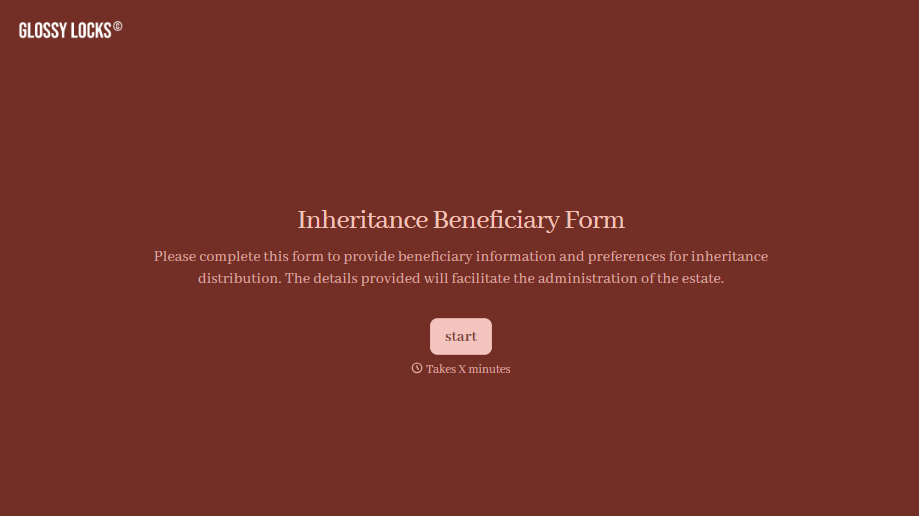
Inheritance Beneficiary Form
Asking a grieving family member for the same banking details across three different phone calls doesn't make settling an estate go any faster. Collect what your firm actually needs, beneficiary information, identification, and distribution details, in one submission instead of three calls.
View template
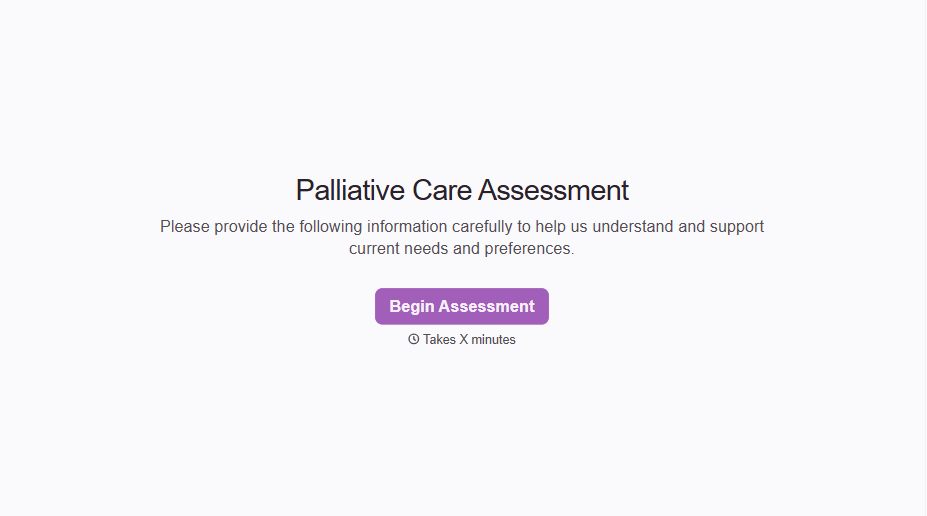
Palliative Care Assessment Form
A symptom check done verbally during a rushed home visit isn't the kind of record that shows whether pain management is actually working from one visit to the next. Collect symptom severity, functional status, and psychosocial needs consistently, so a care team can see change over time instead of relying on memory of the last visit.
View template
With Typeform, you can customize everything
Change text, colors, and even logos to match the look and feel of your brand. Then embed forms smoothly onto web and email.
Make forms feel effortless to fill out. Pace questions, call people by their name, and adapt the flow based on the data they share.
Stay efficient by connecting forms to your workflow. Typeform integrates with 300+ tools including Slack, Zapier, and HubSpot.