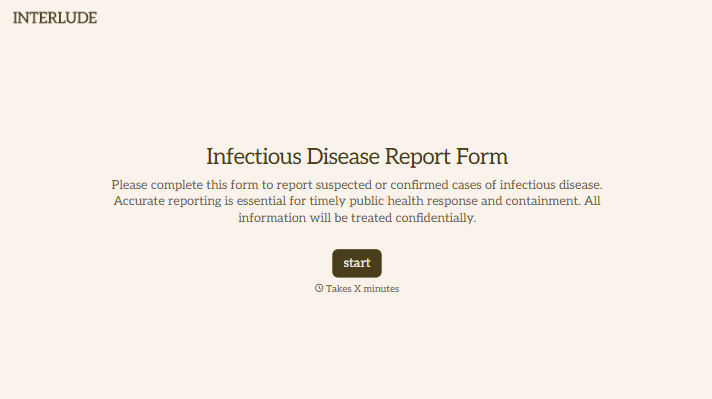
Infectious Disease Report Form
Give staff a clear way to report a suspected or confirmed infectious disease case. Collect relevant details, actions already taken, and contact information for follow-up.



A report arrives with a name and a brief mention of an illness. The dates are missing, it's unclear whether the case is suspected or confirmed, and the person responsible for follow-up has to start by asking basic questions. Typeform's infectious disease report form gives the initial report a consistent structure.
The person reporting records the relevant symptoms, dates, and case status, distinguishing what is known from what still needs confirmation. They describe any actions already taken and identify who can provide more information.
The designated reviewer gets a clearer starting point for follow-up. The organization has a record of what was reported and when. Configure the form for your setting's privacy, access, and reporting requirements before collecting sensitive health information.
An infectious disease report form collects information about a suspected or confirmed case for review by the appropriate person or team. Depending on the setting, it may record symptoms, onset dates, case status, and actions taken. The form supports information gathering; it does not establish a diagnosis.
An informal message can leave out details needed for follow-up, such as when symptoms began or whether a diagnosis has been confirmed. A structured form prompts the reporter to provide those details and makes uncertainty visible. Reviewers can then identify what information is available and what still needs checking.
Collect only the information needed for your reporting purpose, which may include:
- Reporter name, role, and contact details
- Date of the report
- Case identifier or necessary identifying information
- Suspected or confirmed disease, if known
- Relevant symptoms and onset date
- Basis for the reported case status, if available
- Relevant location or exposure details, if required
- Actions already taken
- Contact information for follow-up
Include “unknown” or “not yet confirmed” options so reporters aren't pushed to guess.
Use plain-language questions and separate symptoms, dates, and case status into distinct fields. Explain who should complete the form and who will review it. Make clear which details are required, and avoid broad prompts that invite unnecessary medical history or information about other people.
Do not assume that submitting an internal form fulfills an official reporting requirement. Before using it, confirm the applicable process with the responsible public health authority or your organization's designated lead. Include clear instructions about any separate reporting steps and where urgent concerns should be directed.
Get inspired by relevant templates and categories
3200+ Templates, 300+ Integrations
With Typeform, you can customize everything
Change text, colors, and even logos to match the look and feel of your brand. Then embed forms smoothly onto web and email.
Make forms feel effortless to fill out. Pace questions, call people by their name, and adapt the flow based on the data they share.
Stay efficient by connecting forms to your workflow. Typeform integrates with 300+ tools including Slack, Zapier, and HubSpot.