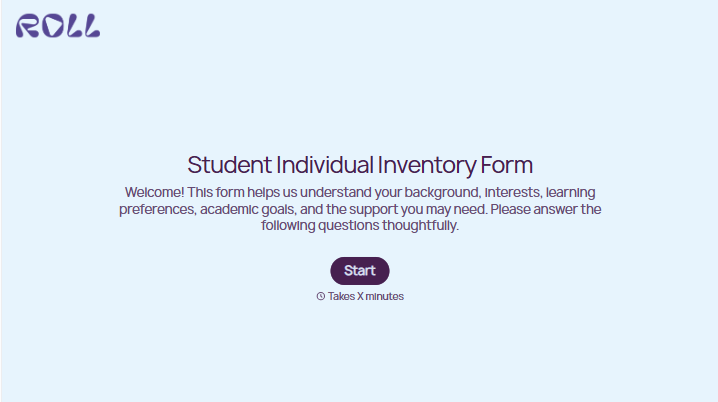
Student Individual Inventory Form
Give students a clear way to share their interests, learning experiences, and goals. Collect information that helps teachers and counselors get to know each student and prepare for useful conversations.



A student rarely speaks in class but enjoys explaining ideas to a small group. Another loves science and isn’t sure which subjects could help them pursue it. Grades alone won’t tell you either story. Typeform’s student individual inventory form gives students room to describe themselves beyond their academic record.
Students share their interests, strengths, school experiences, and plans. They can explain where they feel confident, what they find difficult, and what support they’d like to discuss. Keep questions appropriate to their age, and make personal topics optional so students can choose what they’re comfortable sharing.
Teachers and counselors get a starting point for conversations about learning and future plans. Students get a chance to raise something that might otherwise go unnoticed. Use their responses to guide follow-up rather than treating a completed form as a fixed picture of who they are.
A student individual inventory form collects information about a student’s background, interests, strengths, goals, and support needs. Schools can use it to help teachers or counselors get to know students and prepare for individual guidance. Its questions should reflect the purpose of the inventory and the students’ age.
Academic records show only part of a student’s experience. A dedicated form invites students to explain what they enjoy, where they’re struggling, and what they hope to do next. It also gives quieter students another way to start a conversation with a teacher or counselor.
Choose questions that support a clear educational purpose:
- Student name and relevant class or grade
- Interests, hobbies, and activities
- Subjects or tasks they feel confident in
- Learning experiences they find challenging
- Personal, academic, or career goals
- Support they would like to discuss
- Anything else they want their teacher or counselor to know
Collect family or other sensitive information only when it’s needed, and explain who will be able to read the answers.
Use clear, open prompts such as “What’s something you’re proud of learning?” or “When would extra help be useful?” Explain how the responses will be used and give students enough time to answer privately. Include a “prefer to discuss in person” option for topics they don’t want to describe in writing.
Yes, if you provide an update process. Interests, goals, and support needs can change during the school year. Invite students to revisit their answers before a guidance meeting or at a suitable review point, and record the update date so staff know which information is current.
Get inspired by relevant templates and categories
3200+ Templates, 300+ Integrations
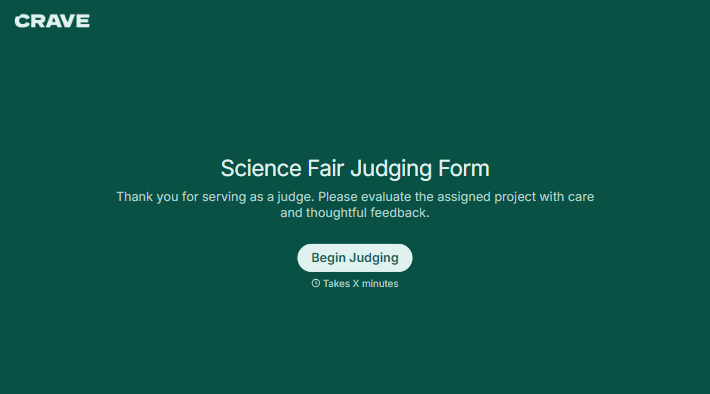
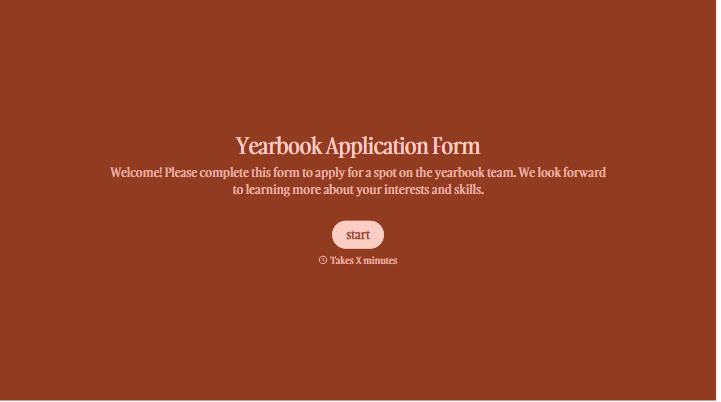
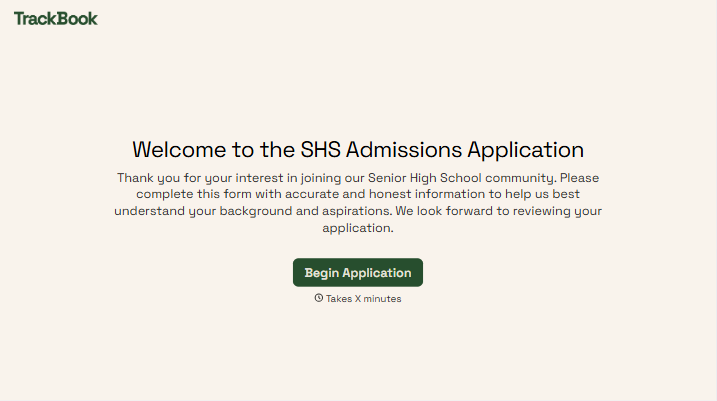
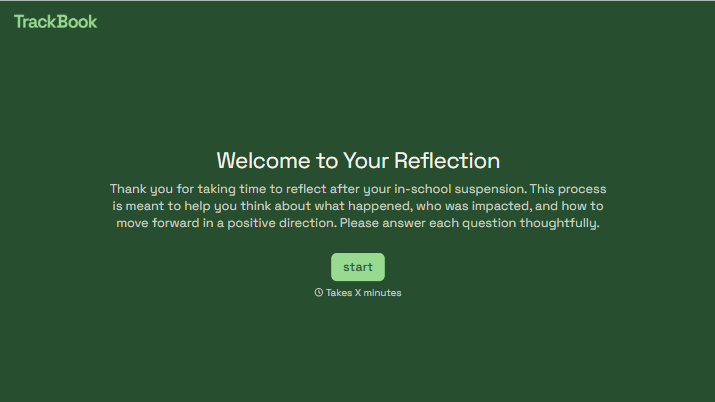
With Typeform, you can customize everything
Change text, colors, and even logos to match the look and feel of your brand. Then embed forms smoothly onto web and email.
Make forms feel effortless to fill out. Pace questions, call people by their name, and adapt the flow based on the data they share.
Stay efficient by connecting forms to your workflow. Typeform integrates with 300+ tools including Slack, Zapier, and HubSpot.