Client Information Form Template
Collect the details you need to serve your clients well, right from the start.



Every client relationship begins with information gathering. Every professional — whether an accountant, a lawyer, a designer, or a consultant — has wasted time chasing down basic details that should have been collected upfront. Incomplete intake means delays, miscommunication, and a first impression that says "disorganized."
This client information form template provides a professional, structured way to collect personal details, business information, project requirements, and communication preferences from new clients. Conditional logic tailors the experience, so a corporate client sees different fields than an individual, and a returning client can skip what's already on file.
Brand it with your logo, embed it on your website, or send a link directly after your first conversation. Submissions flow into your CRM, project management tool, or spreadsheet, giving your team everything they need to hit the ground running.
A client information form is a structured intake document used to collect essential details from new or existing clients. It captures contact information, business details, project requirements, and any preferences or constraints that will shape the working relationship. It's the foundation for organized, efficient client management.
First impressions go both ways. When you ask the right questions upfront and show that you're organized, clients feel confident that they're in good hands. A structured intake also prevents scope creep — when expectations and requirements are documented from day one, there's a reference point for every decision. It saves time, reduces rework, and sets the relationship up for success.
- Full name, company name, and job title
- Email, phone number, and preferred communication method
- Mailing address or business address
- Nature of the project or service needed
- Budget range and expected timeline
- How they heard about you (referral, search, advertising)
Start with the universal fields (contact details, communication preferences) and then add industry-specific sections using conditional logic. An architecture firm might add fields for property type and square footage. A financial advisor might ask about investment goals and risk tolerance. The template is a starting point; the customization makes it yours.
Both approaches work, but collecting information before the first meeting is more efficient. When you already have the basics (who they are, what they need, and what their budget looks like), your first conversation becomes strategic rather than administrative. Send the form immediately after scheduling the meeting, with a note explaining that it helps you prepare to make the most of their time.
Get inspired by relevant templates and categories
3200+ Templates, 300+ Integrations
Bank Reference Form
A reference request faxed to a bank branch and left sitting in a queue for weeks isn't the kind of turnaround a landlord or business can wait on. Collect the applicant's signed authorization and the specific details you need confirmed before the request even reaches the bank, so a decision isn't stuck behind a letter that hasn't come back yet.
View template
Bar Inventory Form
A bottle count eyeballed at the end of a shift and scrawled on a paper sheet doesn't hold up against a pour cost report that says something doesn't add up. Collect what your bar actually needs, item, count, and variance, on a schedule you can actually compare week to week.
View template
Equipment Inventory Form
Equipment that leaves a storage room in someone's arms, with no note about where it went, doesn't show up again until someone needs it and can't find it. Collect what your team actually needs, item details, condition, and who's got it, every time something moves.
View template
Distributor Registration Form
A distributor application that arrives as a scanned resale certificate attached to an email doesn't tell your sales team what territory they're actually asking for. Collect what your company actually needs, business information, tax documentation, and territory, before you set up an account.
View template
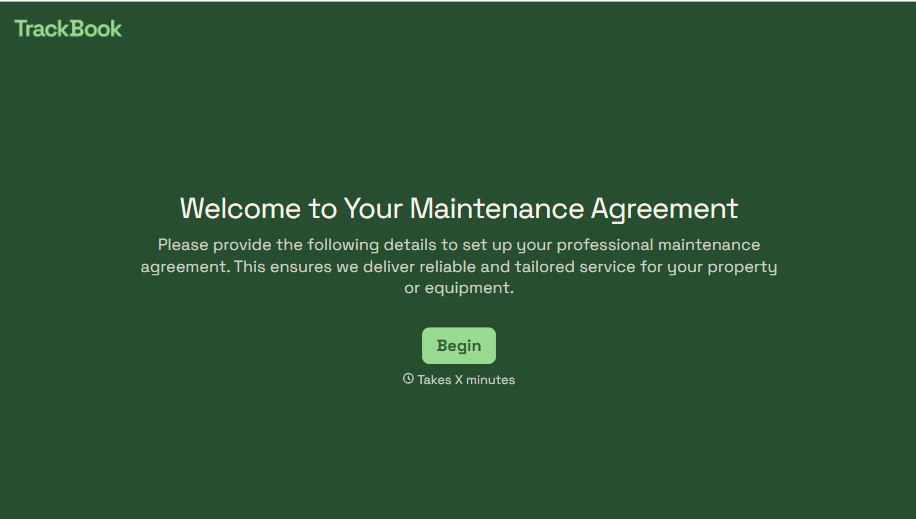
Maintenance Agreement Form
A maintenance plan agreed to over the phone isn't a contract your service team can actually work from, especially when nobody's sure whether the twice-a-year tune-up was part of the deal. Collect the equipment covered, service frequency, and a signed agreement before the first visit, so your team isn't guessing at scope once they're on-site.
View template
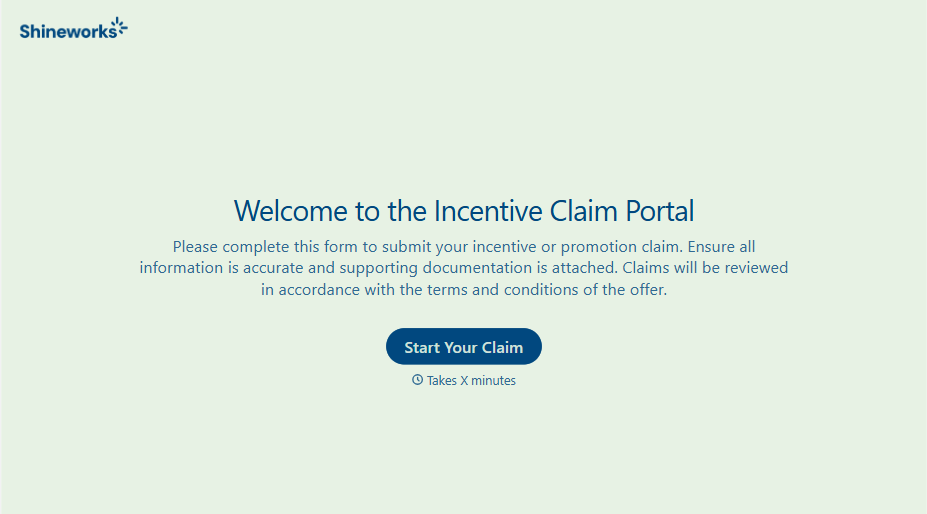
Incentive Claim Form
A rebate claim mailed in with a stapled stack of receipts isn't the kind of paperwork that gets processed quickly, especially when a required serial number turns out to be missing from page three. Collect proof of purchase, product details, and participant information upfront, so a claim doesn't bounce back for a missing document weeks later.
View template
With Typeform, you can customize everything
Change text, colors, and even logos to match the look and feel of your brand. Then embed forms smoothly onto web and email.
Make forms feel effortless to fill out. Pace questions, call people by their name, and adapt the flow based on the data they share.
Stay efficient by connecting forms to your workflow. Typeform integrates with 300+ tools including Slack, Zapier, and HubSpot.