Teacher Observation Form Template
Give evaluators a consistent framework for observing classroom instruction. This template captures what matters most in a format that's easy to complete during or after the observation.



Teacher observation feedback is only useful if it's consistent. When evaluators take unstructured notes or fill out paper forms with vague rating scales, the feedback that gets back to teachers is hard to act on. Different evaluators applying different standards makes professional development planning almost impossible.
A structured observation form solves the consistency problem. Typeform's conditional logic can present follow-up prompts based on initial ratings — if an evaluator marks a domain as "needs improvement," they're prompted to document specific observations. The one-question-at-a-time format keeps evaluators focused during a live classroom visit.
Customize the rubric to your school or district's evaluation framework, and you'll have a reliable tool that produces actionable feedback every time.
A teacher observation form is an evaluation tool used by administrators, instructional coaches, or peer evaluators to document and rate classroom instruction. It typically covers lesson planning, instructional delivery, student engagement, and classroom management. The completed form becomes a record that informs feedback conversations and professional development goals.
Structured observation forms make feedback more objective and easier to compare across time. Without a consistent format, evaluators tend to focus on whatever stood out in a given lesson rather than systematically assessing all relevant domains. A form keeps the evaluation comprehensive and creates documentation that supports performance reviews and professional growth planning.
Focus on the domains your evaluation framework prioritizes. Common areas to cover include:
- Learning objectives: Are they clearly stated and communicated to students?
- Instructional delivery: Is the content presented clearly and at an appropriate pace?
- Student engagement: Are students actively participating and on task?
- Differentiation: Is instruction adjusted to meet diverse learner needs?
- Classroom environment: Is the space organized, respectful, and conducive to learning?
- Use of assessment: Does the teacher check for understanding throughout the lesson?
Specific and observable is better than general and evaluative. "Students were off task for 15 minutes during independent work" is more useful than "engagement was low." Good observation notes describe what the evaluator saw and heard, leaving interpretation for the feedback conversation. Typeform's open-text fields are useful for capturing these specific observations alongside ratings.
Yes. You can create variations for different observation types — a full formal evaluation might take 30 minutes to complete, while a brief walkthrough observation might use a shorter version covering 3-4 core indicators. Conditional logic can route evaluators to the appropriate depth of questioning based on the observation type they select at the start.
Get inspired by relevant templates and categories
3200+ Templates, 300+ Integrations
School Photo Release Form
A photo consent checkbox buried on page 12 of an enrollment packet doesn't tell a teacher who's actually opted out before they post a class photo. Collect what your school actually needs, guardian consent, and exactly where a photo can be used, before the camera comes out.
View template
School Transfer Request Form
A transfer request dropped off at the district office isn't the kind of paperwork that gets processed before the semester it's meant for already started. Collect the student's information, reason for transfer, and supporting documentation upfront, so a request doesn't stall while the district follows up for a missing form.
View template
Student Recommendation Form
An email asking "can you write me a letter of recommendation" with no deadline attached isn't enough for a teacher to actually sit down and write one. Collect the program details, deadline, and what the student wants highlighted before the request lands in an inbox, so a letter doesn't get written in a rush the night it's due.
View template
Technician Evaluation Form
A ride-along evaluation scribbled on a clipboard in the truck isn't the kind of record that holds up months later when it's time to talk about a raise or a certification renewal. Collect specific skill, safety, and customer service observations while the job's still fresh, so a technician's review is built on more than a supervisor's memory of the day.
View template
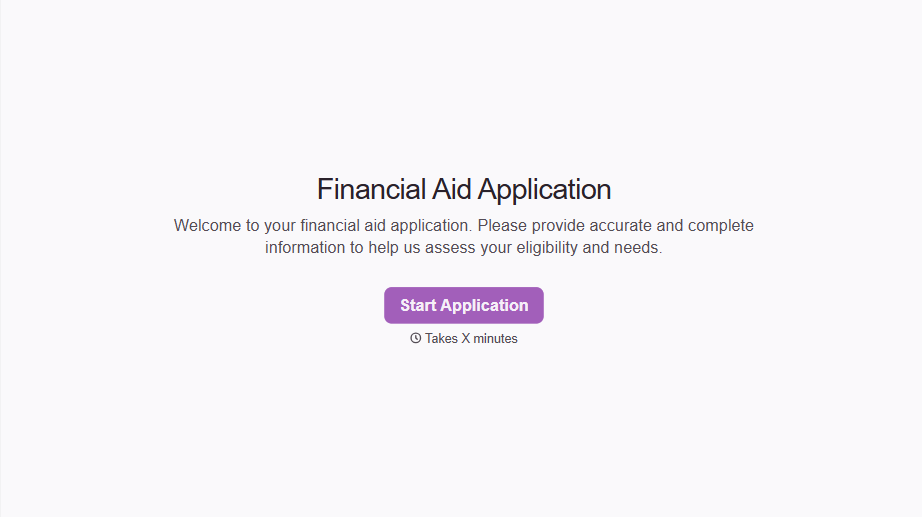
Financial Aid Application Form
A request for help with tuition mentioned to the front office in passing doesn't give your financial aid team anything to actually evaluate. Collect what your school actually needs, household information, income documentation, and need, before the deadline passes.
View template
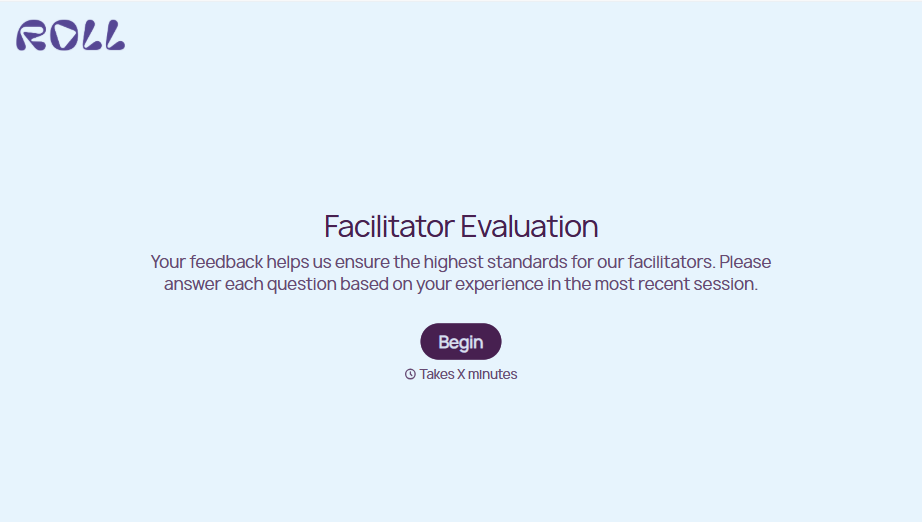
Facilitator Evaluation Form
A round of applause and a few nodding heads doesn't tell your program which facilitator's session actually clicked and which one needs coaching before the next cohort. Collect what your team actually needs, session details, ratings, and specific feedback, before everyone moves on to the next session.
View template
With Typeform, you can customize everything
Change text, colors, and even logos to match the look and feel of your brand. Then embed forms smoothly onto web and email.
Make forms feel effortless to fill out. Pace questions, call people by their name, and adapt the flow based on the data they share.
Stay efficient by connecting forms to your workflow. Typeform integrates with 300+ tools including Slack, Zapier, and HubSpot.