Transgender Survey Form
Give transgender people a way to share their experiences in their own words. Ask what’s working, where support falls short, and what they’d like to change.



A workplace updates its inclusion policy, but an employee still has to explain their name every time they contact IT. A community center welcomes everyone, but its registration form offers only two gender options. An invitation to belong means more when people can point out where the everyday experience doesn’t match. Typeform’s transgender survey form gives that feedback somewhere to go.
Respondents share the experiences relevant to your project, whether that’s accessing services, finding community support, or feeling included at work or school. Ask about gender identity only when it serves a clear purpose, allow people to describe themselves, and make personal questions optional. Being transgender doesn’t mean everyone has the same experiences or needs.
Organizers get specific feedback they can act on. Respondents get space to explain what would make a difference without having to speak for an entire community. Explain who will see the answers, how you’ll use them, and what happens next so people can decide what they’re comfortable sharing.
A transgender survey form is an online questionnaire used to gather feedback from transgender people about their experiences, needs, or views. Organizations might use it to improve services, review workplace inclusion, or plan community programs. Its questions should reflect a clear purpose rather than ask for personal information simply because respondents are transgender.
Policies and attendance numbers can’t tell you whether someone feels respected or can get the support they need. A survey lets you ask about those experiences directly. It can reveal practical changes, such as updating a registration form or making a complaints process easier to use. It also gives people an alternative to raising a concern in person.
Build the questions around what you need to learn:
- What’s working well in the service, space, or organization
- Where respondents have experienced barriers
- Whether they feel respected and supported
- What changes would help
- Whether they want to share anything else
Explain the survey’s purpose before the questions begin. If gender identity is relevant, allow self-description and a “prefer not to say” option. Avoid asking about medical history, transition, or previous names unless that information is necessary for the stated purpose.
Be specific about why you’re asking and what the answers could change. Share the survey through relevant, trusted channels, with permission from community organizers where appropriate. Keep it short, make sensitive questions optional, and explain who can access responses. Involving transgender people in reviewing the questions can help you catch assumptions before the survey goes out.
Yes, if the form and its settings are configured to avoid collecting identifying information. Leaving out the name field alone doesn’t guarantee anonymity: an email address or a combination of personal details may still identify someone. Explain any limits clearly, keep optional follow-up contact details separate from responses, and ask permission before sharing a quote.
Get inspired by relevant templates and categories
3200+ Templates, 300+ Integrations

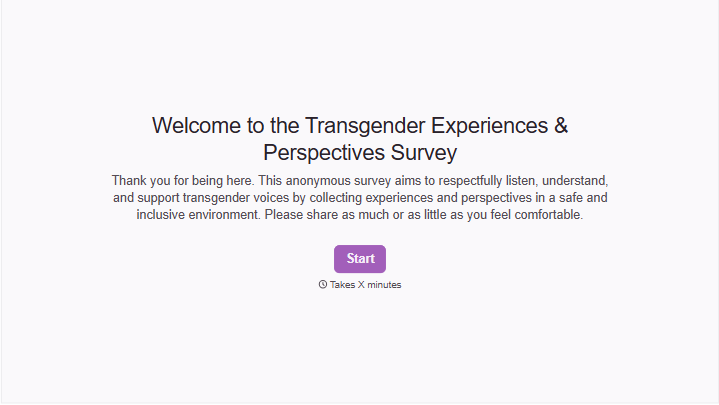

With Typeform, you can customize everything
Change text, colors, and even logos to match the look and feel of your brand. Then embed forms smoothly onto web and email.
Make forms feel effortless to fill out. Pace questions, call people by their name, and adapt the flow based on the data they share.
Stay efficient by connecting forms to your workflow. Typeform integrates with 300+ tools including Slack, Zapier, and HubSpot.