Worker Compensation Claim Form Template
Document workplace injuries quickly and consistently. This template gives employees a clear process for reporting incidents and starting the claims process.



When an employee is hurt on the job, delays in reporting can create complications for everyone. HR needs the details quickly, the employee needs to know what happens next, and the claims process needs accurate incident information to move forward. Paper forms and verbal reports introduce gaps at every step.
A digital worker compensation claim form standardizes what gets reported and how. Employees fill it out as soon as possible after an incident, with prompts that walk them through the event description, injury details, and treatment received. Typeform's conditional logic surfaces follow-up questions where they're relevant — for instance, asking about witnesses only when the employee indicates others were present.
Set up the form to notify HR automatically on submission, connect it to your incident management system, and ensure no claim starts with missing information.
A worker compensation claim form documents the details of a work-related injury or illness so an employee can access benefits, medical coverage, and any applicable wage replacement. It's the official start of the claims process and creates the written record that HR, insurers, and regulators may all need to reference.
A consistent form ensures the right information is captured while the incident is still fresh, which matters both for claim accuracy and for any later dispute resolution. It also signals to employees that there's a clear, supported process for reporting injuries — which encourages timely reporting rather than delays that complicate claims.
Make sure to cover the core incident, injury, and follow-up details:
- When and where exactly did the incident occur?
- What was the employee doing at the time?
- Describe the injury or illness, including the body part affected.
- Was medical attention sought? If so, provide the provider's name and date.
- Were any coworkers or supervisors present at the time?
- Has the employee been able to continue working since the incident?
An incident report documents that an event occurred — it's typically filled out immediately and covers the facts of what happened. A workers comp claim form is specific to requesting benefits and involves more detail about the injury, treatment, and impact on work. In practice, the two are often collected together, and combining them in one form flow reduces duplication for the employee.
Make the reporting process as easy as possible. A mobile-friendly digital form that employees can access from their phone immediately after an incident removes a major barrier. Pair that with a clear workplace policy about reporting timelines and the consequences of delayed reporting — not as a threat, but as a practical guide that protects both the employee and the organization.
Get inspired by relevant templates and categories
3200+ Templates, 300+ Integrations
Bank Reference Form
A reference request faxed to a bank branch and left sitting in a queue for weeks isn't the kind of turnaround a landlord or business can wait on. Collect the applicant's signed authorization and the specific details you need confirmed before the request even reaches the bank, so a decision isn't stuck behind a letter that hasn't come back yet.
View template
X-Ray Release Form
A phone call asking to send X-rays to a new provider isn't an authorization your compliance file can rely on. Collect patient information, the receiving provider's details, and a signed authorization before the images go out, so your front desk isn't scrambling to prove who approved a release.
View template
Work From Home Request Form
A Slack message asking to work from home on Thursday isn't a request anyone can track, especially once the same employee has asked five different ways over a month. Collect the request type, dates or schedule, and manager approval in one place, so HR isn't reconstructing who's working where from a scattered inbox.
View template
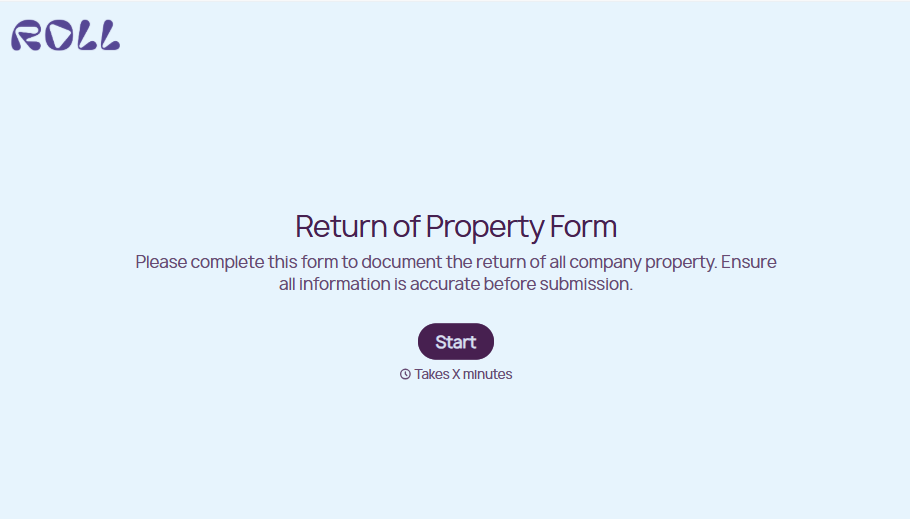
Return of Property Form
A property checklist stapled to an exit interview packet isn't a record anyone can rely on when a laptop turns up missing three weeks later. Collect itemized equipment details, condition at return, and a signed acknowledgment before an employee's last day, so IT isn't chasing down a laptop that already walked out the door.
View template
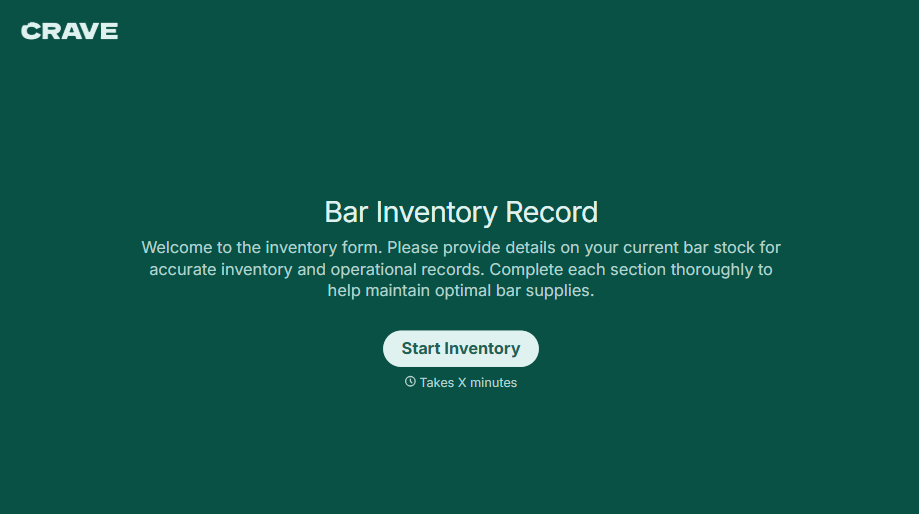
Bar Inventory Form
A bottle count eyeballed at the end of a shift and scrawled on a paper sheet doesn't hold up against a pour cost report that says something doesn't add up. Collect what your bar actually needs, item, count, and variance, on a schedule you can actually compare week to week.
View template
With Typeform, you can customize everything
Change text, colors, and even logos to match the look and feel of your brand. Then embed forms smoothly onto web and email.
Make forms feel effortless to fill out. Pace questions, call people by their name, and adapt the flow based on the data they share.
Stay efficient by connecting forms to your workflow. Typeform integrates with 300+ tools including Slack, Zapier, and HubSpot.