Everyone adopted AI. No one got faster.
Most teams still can't respond to leads fast enough.
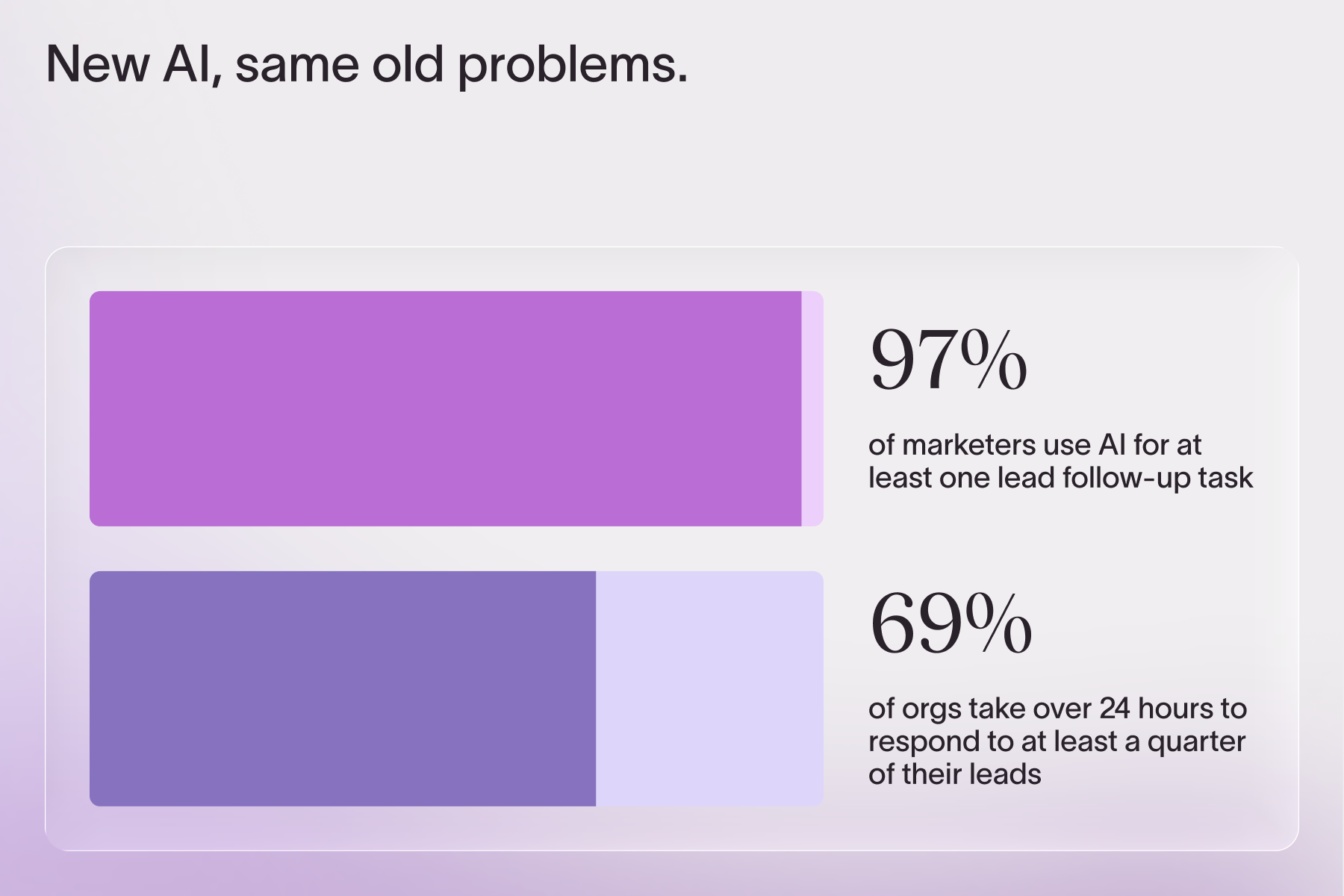
Nearly every team, from engineering to sales, has adopted AI in the name of efficiency, but marketing has gone all-in. 97% percent of teams now use AI for at least one part of lead follow-up. And yet, seven in 10 organizations still leave a quarter or more of their leads waiting over 24 hours for a response.
That’s the AI paradox: new tools, same unsolved problem. Marketing teams have added AI to their existing processes without redesigning those processes around it, so leads still aren't hearing back.
The result? Leads still move through the same disconnected systems, still wait for responses, still fall through the cracks of manual handoffs—now with automation.
To understand what’s really slowing down marketing teams, we surveyed 400 US marketers in May 2026 about how they manage inbound leads and where AI fits in.
Key findings
- AI adoption doesn’t mean acceleration. 97% of marketing teams use AI for at least one lead follow-up activity, but 69% of organizations take more than 24 hours to respond to at least a quarter of their leads.
- Half of marketing teams don't even auto-reply. Only 51% automatically send a follow-up email once someone submits a form.
- Leads travel farther than they should. 68% of teams use four or more platforms between lead capture and first response, and 87% hand leads off two or more times before anyone replies.
- Manual work is eating the week. 70% of marketing teams spend six or more hours every week managing inbound lead information.
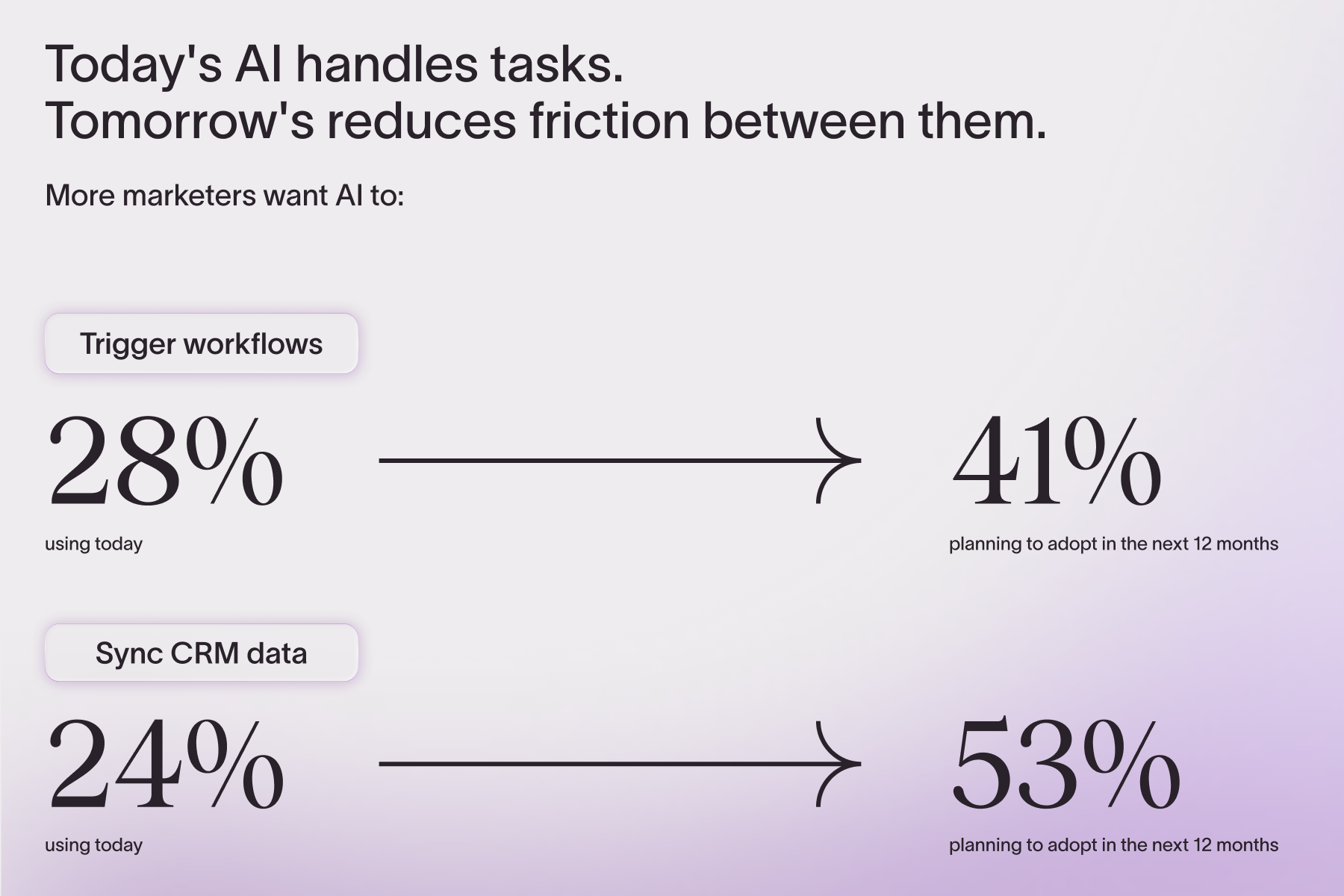
- The next AI investment is the workflow, not the task. Marketers expect AI to absorb CRM updates (53%), email nurture (48%), and scheduling (46%) in the next 12 months.
Delayed responses aren’t a data problem
Bad data is a convenient scapegoat, but it's not what marketers say is actually happening.
78% of marketers report they already collect enough information to personalize a response to every inbound lead. Yet 65% struggle to turn that information into action.
Lead capture isn’t the problem, and neither is data. What marketers are struggling with is everything that happens after they collect lead data. Before following up, 87% of marketers hand off leads at least twice. On top of that, 68% route leads through four or more platforms between lead capture and first response. Every handoff adds delay, and every delay is another chance for the lead to move on before anyone responds.
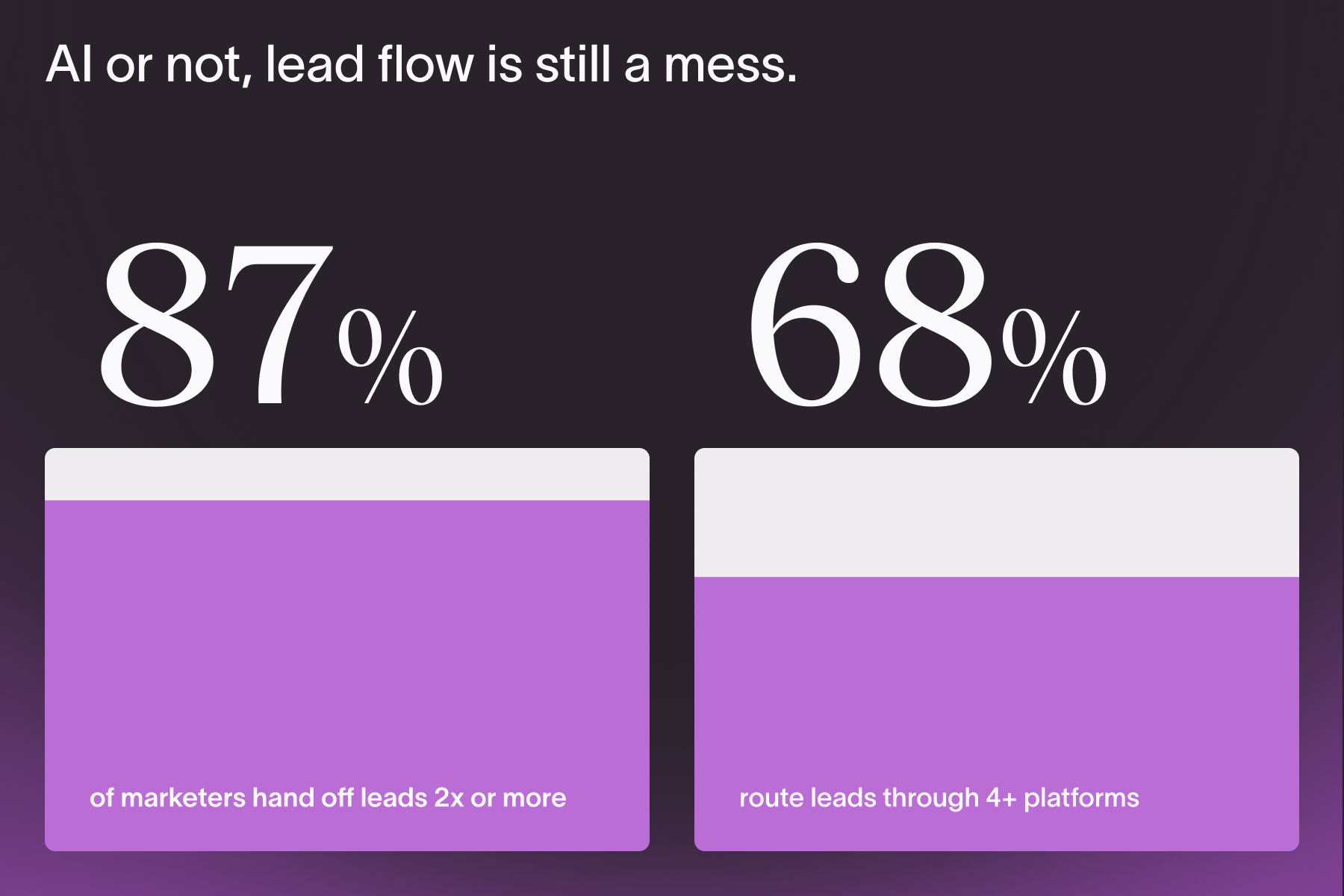
It's a poor customer experience and an expensive one for teams. Fragmentation costs 70% of marketing teams six or more hours of manual work every week.
Left on read: How slow follow-up impacts your pipeline
The moments right after a lead shows intent—submits a form, checks out your pricing page, signs up for your event—should be the easiest time to build momentum. Intent is high, attention is earned, and the next step is obvious.
Instead, potential customers get left on read. And when momentum stalls, the damage isn’t contained to one missed conversation. Marketers say delayed responses contribute to:
- Lost revenue (50%)
- Lower conversion rates (49%)
- More manual work (48%)
- Longer sales cycles (46%)
And notice that no single consequence dominates. Roughly half of marketers report each one. Slow follow-up translates to lost revenue, extra work, and slower deals all at once, and it hits the bottom line—hard.
Between intent and action, AI still isn't showing up
You might expect AI to be the fix. Marketers certainly aren't short on it. Half (50%) already use AI to analyze and visualize data, and adoption stretches across the lead generation workflow:
- 46% book demos or follow up with leads
- 45% route and prioritize leads
- 44% write emails or text messages
- 43% clean or enrich records
- 41% summarize lead information
Each makes task completion faster, but none close the gap between intent and action—the gap that lives between tasks, during handoffs, in the spaces no single person or tool owns.
The problem is that few marketers are using AI to do the work that would bridge the gap. Only 28% of marketing teams use AI to trigger workflows for lead routing and follow-up, and 24% use it to sync information into their CRM.
Without redesigning workflows with AI in mind, that gap persists, and lead follow-up remains unchanged.
What high performers do differently
Nearly all marketers expect AI workflows to replace at least one inbound lead platform, process, or tool in the next 12 months. But adding more AI doesn't guarantee you’ll close the gap between intent and action.
The marketers getting it right follow the same pattern: they’re more likely to use AI throughout the follow-up process, especially in the moments that keep information moving.
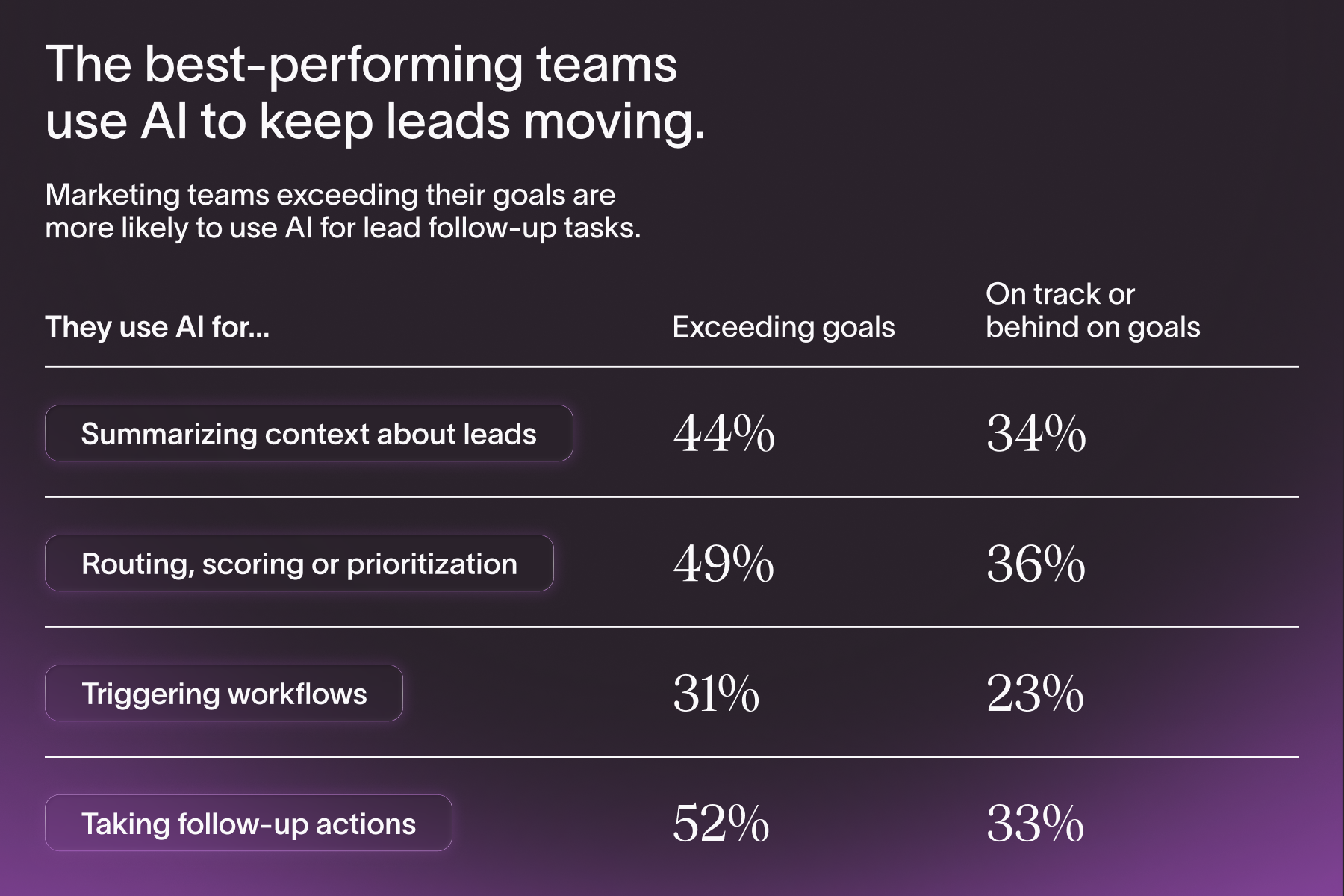
The teams exceeding their goals shorten the distance between intent and action. And more teams are heading in the same direction. Over the next 12 months, marketers expect AI to absorb the tasks that currently slow lead response.
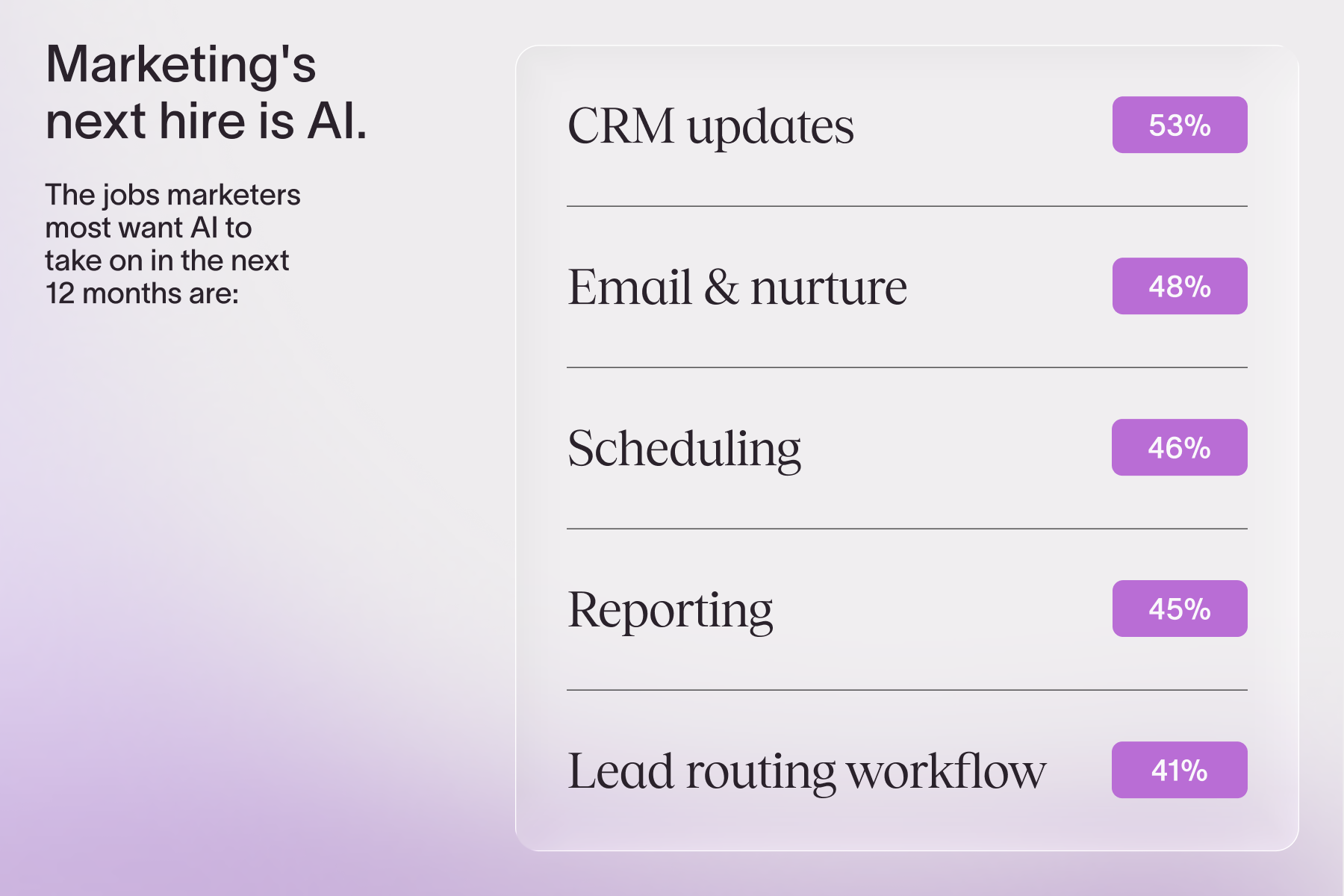
The next competitive divide is already forming: teams that use AI to complete tasks vs. teams that use it to keep leads moving.
AI's real job is the in-between
If there’s one thing the data makes clear, it’s that capturing customer intent isn’t the real challenge. Where marketers are struggling is with what happens next.
How do marketers bridge the gap between intent and timely action? Everyone thought AI would help, so they bought in, bolted it onto existing processes, and started completing tasks faster.
But adding more AI isn’t the solution. It’s about redesigning workflows so AI can handle what happens between tasks—like automatically following up with leads the moment they say, “Hey! I’m interested.”
Typeform has spent over a decade making data collection feel like a conversation, because when asking feels human, people share better answers. And when you've powered millions of those conversations, you learn exactly where they die: not at the form, but at the handoff.
We built Typeform Growth Flow for those in-between moments. Instead of speeding up individual tasks, it connects them. Every submission triggers the next right action automatically. AI does the connective work, not just the task.
Want to see it in action? Explore Growth Flow.
Methodology
In May 2026, we surveyed 400 marketers at the manager level or above. One-third of respondents worked at organizations with 1,000 employees or more. At the time of the survey, all respondents were located in the US and were 18 years or older.
Appendix: Additional findings
On lead capture and follow-up:
Nearly two-thirds of marketing teams (66%) use an online contact form to generate inbound leads.
On process breakdowns:
More than half of marketers (51%) say leads often get routed to the wrong place, and 43% say misalignment between marketing and sales is responsible for delayed lead responses.
On why good data goes nowhere:
Marketers pointed to three types of barriers that prevent them from turning customer data into timely, personalized responses:
- Missing context: 52% say inconsistent or open-text responses make information difficult to interpret, and 36% say lead information is outdated or inaccurate.
- Poor accessibility: 48% say customer information is fragmented across systems or difficult to access.
- Slow workflows: 51% say information doesn't reach the right person quickly enough, and 48% say manual processes create delays or information loss.
On where AI adoption still lags:
While AI adoption is widespread, only 18% of marketing teams use it to generate reports or insights.


.webp)