Beck Depression Inventory (BDI) Questionnaire Form
By the time a paper Beck Depression Inventory (BDI) gets scored by hand and filed in a chart, the moment to act on an elevated result may have already passed. Score responses the moment they come in, flag anything that needs immediate attention, and route the result to the right person before the appointment ends.



Depression screening usually still happens on paper: a clipboard in the waiting room, a scoring key a staff member runs by hand, a result that sits in a folder until a clinician has a free minute to look at it. That gap between "patient answered" and "someone qualified saw the answer" is where risk hides.
Typeform's BDI questionnaire form collects the same structured self-report items clinicians already rely on, scores them automatically, and uses conditional logic to act on what the answers actually say. A response on the suicidal-thoughts item can branch straight to a "please contact us now" screen and a support-line number, instead of waiting in a queue behind routine intake paperwork. A low-severity result can route to a standard follow-up; an elevated one can page a clinician directly.
Connect the form to your practice management or EHR system through Zapier, and a completed screening can create a chart note, alert a provider, or schedule a follow-up automatically, and no one has to remember to check a folder.
It's an online version of the BDI self-report screening: a structured set of questions covering symptom areas like mood, sleep, appetite, energy, and self-worth, each scored on a severity scale, that clinicians use to gauge how severe a patient's depressive symptoms are. Digitizing it means the score is calculated the moment the patient submits, instead of by hand afterward.
A paper form's score only exists once someone sits down and adds it up. A digital form calculates it instantly and can act on the result immediately, flag it, route it, escalate it, instead of that number waiting in a stack until someone has time to look.
Structure it around what the screening and the visit actually need:
- Patient identifying and intake information
- The licensed BDI or BDI-II item set, administered in its required format
- Automatic scoring against the instrument's official thresholds
- Conditional branching on high-risk responses (particularly suicidal ideation) to crisis resources or an immediate staff alert
- Routing of the completed score to the right clinician or chart
No. The BDI is a screening and severity-tracking tool, not a diagnostic instrument, a score indicates the likelihood and severity of depressive symptoms, but a diagnosis requires clinical evaluation by a qualified professional. The form should make that distinction clear to whoever fills it out, and a high score should prompt a conversation with a clinician, not stand in for one.
It should. Pair the suicidal-ideation item with conditional logic so any response above "none" immediately surfaces crisis resources on-screen and, separately, alerts a clinician or staff member in real time—this shouldn't wait for someone to review submissions later in the day.
Get inspired by relevant templates and categories
3200+ Templates, 300+ Integrations
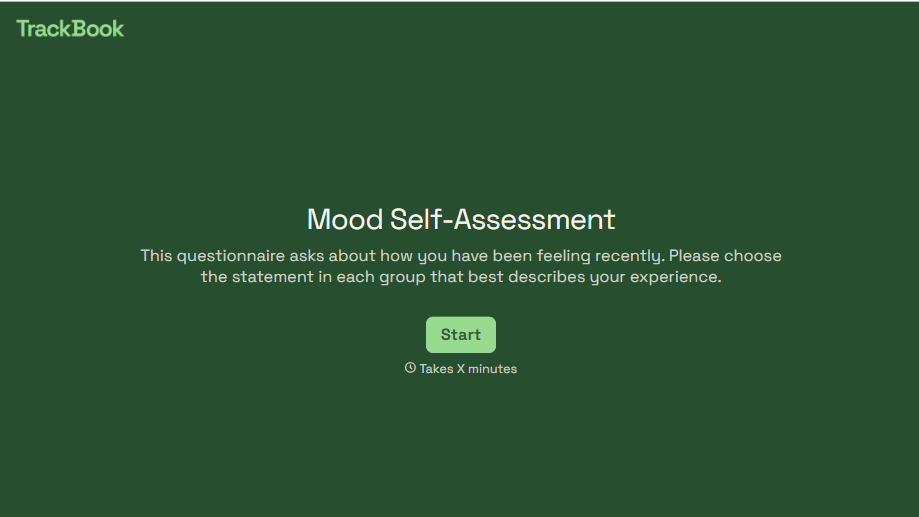
Beck Depression Inventory (BDI) Questionnaire Form
By the time a paper Beck Depression Inventory (BDI) gets scored by hand and filed in a chart, the moment to act on an elevated result may have already passed. Score responses the moment they come in, flag anything that needs immediate attention, and route the result to the right person before the appointment ends.
View template

With Typeform, you can customize everything
Change text, colors, and even logos to match the look and feel of your brand. Then embed forms smoothly onto web and email.
Make forms feel effortless to fill out. Pace questions, call people by their name, and adapt the flow based on the data they share.
Stay efficient by connecting forms to your workflow. Typeform integrates with 300+ tools including Slack, Zapier, and HubSpot.