Endodontic Referral Form
Give the endodontist the findings and details a patient can't relay. Collect the tooth number, test results, the working diagnosis, and radiographs in one referral.



A patient arriving for a root canal knows that they were told they needed one. They don’t know which tooth was tested, what the cold test showed, or whether you suspected a fracture. So the endodontist starts the diagnosis over, re-takes the radiograph the patient has already completed, and the patient wastes more time waiting for care. Typeform's endodontic referral form sends the findings ahead of the patient, so the specialist reads the case before the appointment rather than reconstructing it during one.
Referring dentists identify the tooth by number, note the tests performed and what they showed, and give the working diagnosis so you can start treatment as soon as possible. An initial referral brings up the pulpal and periapical findings and any restorative plan, while a retreatment case brings up when the original treatment was done, what's changed since, and what the current radiograph shows. Radiographs are uploaded with the referral itself.
Endodontists can identify the affected tooth, read your findings, and preview the dental images before the patient sits down. Treatment starts at the first appointment, so the patient isn’t left waiting in pain for care.
An endodontic referral form is an online form for sending a patient to an endodontist with the clinical picture attached. It collects the tooth in question, the tests performed and their results, the working diagnosis, relevant history, radiographs, and how urgent the case is. General dentists use endodontic referral forms to hand over a diagnosis rather than a patient who knows only that they need a root canal.
Without an endodontic referral form, a referral is a vague phone call and usually involves a patient relaying whatever information they remembered their referring dentist saying. The specialist can't tell which tooth was affected or tested or what those findings were, causing repeat testing. A case that could have been treated in the first visit becomes two separate appointments. An endodontic referral form saves time on all ends, sending the findings along with the referral, so treatment can start immediately.
Send what the specialist needs:
- Tooth number and the numbering system used
- Tests performed and their results
- Working pulpal and periapical diagnosis
- Relevant dental and medical history
- Radiographs and urgency
Name the numbering system on the form, not just the number. Universal, FDI, and Palmer all use different descriptions, and a referral reading upper left molar could mean either of two teeth. On the endodontic referral form, ask for the number and the numbering system used, and include the quadrant in words as a cross-check.
Yes. Referring dentists can upload periapical or panoramic images with File Upload, available on paid Typeform plans. They can add images or PDFs up to 10MB each, which suits an exported JPEG or PDF, though a full DICOM set often runs larger and may be better sent through your imaging system with the referral pointing to it. Every image arrives attached to the referral.
Get inspired by relevant templates and categories
3200+ Templates, 300+ Integrations
X-Ray Release Form
A phone call asking to send X-rays to a new provider isn't an authorization your compliance file can rely on. Collect patient information, the receiving provider's details, and a signed authorization before the images go out, so your front desk isn't scrambling to prove who approved a release.
View template
Palliative Care Assessment Form
A symptom check done verbally during a rushed home visit isn't the kind of record that shows whether pain management is actually working from one visit to the next. Collect symptom severity, functional status, and psychosocial needs consistently, so a care team can see change over time instead of relying on memory of the last visit.
View template
Dental Treatment Plan Form
A treatment plan explained chairside, in the few minutes right after an exam, doesn't hold up when a patient's trying to remember it at the front desk. Collect what your practice actually needs, the recommended procedures, cost estimate, and signed consent, before treatment gets scheduled.
View template
Medical Physical Exam Form
A health history filled out on a clipboard in the waiting room, minutes before being called back, isn't a history anyone fills in completely. Collect what your provider actually needs, patient information, health history, and current symptoms, before the exam starts.
View template
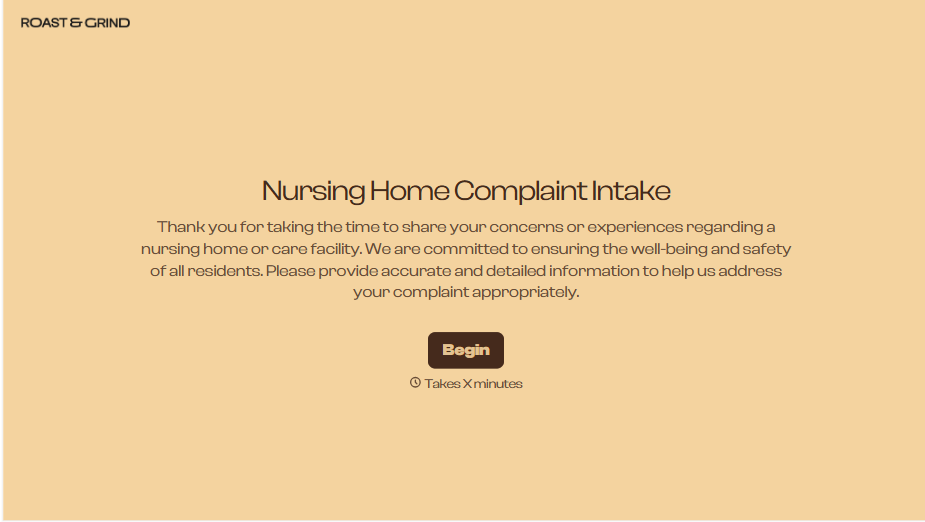
Nursing Home Complaint Form
A family member who calls the front desk about a missed medication or an unanswered call light often gets a verbal apology and nothing written down, no record that it happened, no way to tell if it's the third time this month or the first. And if what's actually being reported is abuse or neglect, a facility's own intake form isn't where that report should end, or even start.
View template
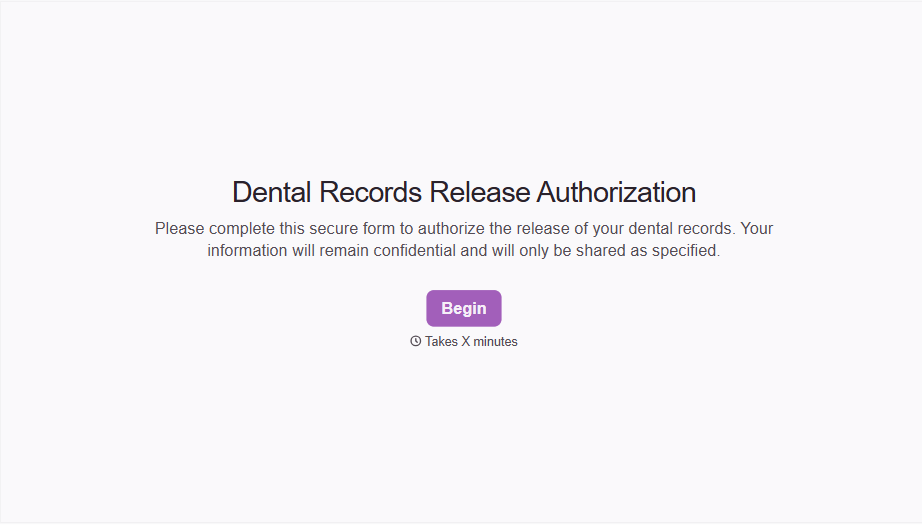
Dental Record Release Form
A release that just says "I authorize my records to be sent" doesn't say which records, sent to whom, or for how long that authorization is good, and HIPAA has a specific list of what actually has to be in there for the release to count as valid. Spell out what's being released, to whom, and until when, before the request goes out.
View template
With Typeform, you can customize everything
Change text, colors, and even logos to match the look and feel of your brand. Then embed forms smoothly onto web and email.
Make forms feel effortless to fill out. Pace questions, call people by their name, and adapt the flow based on the data they share.
Stay efficient by connecting forms to your workflow. Typeform integrates with 300+ tools including Slack, Zapier, and HubSpot.