Friendship Survey Form
Matching two people because they happened to sign up for a buddy program on the same day tells you almost nothing about whether they'll actually get along. Ask what someone's looking for in a friendship before you pair them with anyone.



Buddy and friendship matching programs, whether they're run by a senior center, a campus group, or a community organization, often pair people based on whoever's available that week, or a five minute conversation at intake. Two people can end up matched with nothing in common besides open availability, while someone who'd have been a great fit gets missed entirely because they signed up a day later.
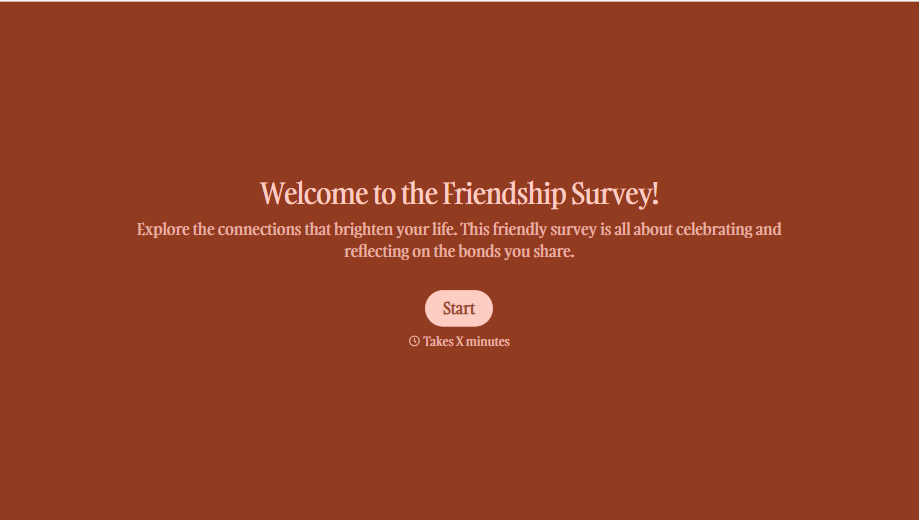
Typeform's friendship survey form asks each participant what actually matters for a good match: interests, availability, and how they prefer to connect, then uses conditional logic to branch from there. Someone looking for an in person activity partner can branch to questions about hobbies and schedule; someone looking for a regular phone check-in can branch to questions about the best time to call, instead of everyone answering the same fixed list regardless of what kind of connection they're actually after.
Every response lands in one record instead of notes from an intake conversation that only one staff member remembers. Connect the form to your CRM or a matching spreadsheet through Zapier, and two compatible responses can get flagged for review automatically. Ask for it before you start matching, and pairs start the relationship with something in common instead of just open timing.
A friendship survey form is an online form organizations use to collect what someone's looking for in a friendship or buddy match, like interests, availability, and preferred way of connecting, before pairing them with anyone. It replaces a quick intake conversation with a consistent record for every participant.
Matching by availability alone tells you two people can meet at the same time, not that they'll have anything to talk about once they do. A survey collects what each person actually wants out of the match, so pairing decisions are based on more than a shared open slot.
Ask for what your matching process will actually use:
- Name and contact information
- Interests and hobbies
- Availability and preferred way of connecting, like phone, text, or in person
- What kind of connection they're looking for
- Any preferences or needs relevant to the match
No. The form tells you what someone's looking for, it doesn't guarantee two people will actually connect once they're paired. It gives whoever's making the match more to work with than a name and an open time slot, but the relationship still depends on the people in it.
Not entirely on its own, but you can get close. Connect the form to a spreadsheet or CRM through Zapier and set up scoring or tagging based on shared interests or availability, so it likely matches the surface for review instead of someone reading through every response by hand.
Get inspired by relevant templates and categories
3200+ Templates, 300+ Integrations
With Typeform, you can customize everything
Change text, colors, and even logos to match the look and feel of your brand. Then embed forms smoothly onto web and email.
Make forms feel effortless to fill out. Pace questions, call people by their name, and adapt the flow based on the data they share.
Stay efficient by connecting forms to your workflow. Typeform integrates with 300+ tools including Slack, Zapier, and HubSpot.