Peer Evaluation Form Template
Give colleagues a structured, honest way to provide feedback to each other so development conversations are grounded in specifics.



Asking colleagues to evaluate each other without a clear framework tends to produce vague, unhelpful responses. People aren't sure what to comment on, they default to generic praise, or they hesitate to share constructive feedback because it feels too direct without a structure to give it context.
A peer evaluation form changes this. Typeform guides evaluators through specific competency areas one at a time, making the process more focused and easier to complete. Conditional logic can adapt the form based on the role or team of the person being evaluated. Responses aggregate in a way that lets HR or managers see patterns across feedback from multiple peers. Anonymous response options can also increase honesty, which makes the feedback more useful.
Customize the form with your company's competency framework, rating scales, and development priorities. Share it via your HR system or a direct link at the start of your review cycle.
A peer evaluation form is a structured feedback survey completed by a colleague about another colleague's performance. It assesses competencies like collaboration, communication, reliability, and contribution, providing a perspective that supplements manager-only evaluations.
Peer feedback adds dimensions to performance reviews that managers can't always see. Colleagues observe day-to-day collaboration, communication style, and how someone shows up under pressure in ways that aren't always visible upward. When structured well, peer feedback leads to richer development conversations and more balanced performance assessments.
Focus on observable behaviors and contributions:
- How effectively does this person collaborate with the team?
- How clearly do they communicate — in meetings, written communication, and under pressure?
- Do they follow through on commitments reliably?
- How do they handle disagreement or conflict?
- What's their biggest contribution to the team?
- What's one area where they could have more impact?
It depends on your culture and the purpose of the feedback. Anonymous evaluations often produce more honest responses, but they can also lead to feedback that's harder to contextualize or act on. Named evaluations are more accountable and often more constructive. Many organizations offer both options and let managers decide based on team dynamics.
Use a structured form with specific, behavioral questions rather than open-ended prompts like "What do you think of this person?" Train evaluators on common biases (like recency bias or halo effect) before the review cycle starts. Reviewing feedback at a group level rather than acting on any single comment also helps reduce the impact of individual bias.
Get inspired by relevant templates and categories
3200+ Templates, 300+ Integrations
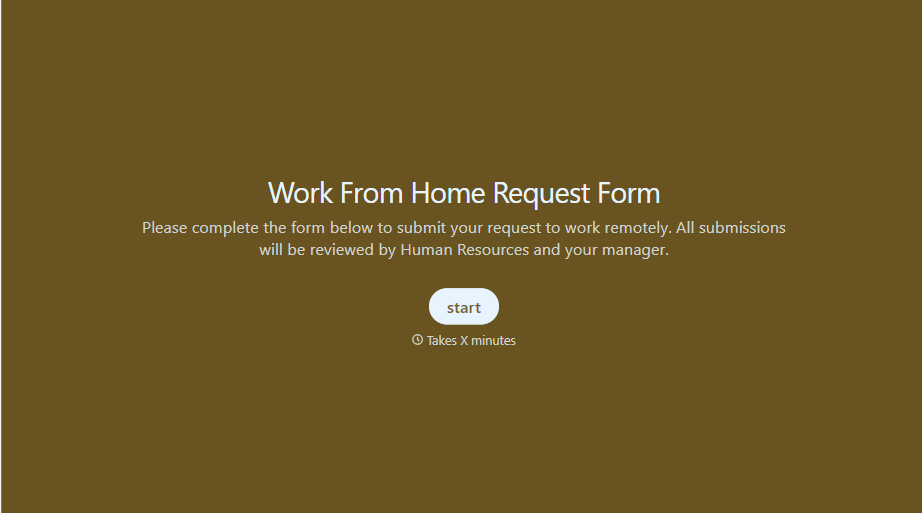
Work From Home Request Form
A Slack message asking to work from home on Thursday isn't a request anyone can track, especially once the same employee has asked five different ways over a month. Collect the request type, dates or schedule, and manager approval in one place, so HR isn't reconstructing who's working where from a scattered inbox.
View template
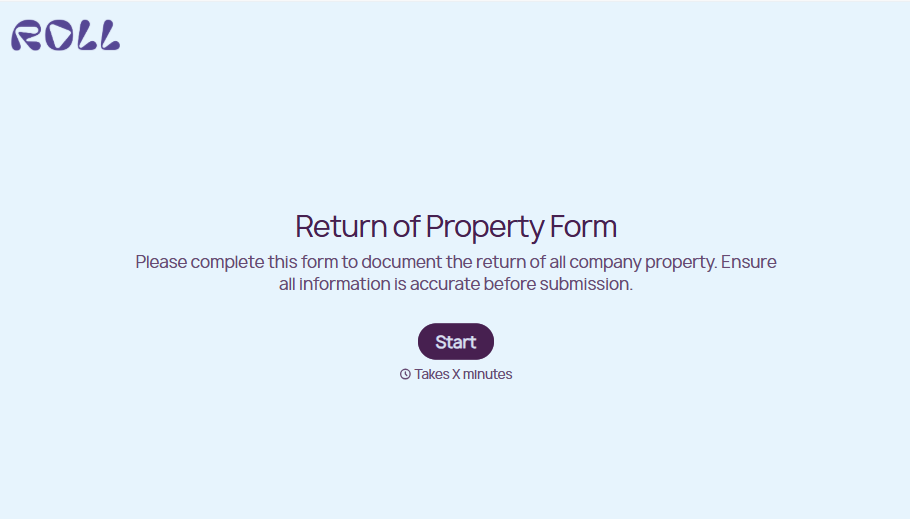
Return of Property Form
A property checklist stapled to an exit interview packet isn't a record anyone can rely on when a laptop turns up missing three weeks later. Collect itemized equipment details, condition at return, and a signed acknowledgment before an employee's last day, so IT isn't chasing down a laptop that already walked out the door.
View template
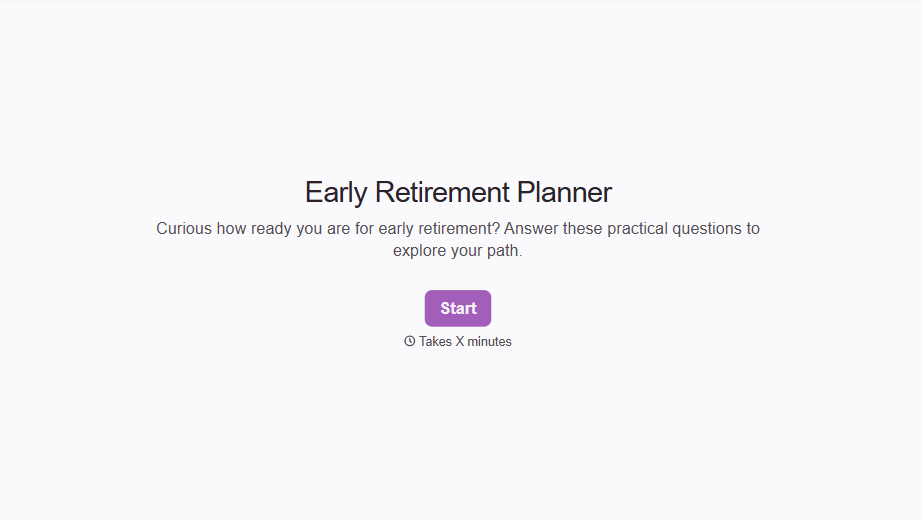
Early Retirement Form
A retirement mentioned to a manager in conversation doesn't give HR anything to actually process, and if there's an incentive deadline attached, the date that conversation happened can matter more than anyone realized at the time. Collect what your HR team actually needs, employee information, requested date, and benefit elections, before a window closes.
View template
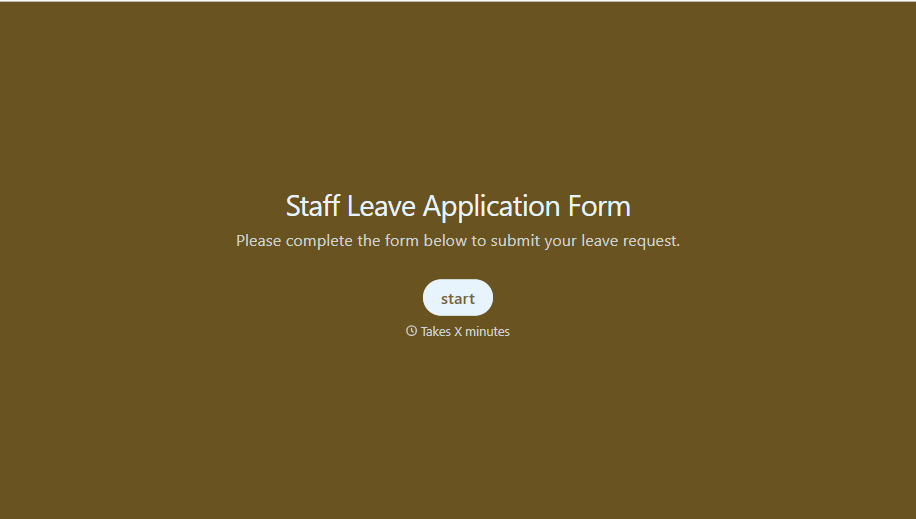
Staff Leave Application Form
A vacation request approved with a thumbs-up emoji in Slack isn't the kind of record payroll can work from when it's time to reconcile someone's leave balance. Collect the leave type, dates, and manager approval in one place, so a team doesn't accidentally double-book someone's time off.
View template
Disability Accommodation Request Form
A quiet word to a manager about needing a different desk setup isn't the kind of request that starts a documented process. Collect the specific accommodation needed and any supporting information before a decision gets made informally, so a request doesn't get lost between a hallway conversation and HR's desk.
View template
Technician Evaluation Form
A ride-along evaluation scribbled on a clipboard in the truck isn't the kind of record that holds up months later when it's time to talk about a raise or a certification renewal. Collect specific skill, safety, and customer service observations while the job's still fresh, so a technician's review is built on more than a supervisor's memory of the day.
View template
With Typeform, you can customize everything
Change text, colors, and even logos to match the look and feel of your brand. Then embed forms smoothly onto web and email.
Make forms feel effortless to fill out. Pace questions, call people by their name, and adapt the flow based on the data they share.
Stay efficient by connecting forms to your workflow. Typeform integrates with 300+ tools including Slack, Zapier, and HubSpot.