Clay boosts form completion rates by 70% with a one-question Typeform
See how Clay replaced a 5-6 field qualification form with a single LinkedIn URL—and turned one input into 20+ data points without slowing anyone down.
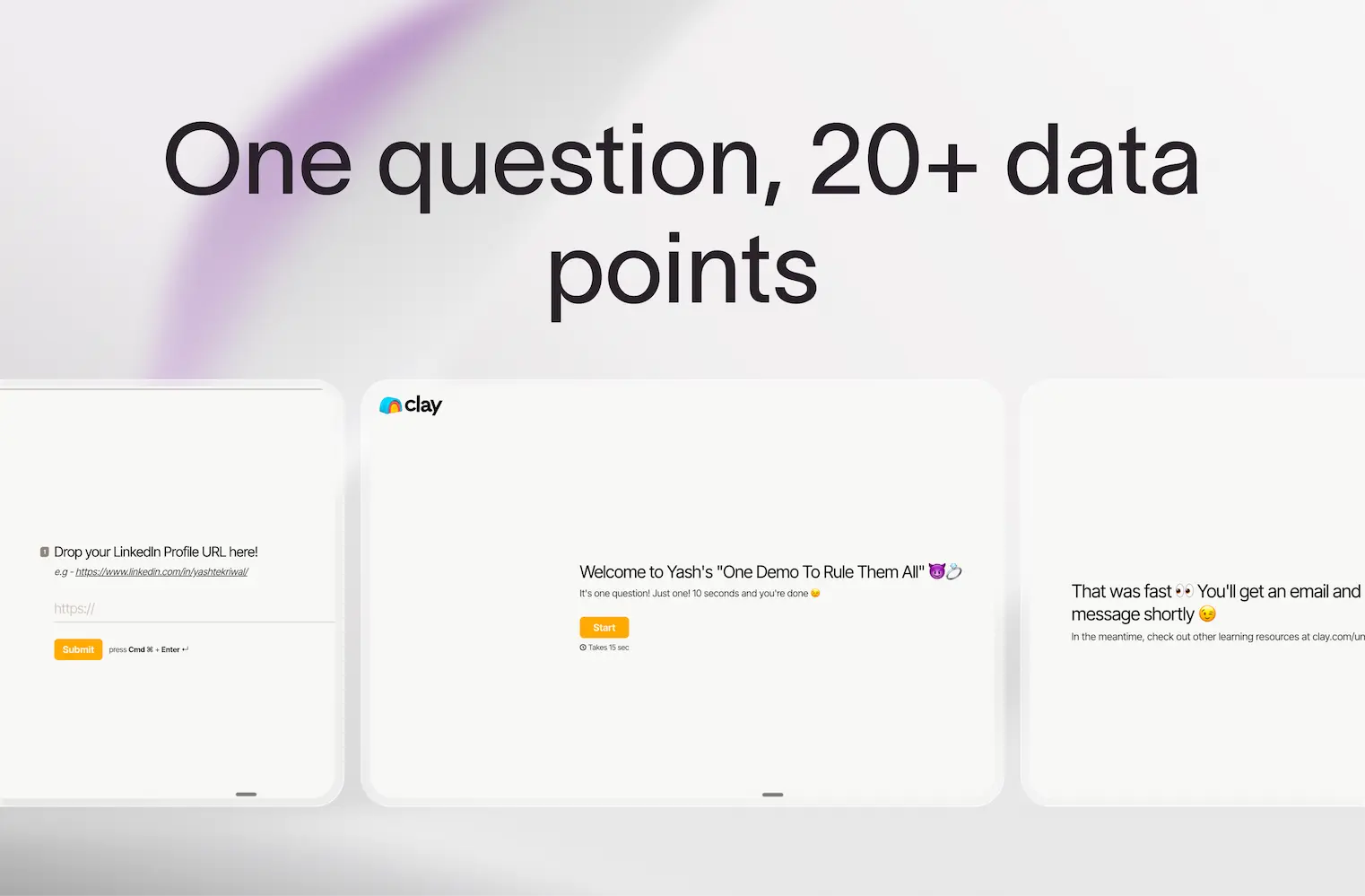
Clay is a (seriously) beloved data enrichment platform that helps teams cut down on manual research and act on better data. GTM teams use it to enrich customer records, uncover better insights, and move faster across inbound, outbound, retention, and expansion.
But as demand grew, Clay faced a familiar growth challenge: how do you qualify leads without burying prospects in a form they won’t finish?
With Typeform, Clay has:
- Reduced its inbound form from 5-6 fields to a single question
- Improved form completion rates by 60–70%
- Generated 20+ qualification data points from a single LinkedIn URL
"For anything where I just need to follow up and qualify — one question is magical." - Yash Tekriwal, Head of GTME Ecosystem, Clay
Challenge: A form that filters out the wrong people
As a popular brand and tool, Clay gets tons of inbound interest. Its standard response is to gate access behind a lengthy form that asks multiple questions about the lead’s:
- Company
- Role
- Industry
- Budget
- Team size
- And more
Yash Tekriwal, Head of GTME Ecosystem at Clay, saw that approach as self-defeating.
Every question you add to a form is attempting to extract value from a potential relationship before you've actually decided whether or not that relationship is worth pursuing. "It’s a common problem that most treat as an unavoidable tradeoff: Ask enough questions to qualify leads, or keep the form short and lose much-needed qualification data.”
Clay was feeling the cost of question-stuffing every form. Eager leads were dropping off before they could get through, creating the exact kind of “form fatigue” the Clay brand works hard to avoid.
“It's very easy to overanalyze and think about leads like a funnel in a science,” says Yash.“But you have to remember that the process of getting people to use your software is about increasing fun, trust, and relationships.”
Yet the problem remained. Clay’s sales team couldn't manually qualify leads fast enough to keep pace with inbound volume. Their multi-field forms turned away qualified prospects before any conversation started.
And speed was the difference between a reply and a ghost—prospects who don't hear back within five minutes are 80% less likely to respond. A long lead qualification form compounded by a slow process hurt in both directions.
Solution: One question. 20 data points.
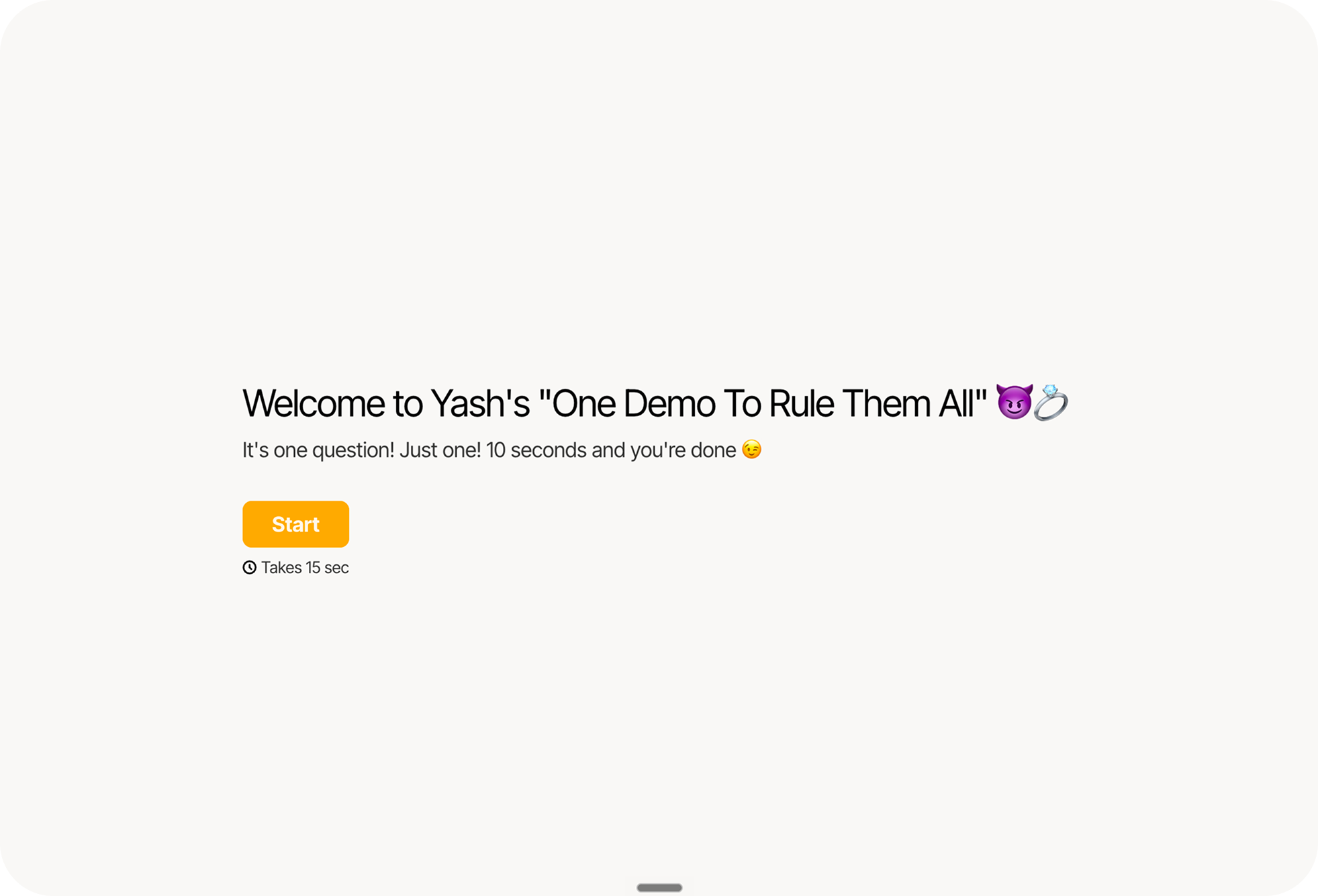
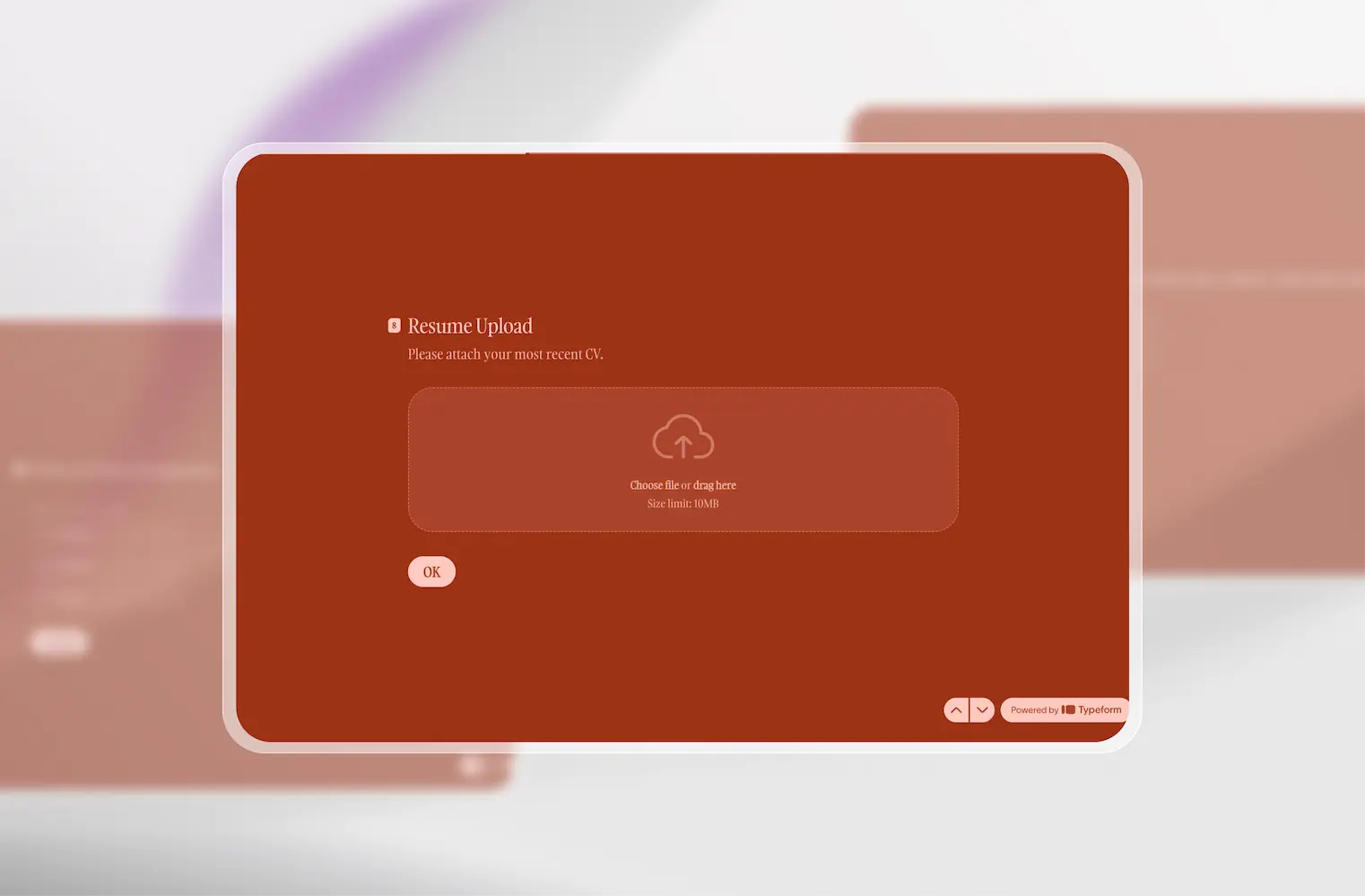
Clay designed a new form with Typeform that asks for just one thing: a LinkedIn URL.
"If you give me your LinkedIn profile URL, I can pull everything else—plus two dozen other data points I need to understand who you are and where you work—to score you." - Yash Tekriwal, Head of GTME Ecosystem, Clay
That's possible because of how Typeform and Clay work together via a native integration. The LinkedIn URL flows directly into Clay the moment a prospect hits "Submit." No middleware. No manual handoff. Clay triggers automatic enrichment, pulling 20+ additional qualification data points, including company size, industry, funding status, role seniority, and more from 180+ data providers.
Clay scores the lead, routes them to the right rep, and triggers personalized outreach within minutes, while the prospect’s interest is still fresh.
The outreach itself isn't generic either. "I automatically send everyone a LinkedIn message that has a custom meme and a research doc about them and their company, and it's always accurate.” Says Yash, “People's minds are blown by that."
Clay runs the entire sequence—from form submission to personalized follow-up—without a human touching it.
The safety net: Partial submissions
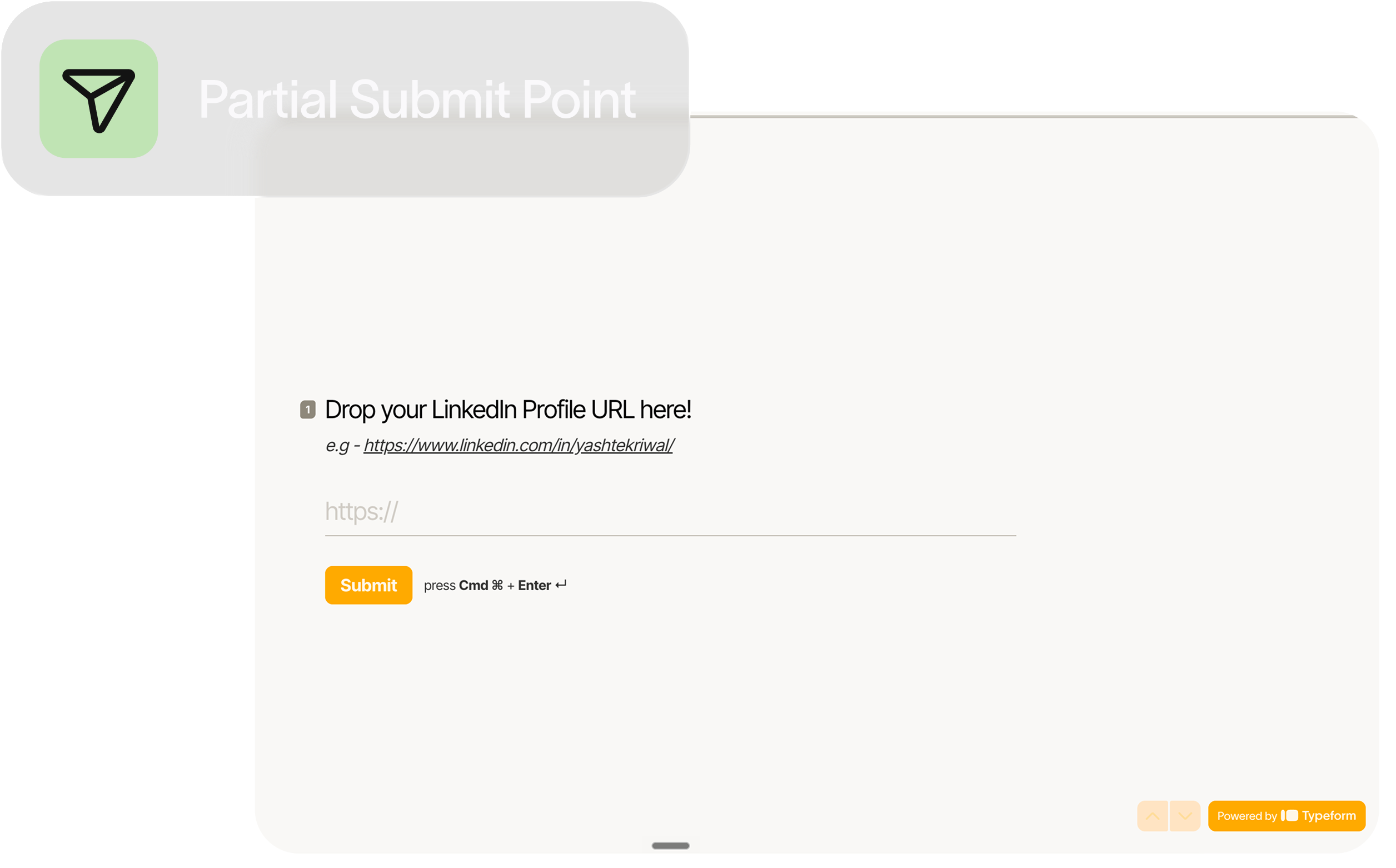
Clay’s system is also designed to catch drop-offs before they become dead ends. Typeform's Partial Submit feature captures any prospect who enters their email but doesn't complete the form, routing them into a separate follow-up sequence.
Typeform fits this system for a few specific reasons:
- It looks like Clay—same fonts, same colors, no jarring handoff
- The native Clay integration removes middleware from the core workflow
- It’s fast to deploy without technical setup
This matters a lot for a team that moves quickly and regularly needs to spin up forms for live events, one-off campaigns, and recurring qualification flows.
"Lowest friction, fastest way for us to get data from all of these live touchpoints that we have with customers—that's Typeform." - Yash Tekriwal, Head of GTME Ecosystem, Clay
Results: More leads in, better qualification out
The one-question form increased completion rates by 70%, driving more prospects through the top of the funnel. By enriching their Typeform submissions, Clay understands each prospect better than a six-field form ever could.
And by asking for only one thing, Clay signals respect for the prospect's time. As Yash puts it: "The shorter you make your form, the more it feels like you're meeting people where they're at."
For Clay, Typeform stays in the stack because it solves the right problem: clean data from prospects, fast, without asking them to do more work than necessary. The one-question form isn't a shortcut. It's a front door.

Liked that? Check these out:
.webp)
.webp)
Customer
Same Typeform, new approach: How Digital Hamster rethinks forms
Grab the playbook for using forms for more than data collection. See how Digital Hamster’s co-founder Aida Selimova turns Typeform into a tool for understanding people, from building relationships on the blog and rethinking NPS to personalizing onboarding.
Read more