Business Travel Survey Questions
Stop setting travel policies without input from the employees who actually travel. Collect comfort ratings, booking experience feedback, and policy suggestions in one organized survey.



Travel managers and HR teams that set business travel policies without employee feedback often discover problems only when someone raises a complaint or burns out from frequent trips. Poor booking tools, unclear reimbursement, and substandard accommodations quietly drain budget and employee goodwill. Typeform's business travel survey gives travel managers a reliable way to collect structured feedback from employees who travel for work.
The survey captures travel frequency, booking experience, accommodation ratings, expense reimbursement clarity, travel fatigue levels, and open-ended policy suggestions. Questions appear one at a time, so employees move through each topic without the survey feeling like a long debrief after every trip. Conditional logic adapts the survey based on how frequently an employee travels. A frequent traveler sees questions about hotel quality and policy gaps; an occasional traveler answers questions about their overall experience.
Customize the survey to match your travel policy, reimbursement process, and employee travel profile. Share it via email or your HRIS after a travel period or at the end of the quarter. Every response feeds into Google Sheets or Airtable via Zapier, so your travel manager spots patterns across employees and routes without reviewing submissions one by one. Your travel policy reflects how your employees actually travel, not how you assumed they do.
A business travel survey form is a structured questionnaire that HR teams and travel managers send to employees after business trips to collect feedback on their travel experience and company travel policies. It captures travel frequency, booking experience, accommodation ratings, expense reimbursement clarity, and policy suggestions in one submission. Use the business travel survey form so your team builds travel policy around real employee experiences.
Poorly designed travel policies waste company budgets on tools and accommodations employees don't actually value. Employees who frequently travel and who feel unsupported are more likely to disengage or leave. A business travel survey shows you whether your booking tools, hotel program, and expense process are actually working for the people who use them.
Collect feedback on what matters most:
- Travel frequency and typical trip duration
- Booking tool usability and hotel or flight satisfaction
- Expense reimbursement process clarity and speed
- Travel fatigue and work-life balance impact
- Suggestions for improving travel policy or support
Yes. Add a Date question so employees indicate which trip or travel period they're reviewing, along with fields for destination and purpose. Conditional logic can then route employees through questions specific to air travel, ground transportation, or international trips based on their answers. Your team collects structured, trip-specific feedback, rather than general impressions.
Send the survey quarterly or after a defined travel period rather than after every individual trip—survey fatigue is a real risk for frequent travelers. A quarterly check-in captures enough trips to surface patterns without adding to the administrative burden of travel itself. Sending the same questions each cycle also makes it easier to track satisfaction trends as policies change.
Get inspired by relevant templates and categories
3200+ Templates, 300+ Integrations
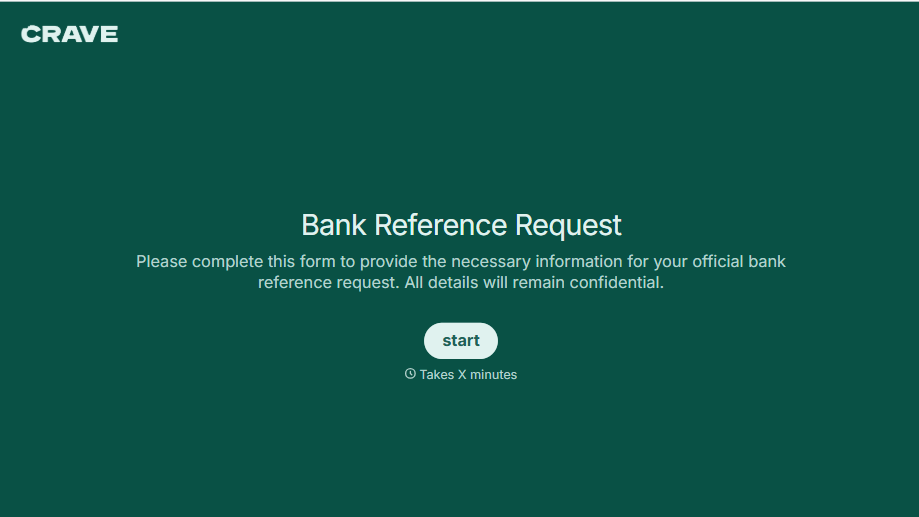
Bank Reference Form
A reference request faxed to a bank branch and left sitting in a queue for weeks isn't the kind of turnaround a landlord or business can wait on. Collect the applicant's signed authorization and the specific details you need confirmed before the request even reaches the bank, so a decision isn't stuck behind a letter that hasn't come back yet.
View template
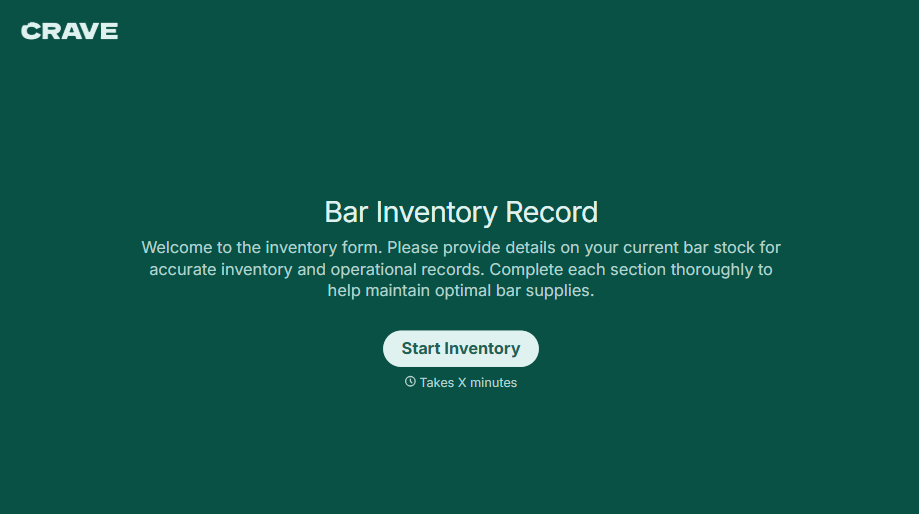
Bar Inventory Form
A bottle count eyeballed at the end of a shift and scrawled on a paper sheet doesn't hold up against a pour cost report that says something doesn't add up. Collect what your bar actually needs, item, count, and variance, on a schedule you can actually compare week to week.
View template
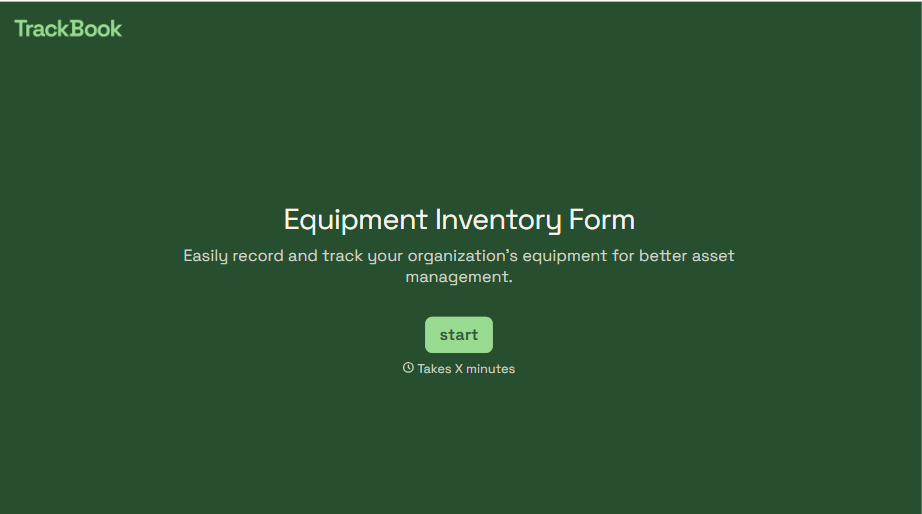
Equipment Inventory Form
Equipment that leaves a storage room in someone's arms, with no note about where it went, doesn't show up again until someone needs it and can't find it. Collect what your team actually needs, item details, condition, and who's got it, every time something moves.
View template
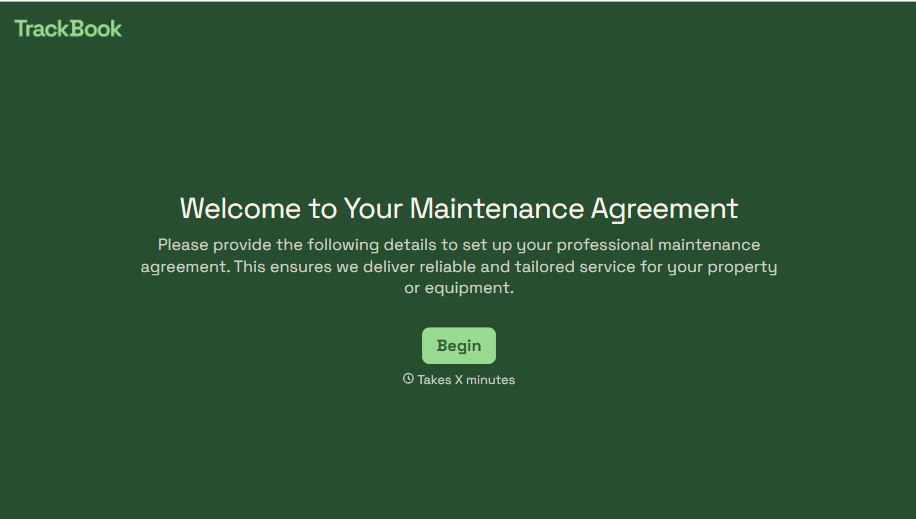
Maintenance Agreement Form
A maintenance plan agreed to over the phone isn't a contract your service team can actually work from, especially when nobody's sure whether the twice-a-year tune-up was part of the deal. Collect the equipment covered, service frequency, and a signed agreement before the first visit, so your team isn't guessing at scope once they're on-site.
View template
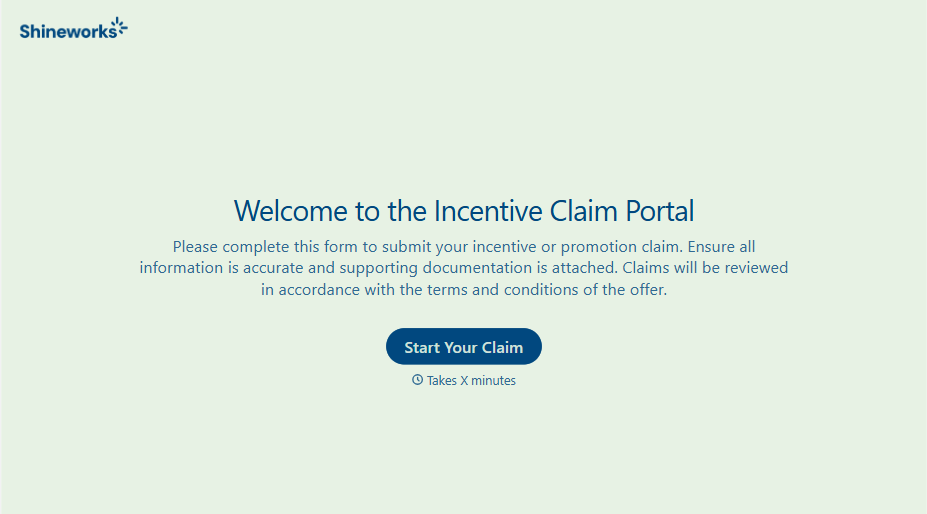
Incentive Claim Form
A rebate claim mailed in with a stapled stack of receipts isn't the kind of paperwork that gets processed quickly, especially when a required serial number turns out to be missing from page three. Collect proof of purchase, product details, and participant information upfront, so a claim doesn't bounce back for a missing document weeks later.
View template
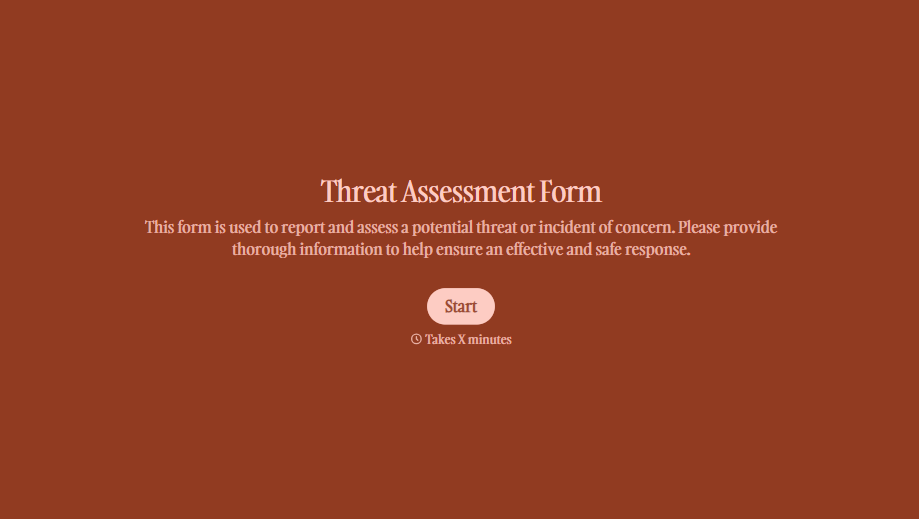
Threat Assessment Form
A concerning comment that gets passed from a teacher to a counselor to whoever's free that period loses detail with every retelling. Collect what your team actually needs, what was observed or reported, who was involved, and when, before an important detail gets dropped along the way.
View template
With Typeform, you can customize everything
Change text, colors, and even logos to match the look and feel of your brand. Then embed forms smoothly onto web and email.
Make forms feel effortless to fill out. Pace questions, call people by their name, and adapt the flow based on the data they share.
Stay efficient by connecting forms to your workflow. Typeform integrates with 300+ tools including Slack, Zapier, and HubSpot.