Construction Handover Form
Move past a walkthrough and a verbal "looks good, it's yours now." Document the exact date the project reached substantial completion, because that date is doing more legal work than most people realize.



The handover date isn't just a scheduling milestone. It usually starts the clock on a statute of repose, an absolute deadline for construction defect claims that runs from substantial completion no matter when a defect is actually discovered, and that deadline swings wildly by state, from six years in some to 20 in others, with New York having none at all for buildings. An undocumented or disputed handover date leaves both sides unsure which clock even started, or whether it's already run out.
Typeform's construction handover form captures the exact substantial completion date alongside the specific documents delivered, as-built drawings, O&M manuals, warranties, with a Signature question for both parties to acknowledge handover. Conditional logic can route different document checklists depending on project type, so nothing gets missed before sign-off.
Every completed handover comes in as one timestamped record instead of a walkthrough and a verbal "looks good." That's the file you want if a defect claim surfaces years later and the first useful answer needs to be a specific date, not a guess.
A construction handover form documents that a project has reached substantial or practical completion: the exact date, the condition of the work, the documents delivered (as-built drawings, warranties, operation and maintenance manuals), and acknowledgment from both the contractor and the owner.
Because in most states, it starts the clock on a statute of repose, an absolute deadline for construction defect claims that runs from substantial completion no matter when a defect is actually discovered. Unlike a statute of limitations, which starts when a problem is found, a repose period that has already expired bars a claim entirely, even for a defect nobody knew about yet.
It varies dramatically by state. Pennsylvania allows up to 12 years from lawful occupancy, extendable to 14. Maryland allows 20 years for general improvements. California, Texas, Florida, Illinois, Oregon, and Minnesota generally use 10 years. Colorado, Washington, Nevada, North Carolina, and Massachusetts use six. New York has no statute of repose for buildings at all. Confirm the specific rule for your project's state rather than assuming a national standard.
Capture enough to fix the exact completion date and document what was delivered:
- Project name and exact date of substantial or practical completion
- Documents delivered (as-built drawings, warranties, O&M manuals, permits)
- Outstanding punch-list items and timeline for completion
- Defects liability period start date and duration
- Signature from both contractor and owner acknowledging handover
Yes. Typeform's signature question lets the contractor and owner each sign by typing, drawing, or uploading their signature, time-stamps it the moment they submit, and locks the response so it can't be changed afterward, generating a PDF you can keep on file. It's available on Typeform's Growth Flow, Growth Custom, and Enterprise plans.
Get inspired by relevant templates and categories
3200+ Templates, 300+ Integrations
With Typeform, you can customize everything
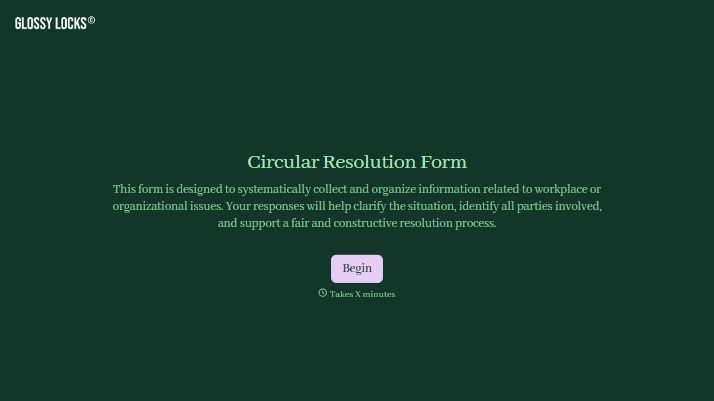
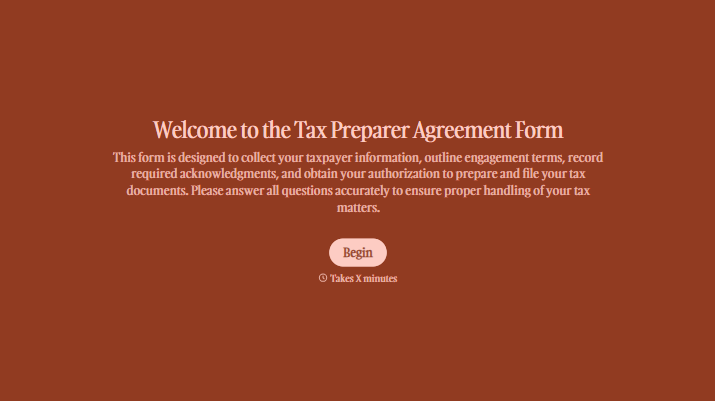
Change text, colors, and even logos to match the look and feel of your brand. Then embed forms smoothly onto web and email.
Make forms feel effortless to fill out. Pace questions, call people by their name, and adapt the flow based on the data they share.
Stay efficient by connecting forms to your workflow. Typeform integrates with 300+ tools including Slack, Zapier, and HubSpot.