Guest Intake Form
Move past a form that only asks for a name and a phone number before a treatment. Screen for the medication history that changes what you can safely do, confirm you're staying inside what your license actually covers, and keep a record of exactly what your guest disclosed.



A quick sign-in sheet doesn't ask the one medication question that actually changes the appointment: is this guest on isotretinoin, or was she recently? The American Academy of Dermatology is explicit that waxing is off-limits during isotretinoin treatment and for six months after stopping, because the medication thins the skin enough that waxing can cause permanent scarring. A form that skips straight to "which service would you like" never gets the chance to catch that before it's a problem.
A guest intake form also has to protect the boundary of what you're actually licensed to do. In California, for example, estheticians can perform chemical peels only down to the epidermis, the outermost layer of skin, a peel that reaches the dermis is legally a medical procedure, and performing one without a physician's involvement is unlicensed practice of medicine, not just a licensing technicality. It can mean board discipline, criminal exposure, and a liability policy that won't cover you because the treatment fell outside your scope, and while rules like this vary by state, the underlying principle doesn't.
Typeform's guest intake form asks about medications, allergies, skin conditions, and recent treatments before it asks what service someone wants, so anything that changes what's safe or permitted comes up first, and conditional logic can flag a response, like recent isotretinoin use, and route the guest to a different service or a rescheduling note instead of letting the booking go through as normal. Every submitted form becomes a timestamped record of what your guest disclosed and when, the file you want if a reaction happens or you need to show you asked the right questions before the appointment, not after.
A guest intake form collects what a spa, salon, or wellness business needs to know before a service: the guest's contact information, relevant medical history, medications, allergies, and any prior reactions to treatments. It's what a technician or provider checks before deciding whether a requested service is actually appropriate.
Because it changes what's safe to do to their skin. The American Academy of Dermatology advises against waxing during isotretinoin treatment and for six months after stopping, since the medication thins the skin enough that waxing can cause permanent scarring. If your intake form doesn't ask, you won't know until after the service, which is too late.
It depends on your license type and your state's specific rules, so confirm with your state board rather than assuming. As an example, California limits estheticians to chemical peels that act only on the epidermis; anything that reaches the dermis is a medical procedure and requires a physician's involvement. Performing outside that scope can mean board discipline, criminal exposure for unlicensed practice of medicine, and a liability policy that won't cover the claim.
Capture enough to confirm the service is appropriate and document what was disclosed:
- Guest name and contact information
- Relevant medical history and current medications
- Allergies and known reactions to previous treatments
- Recent or current use of medications that affect skin sensitivity, like isotretinoin
- The specific service requested
- Signature and date confirming the information provided is accurate
Yes. Typeform lets guests complete their intake form from any device before they arrive, and its signature question lets them sign by typing, drawing, or uploading their signature. It time-stamps the signature the moment they submit and locks the response so it can't be changed afterward, generating a PDF you can keep on file. It's available on Typeform's Growth Flow, Growth Custom, and Enterprise plans.
Get inspired by relevant templates and categories
3200+ Templates, 300+ Integrations
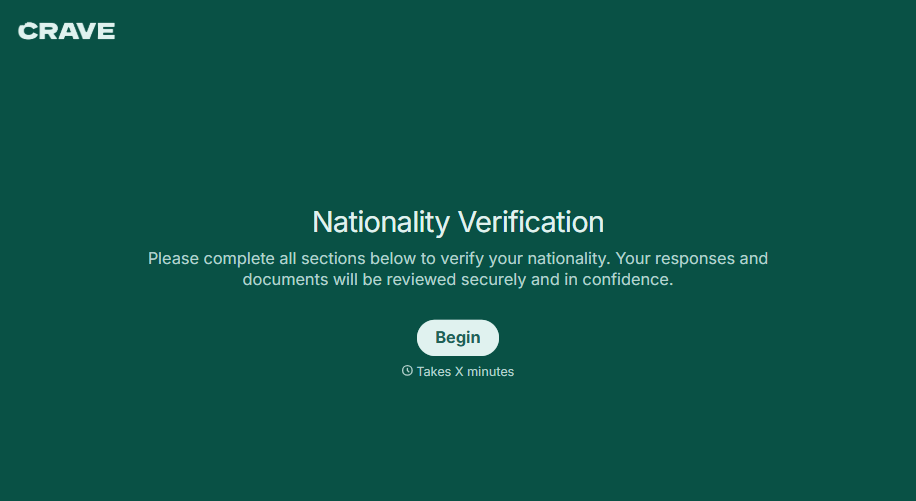
Nationality Verification Form
A self-certification buried in a stack of new account paperwork isn't the kind of record a compliance team can rely on for a regulatory filing. Collect nationality, tax residency, and a signed declaration before an account opens, so compliance isn't chasing down a customer's citizenship status after the fact.
View template
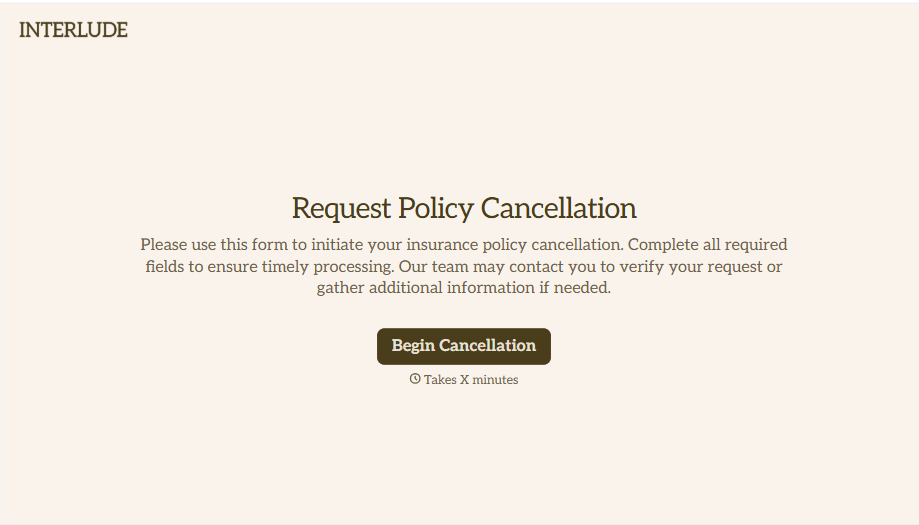
Policy Cancellation Form
A cancellation requested over the phone doesn't leave a clear record of exactly what date the policyholder actually asked for, and that date matters more than it sounds like it should. Collect what your agency actually needs, policy details, identity verification, and the requested effective date, before coverage actually ends.
View template
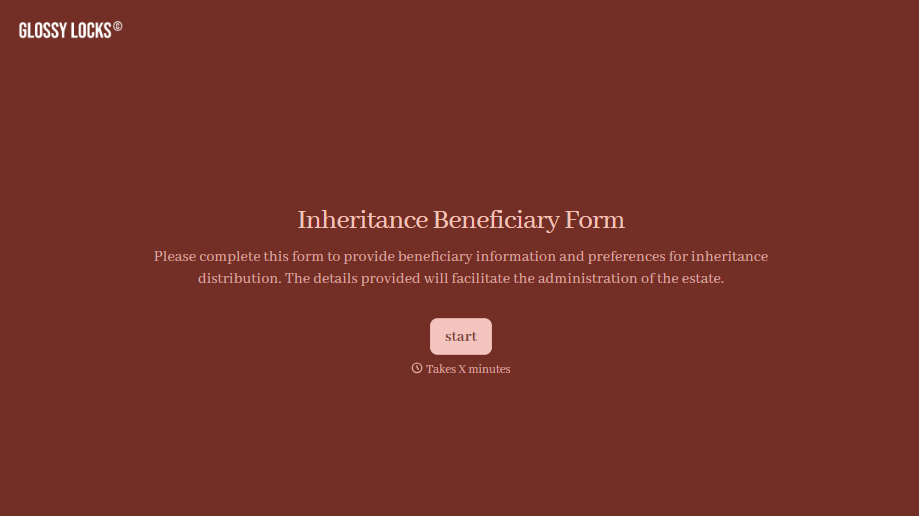
Inheritance Beneficiary Form
Asking a grieving family member for the same banking details across three different phone calls doesn't make settling an estate go any faster. Collect what your firm actually needs, beneficiary information, identification, and distribution details, in one submission instead of three calls.
View template
With Typeform, you can customize everything
Change text, colors, and even logos to match the look and feel of your brand. Then embed forms smoothly onto web and email.
Make forms feel effortless to fill out. Pace questions, call people by their name, and adapt the flow based on the data they share.
Stay efficient by connecting forms to your workflow. Typeform integrates with 300+ tools including Slack, Zapier, and HubSpot.