Home health referral form
Collect every detail needed to place a patient in home health care, without the follow-up calls or missing paperwork.



Incomplete home health referrals delay care for patients who can't afford to wait. Something as minor as a missing diagnosis code or an insurance detail means someone has to chase it down before the intake process can finalize. That back-and-forth costs time that patients can’t spare. Typeform's home health referral form template gives care coordinators a consistent way to capture every required detail upfront.
The form covers patient demographics, diagnosis and clinical notes, insurance information, care needs, and referring provider details. Typeform walks referrers through one question at a time, so every detail gets captured, even on the busiest shifts. Conditional logic adapts based on the patient's care needs. A wound care referral surfaces different clinical fields than a physical therapy referral, keeping each form focused on the details that matter for each unique case.
Customize the fields to match your organization's intake requirements or payer criteria. Share the form via email, embed it on your provider portal, or send it as a direct link to referring partners. Every submission syncs to your care coordination system or Google Sheets via Zapier, so referrals arrive organized and ready to act on. Get the full clinical picture from the start and avoid the back-and-forth of follow-up calls.
A home health referral form is a structured document that healthcare providers use to connect patients with home-based clinical services. It captures patient demographics, diagnosis, insurance details, care needs, and referring provider information. It’s what moves a patient from “recommended for home health care” to receiving it.
A verbal referral or a faxed note leaves too much room for missing information, and in home health, missing information directly impacts patient care. A structured referral form ensures every intake team member receives the same complete details the first time. Use it to reduce intake delays, minimize follow-up calls, and give home health agencies what they need to begin care on day one.
Cover every detail that affects a smooth patient intake:
- Patient demographics and contact information
- Referring provider name, credentials, and contact details
- Primary diagnosis and relevant clinical history
- Insurance carrier, policy number, and authorization status
- Specific care needs (skilled nursing, physical therapy, wound care, etc.)
- Preferred start date and scheduling constraints
- Emergency contact information
Build required fields into the form so nothing slips through at intake. Flag clinical sections (diagnosis codes, authorization status, care type, etc.) as mandatory so the referring provider can’t move past them without a response. Conditional logic surfaces relevant follow-up fields based on the referring provider’s answers. For example, a wound care referral may automatically prompt for wound assessment details, and a physical therapy referral may ask for mobility notes and therapy goals.
Yes. Share the form as a direct link, embed it on a provider portal, or distribute it by email to any referring partner. Connect the form to Google Sheets or your intake system via Zapier so every referral routes to the right team automatically.
Get inspired by relevant templates and categories
3200+ Templates, 300+ Integrations
Bank Reference Form
A reference request faxed to a bank branch and left sitting in a queue for weeks isn't the kind of turnaround a landlord or business can wait on. Collect the applicant's signed authorization and the specific details you need confirmed before the request even reaches the bank, so a decision isn't stuck behind a letter that hasn't come back yet.
View template
X-Ray Release Form
A phone call asking to send X-rays to a new provider isn't an authorization your compliance file can rely on. Collect patient information, the receiving provider's details, and a signed authorization before the images go out, so your front desk isn't scrambling to prove who approved a release.
View template
Bar Inventory Form
A bottle count eyeballed at the end of a shift and scrawled on a paper sheet doesn't hold up against a pour cost report that says something doesn't add up. Collect what your bar actually needs, item, count, and variance, on a schedule you can actually compare week to week.
View template
Equipment Inventory Form
Equipment that leaves a storage room in someone's arms, with no note about where it went, doesn't show up again until someone needs it and can't find it. Collect what your team actually needs, item details, condition, and who's got it, every time something moves.
View template
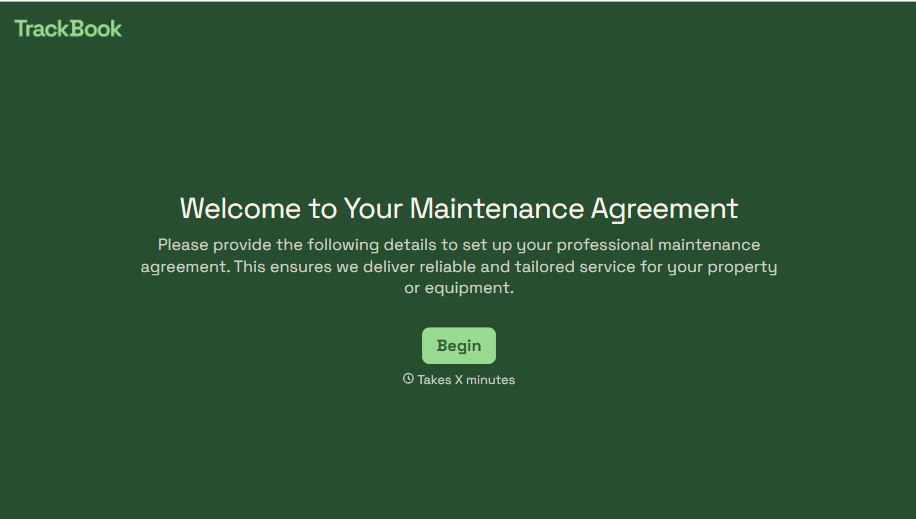
Maintenance Agreement Form
A maintenance plan agreed to over the phone isn't a contract your service team can actually work from, especially when nobody's sure whether the twice-a-year tune-up was part of the deal. Collect the equipment covered, service frequency, and a signed agreement before the first visit, so your team isn't guessing at scope once they're on-site.
View template
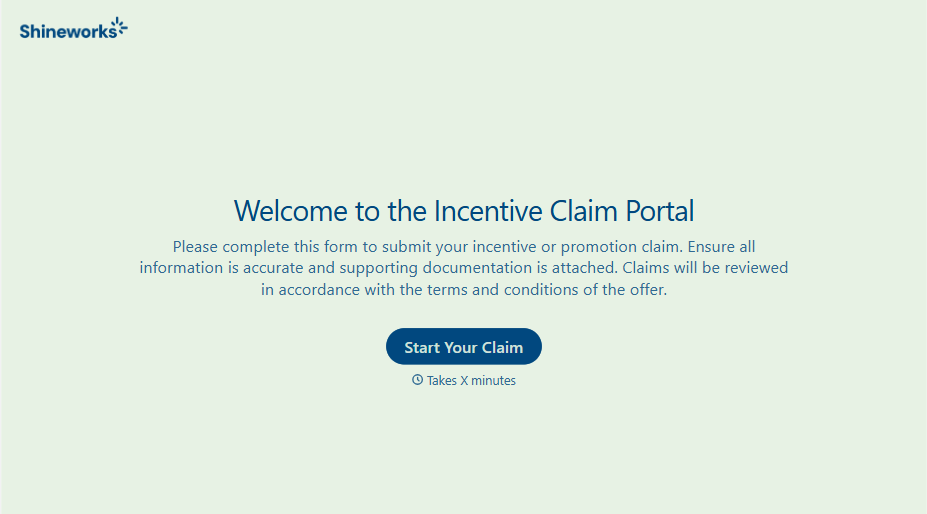
Incentive Claim Form
A rebate claim mailed in with a stapled stack of receipts isn't the kind of paperwork that gets processed quickly, especially when a required serial number turns out to be missing from page three. Collect proof of purchase, product details, and participant information upfront, so a claim doesn't bounce back for a missing document weeks later.
View template
With Typeform, you can customize everything
Change text, colors, and even logos to match the look and feel of your brand. Then embed forms smoothly onto web and email.
Make forms feel effortless to fill out. Pace questions, call people by their name, and adapt the flow based on the data they share.
Stay efficient by connecting forms to your workflow. Typeform integrates with 300+ tools including Slack, Zapier, and HubSpot.