Organizational Culture Survey Form
What do your employees actually think about working at your company? An organizational culture survey form replaces guesswork with real answers.



Annual engagement surveys capture a snapshot, not the full picture. By the time you compile the results, the issues employees raised are already affecting retention, morale, and trust. Most companies don’t realize how much waiting to act actually costs them. Typeform's organizational culture survey template gives HR professionals and leaders a reliable way to gather structured, honest feedback from employees.
The survey uses rating scales and open-ended fields to measure how employees perceive management, culture, and the workplace environment. The one-question-at-a-time format removes the pressure of a long form, so employees can answer thoughtfully and honestly. Conditional logic adapts the survey based on each employee's responses—keeping follow-up questions relevant to their actual experience. The result is nuanced feedback that shows exactly where your organization can improve.
Share the form by email, embed it on your intranet, or send it as a standalone link—ideal for remote and distributed teams. Connect responses to Google Sheets or Airtable via Zapier so results arrive organized and ready to review. Export results as a PDF to share findings with stakeholders in a format that's easy to present. The clearer the data, the faster your leadership team can identify what to address first.
An organizational culture survey is a questionnaire that collects employee feedback on their workplace environment, management, and company culture. Rating questions measure specific aspects, including communication, trust, leadership, and inclusion, on a consistent scale so results are easy to track over time. Done right, it tells you what your employees actually think before it shows up in turnover.
Most leaders think they know how their employees feel. An organizational culture survey tells you for sure. It gives HR teams and company leaders structured, data-backed insight into what's working and what's creating friction in the workplace. Use it for annual culture reviews, post-restructure check-ins, or any time you need an honest read on employee sentiment.
Cover both the environment and the experience:
- How employees feel about communication from leadership
- Whether they feel valued and recognized for their contributions
- Their perception of fairness, inclusion, and psychological safety
- How well the organization supports their growth and development
- Their overall satisfaction with the workplace environment
- An open-ended question for anything they want leadership to know
Start with simple, low-stakes questions to ease employees in before moving to more sensitive topics like management or psychological safety. Use question groups to organize related items. Grouping all communication questions together, for example, gives employees context and keeps the survey from feeling scattered. Conditional logic lets employees skip questions that don't apply to their role or experience, keeping the survey focused and helping reduce drop-off before completion.
Connect responses to Google Sheets or Airtable via Zapier, so results stay organized and accessible to everyone who needs them. Filter by department, tenure, or response date to identify patterns and prioritize where to act first. Once responses are collected, export them as a PDF to share findings in a format that's easy to present in meetings or distribute to stakeholders.
Get inspired by relevant templates and categories
3200+ Templates, 300+ Integrations
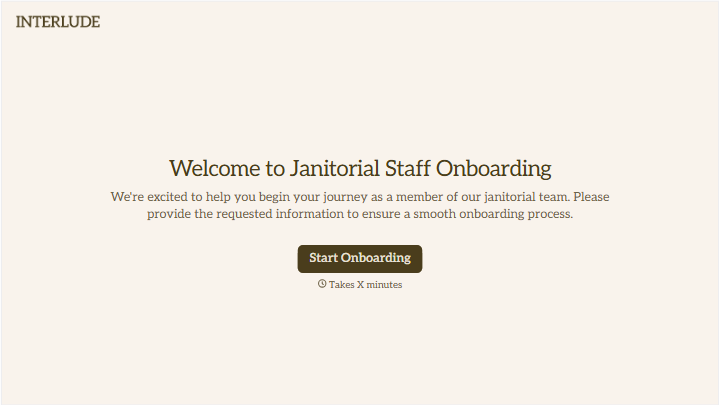
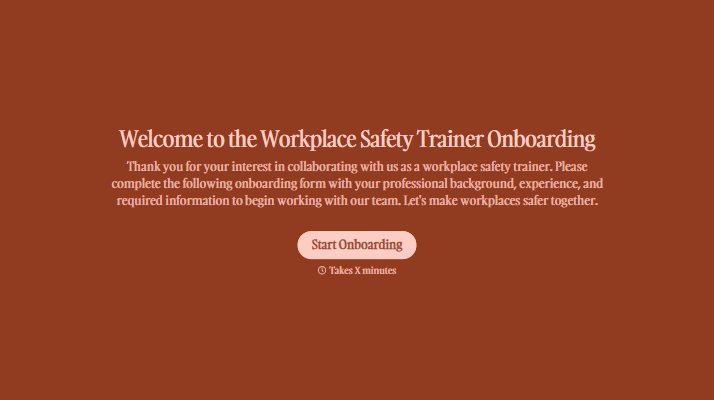
With Typeform, you can customize everything
Change text, colors, and even logos to match the look and feel of your brand. Then embed forms smoothly onto web and email.
Make forms feel effortless to fill out. Pace questions, call people by their name, and adapt the flow based on the data they share.
Stay efficient by connecting forms to your workflow. Typeform integrates with 300+ tools including Slack, Zapier, and HubSpot.