Typeform can do what? Meet Growth Flow and Research Flow
Forms are no longer the finish line—they're the trigger. Meet Growth Flow and Research Flow, the two new Typeform products turning every submission into automated flows that ignite growth.
.webp)
What do you think of when you see “Typeform?” Probably the form builder brands trust to create beautifully designed, conversational forms that people actually want to fill out. While that’s still foundational to who we are, Typeform can do so much more.
Even the best forms are only as useful as what happens after the responses start rolling in. And right now? Taking action on those responses requires a lot of manual work.
It’s where the customer journey breaks. Not because brands don’t care, but because manual, disconnected processes—routing data, following up, nurturing, stitching tools together—make it impossible to act when intent's highest.
And despite more intelligence than ever before, AI has created a new type of manual labor—forcing you to be the human glue between 10 different AI apps.
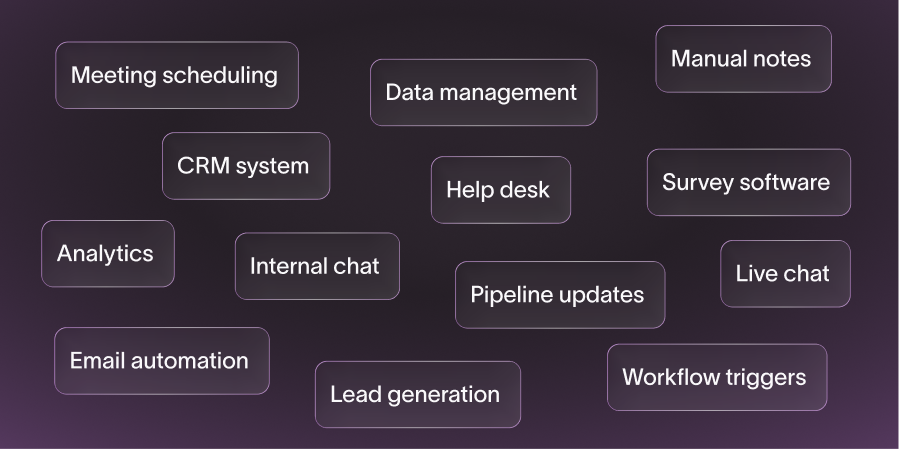
“While you’re busy acting as a bridge between your lead capture, your scheduler, and your CRM, that customer’s excitement is cooling off. That dead time is where growth stalls. That’s why we’re officially shifting from forms to flows.” - Aleks Bass, Chief Product and Technology Officer, Typeform
So we’ve moved from forms as the finish line. Instead, they’re now what triggers automated growth flows that capture, enrich, convert, and retain customers without the manual effort or delays.
Powered by Typeform AI, our two new products—Growth Flow and Research Flow—are everything you need to deeply understand your audience and turn their submissions into real business growth.
And no, you don’t have to do it manually. We’ve put together a guide (complete with prompts) to get Typeform AI to build your forms and workflows.
Because, as Aleks puts it, “The conversation shouldn’t be the finish line—it should be the ignition switch.” Here’s what Typeform can actually do now, starting with the engine behind it all.
Typeform AI: The engine behind the flows
When we first rolled out Typeform AI, it did everything you’d expect: build forms from prompts, optimize and translate them, and surface qualitative and quantitative insights instantly.
It still does all that. But Typeform AI is so much more—it’s the engine that turns intent into momentum, and momentum into customers.
“AI isn’t about hype—it’s about making work easier, not harder. Our AI helps you create high-performing forms in minutes, surface key insights instantly, and take action faster—without a steep learning curve or a full team behind you.” - Aleks Bass, Chief Product and Technology Officer, Typeform
No manual patchworking apps or processes. No need to be a prompt engineer. Just a connected end-to-end customer lifecycle powered by automated flows that keep your customers moving toward conversion.
That's what powers Growth Flow and Research Flow, turning your forms—the ignition switch—into motion.
Growth Flow: Turn every response into a workflow
Growth Flow is our solution to slow, manual processes. The ones that react to warm leads after intent is gone. It powers flows that drive growth, automatically.
Growth Flow, Aleks explained, “is how you turn a passive interaction into a high-speed revenue engine.” It’s how you bring together all your tools—from your CRM and form builder to your scheduler and enrichment platform—and start running your go-to-market motion.
Instead of delays and dead time, you’re building momentum and a fully connected customer journey. Growth Flow makes it possible by operating how customers actually move through your business:
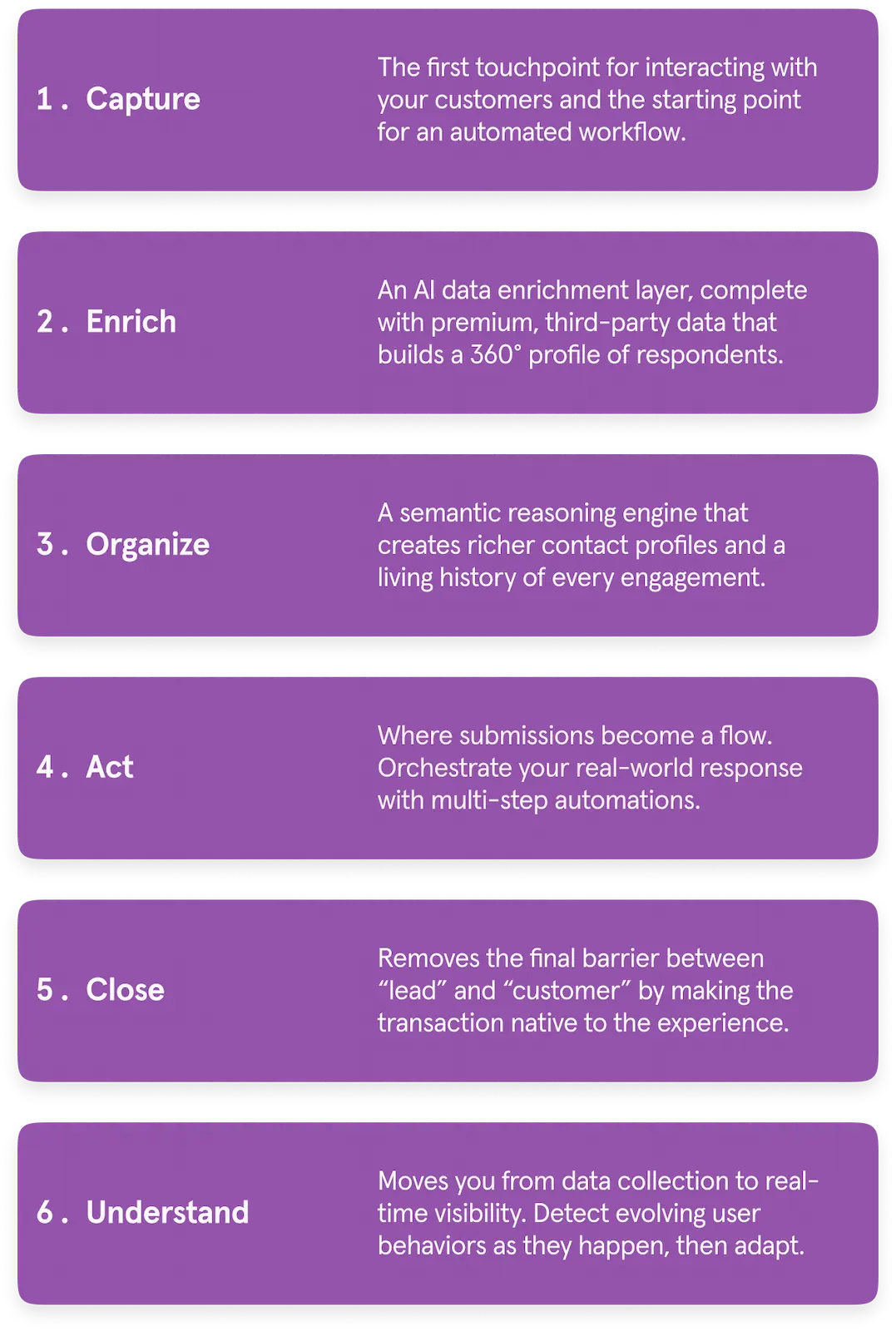
1. Capture
Growth Flow doesn’t ditch the form. Instead, the form acts as the first touchpoint for interacting with customers. It captures data and crucial customer signals, then kicks off your automated workflows.
The difference now is that the form doesn't end the conversation—it starts it.
2. Enrich
The moment someone hits submit, AI data enrichment kicks in. “We’re laying in premium, third-party data to build a 360° profile of your respondent without making them fill out a 20-question form,” Aleks explained.
It’s where the human glue work disappears—no more cross-referencing your CRM or LinkedIn to piece together a customer profile. With a security-first architecture and 92% match rate for B2B teams (71% for B2C), you get accurate, invaluable context.
And it all happens automatically. Once Typeform captures that context, Growth Flow starts organizing it.
3. Organize
Growth Flow’s AI-powered contact mapping eliminates the manual burden of database management—no more spending hours connecting form fields to CRM properties.
Its semantic reasoning engine reads the intent behind your questions and structures data accordingly, shrinking setup time from hours to minutes.
You get richer contact profiles that serve as a living history of every customer touchpoint, interaction, and engagement. Instead of a dozen tools, Typeform becomes your central hub for audience data.
4. Act
“In 2026, growth is defined by speed-to-lead,” said Aleks. And if you’re not responding the moment someone shows interest, you've already lost the opportunity.
That’s why we’ve built multi-step automations directly into Typeform—so you can orchestrate your real-world response. No Zaps, separate tools, or manual handoffs.
For B2B, that means high-velocity sales. Imagine a response triggering a Slack action that notifies the sales team (with the enriched context), so they can reach out while the prospect is still on your site.
Or, a B2C brand sending an instant SMS confirmation and a highly personalized Klaviyo sequence that keeps you top of mind without a second of delay.
Every response triggers the next action, continually building the momentum needed to close.
5. Close
Previously, if you wanted to close the deal, you and the respondents had to leave the form. And every extra step—PDF attachments, separate schedulers, payment processors—gave your lead another chance to drop off.
Growth Flow is where you remove the final barrier between a lead and a customer. “We’ve eliminated the friction of the follow-up by making the transaction native to the experience,” Aleks explained.
The moment intent’s highest, your customer can sign, schedule, or pay without leaving the flow. These five question types make it all possible.
Signature question
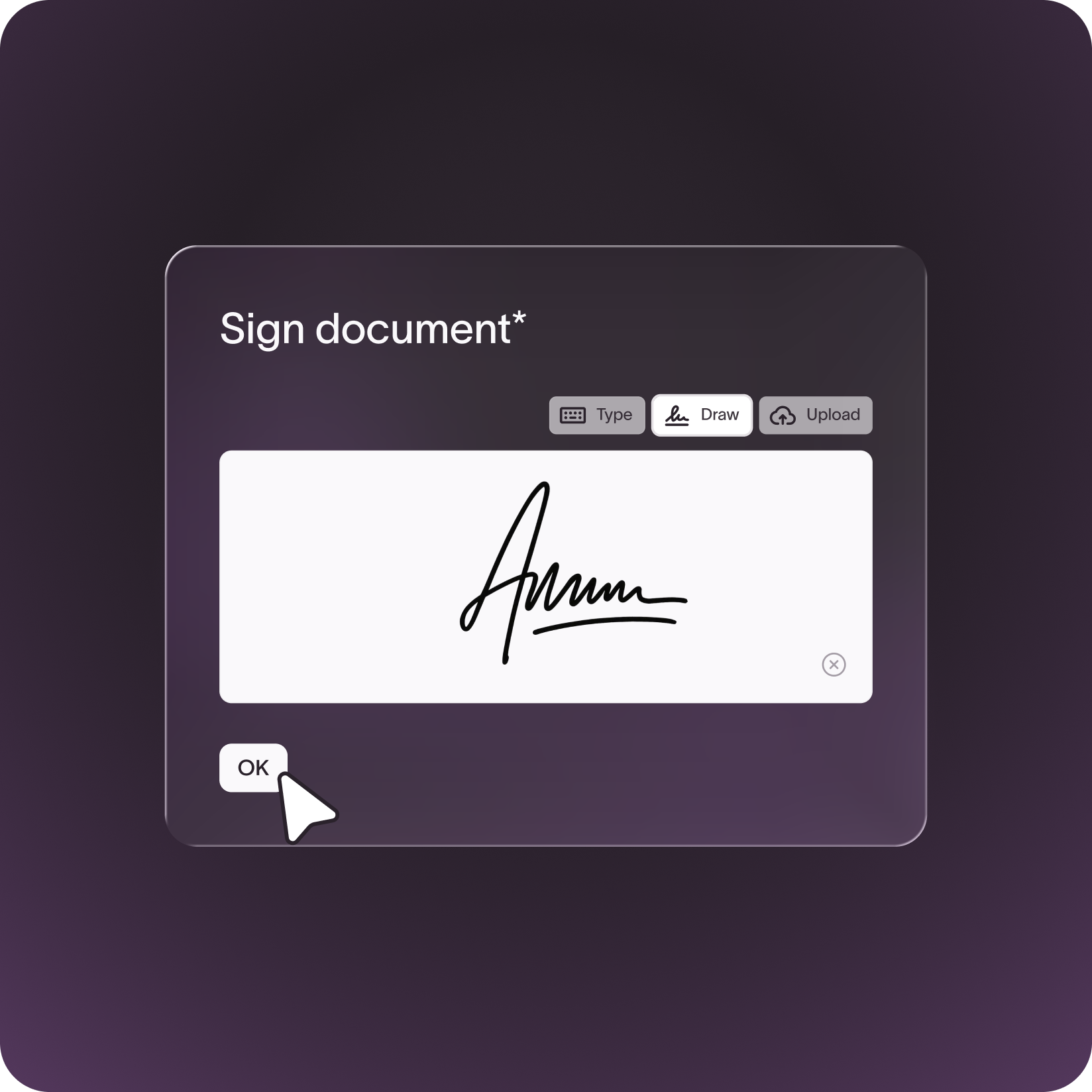
Close deals the second a lead’s intent is highest with Typeform’s native signature blocks. Respondents can sign agreements, consent forms, waivers, and contracts—without leaving the form.
No more emailing PDFs or sending leads to Docusign links. No more losing momentum to follow-ups that are too slow.
Scheduler question
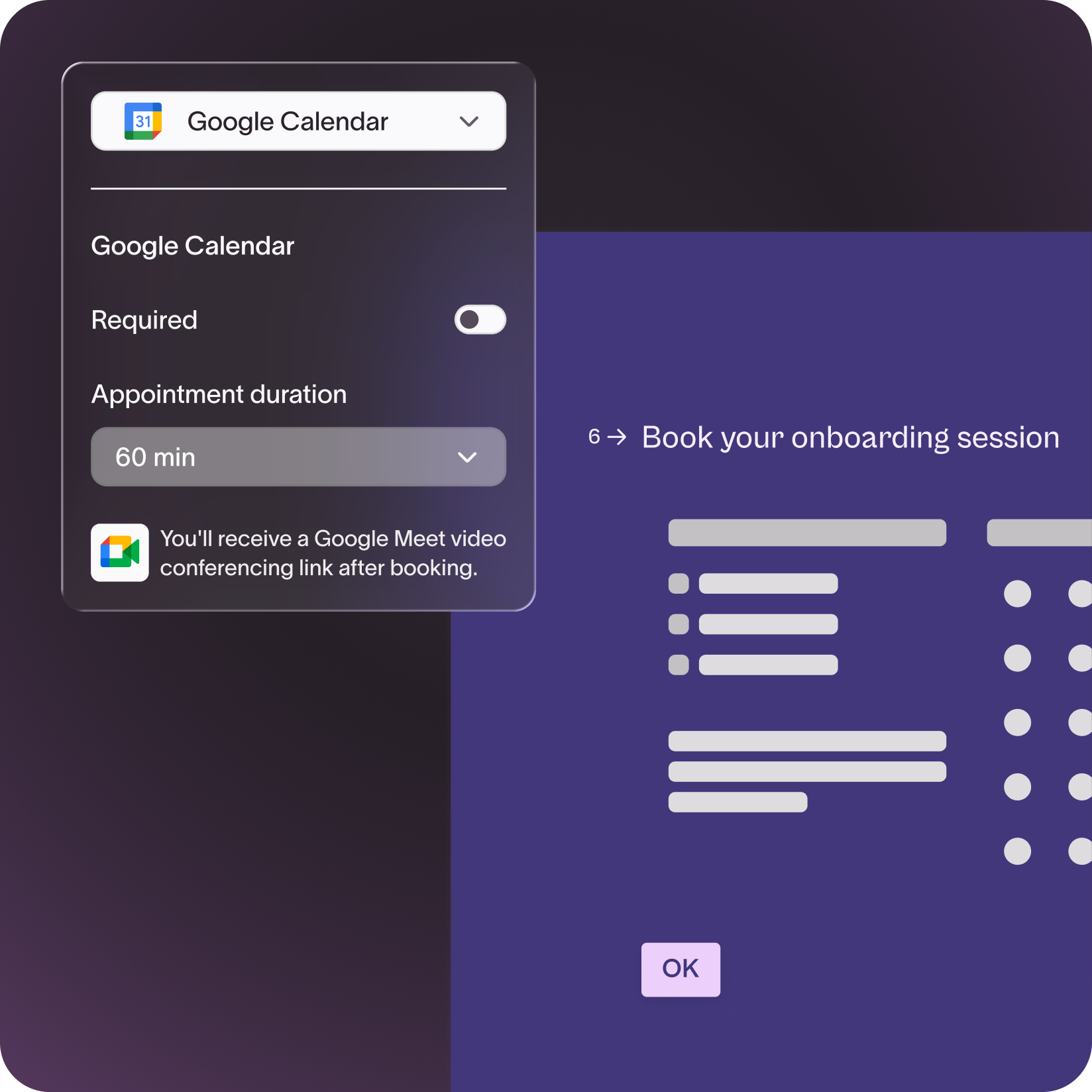
Skip the back-and-forth email chain with Typeform’s direct sync to Google Calendar and Calendly. The scheduler question lets respondents book appointments, sales calls, or consultations based on your actual availability—right inside your form.
No more “What time works for you?” chains or scheduling links buried in threads.
Form pages
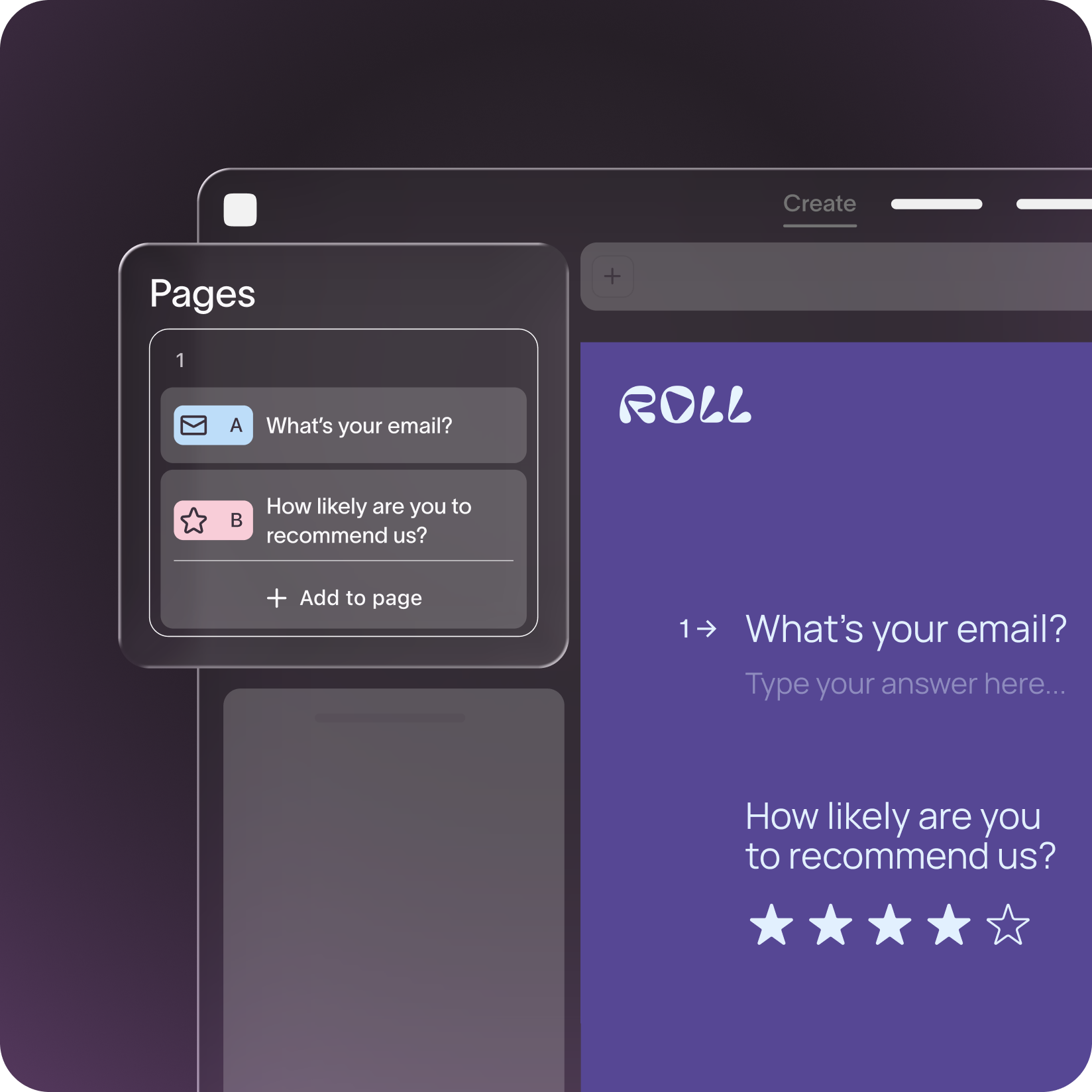
Group related questions onto a single screen to reduce cognitive load and make it easier for respondents to move through your form. For example, if someone’s registering for your event, you can ask for their name, email, and company name all on one form page.
Video question

Capture every response nuance—like tone and body language—that text-based questions leave behind. Video questions let respondents record their answers so you can gain even more context.
And when you record the question yourself, respondents see and hear you too, building instant trust and connection. Video questions are perfect for lead gen and coaching applications.
Payment question
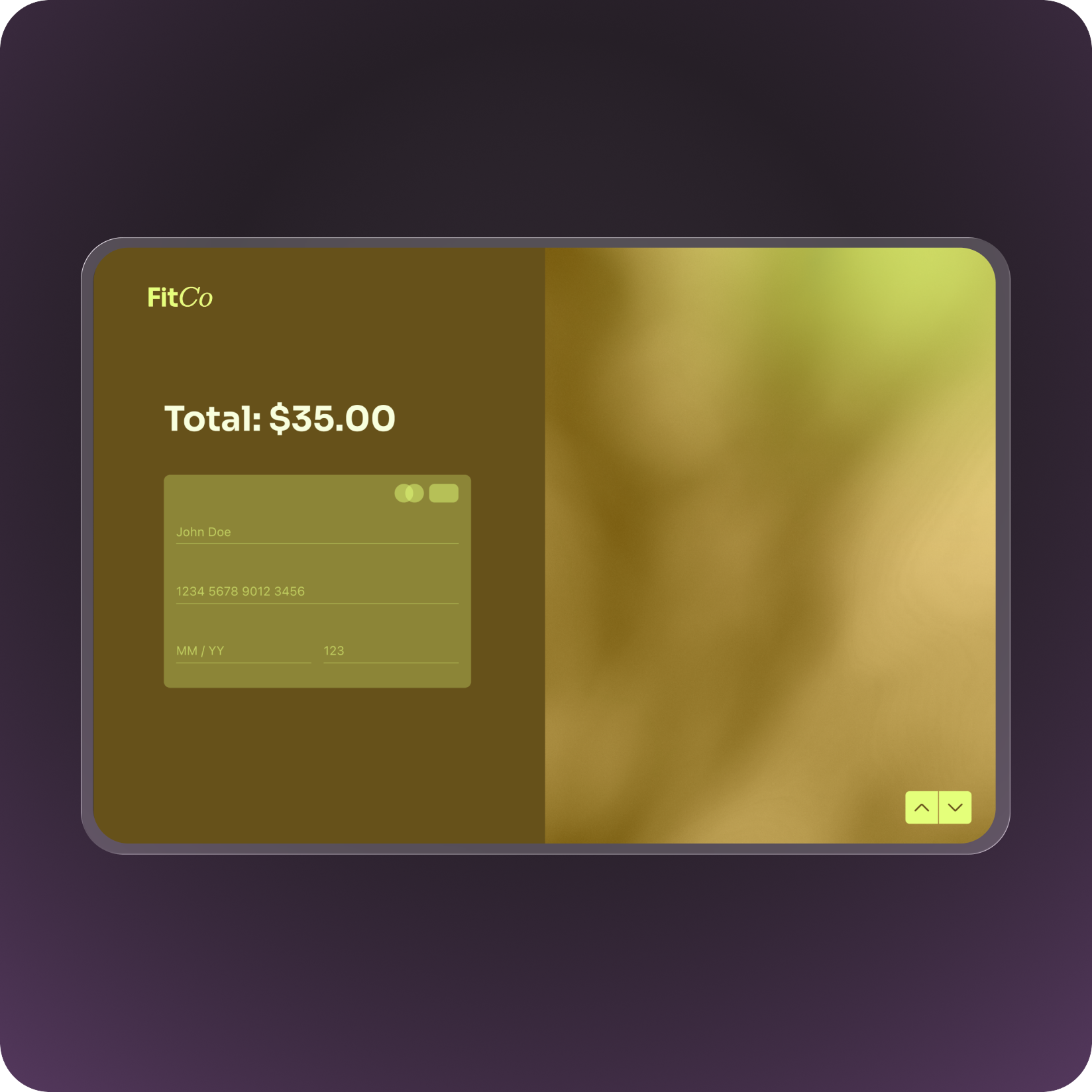
Turn your form into a shoppable storefront with a payment question that lets you collect fees through Stripe or PayPal directly in your form.
Dynamic pricing updates based on what the respondent selects, and the transaction happens in the same flow as the interest—no separate checkout or abandoned carts.
Payment questions are perfect for event registration, product or ticket sales, and collecting deposits.
6. Understand
Growth Flow's contacts analysis and time series analysis detect evolving customer behaviors as they happen—not weeks later when reports are old and your audience has moved on.
You see how needs are shifting in real time, so you can pivot your strategy and address emerging trends before they hit your bottom line. Real-time visibility, real-time response.
For example, if you notice form completion rates dropping among a specific segment, you can adjust before the trend impacts revenue.
Research Flow: Scale AI-moderated research
Research is a crucial part of business growth, but it has also historically been the slowest part. Teams get stuck in a one-to-one cycle that looks a little something like this:
Spend weeks recruiting the right participants. Play email tag, trying to schedule and reschedule the interviews. Manually interview a handful of people, and then spend weeks pulling out insights long after the moment has passed.
As Aleks said, “That’s not research—that’s a slowdown.” So we built Research Flow. It's our end-to-end AI research agent that recruits participants, conducts AI-moderated interviews, and analyzes the findings—all at a scale that wasn't previously possible.
“We are democratizing deep audience empathy, moving beyond what people are doing to exactly why they're doing it.” - Aleks Bass, Chief Product and Technology Officer, Typeform
For SMBs and mid-market teams, Research Flow is the difference between research that takes months and research you can act on in days.
How Research Flow works
As Nina Kamaruddin, Senior Product Marketing Manager at Typeform, explained, Research Flow lets you “leverage AI for every stage of the research lifecycle, from the initial study design and recruitment to AI-led interview moderation and insight generation.”
It fields both quantitative and qualitative research in minutes by handling the entire process in five simple steps:
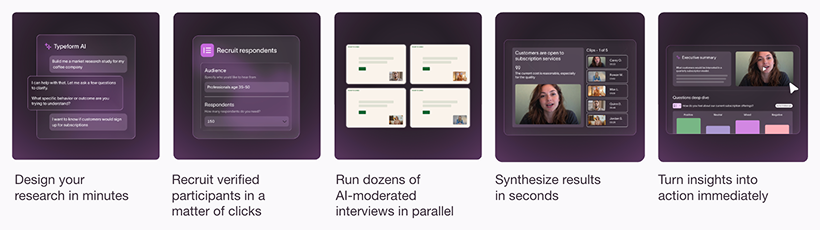
The game-changer is what Aleks calls “speed of scale.” Research Flow can interview thousands of people simultaneously, using video and audio capabilities to probe for the emotional nuances behind every answer. It's not just collecting responses—it's surfacing the why.
Instead of a small sample and a hunch, Research Flow gives you massive scale and a validated strategy in days (and the data backs it up).
Research Flow vs. traditional surveys
It’s one thing to describe Research Flow—it’s another to put it to the test. And that’s exactly what the Typeform research team did.
Leigh Smith, Senior Director of Research at Typeform, explained the setup:
“We randomly assigned people to complete our study in the Research Flow product, or they were assigned to complete the same study, same questions, in a traditional survey tool.”
The difference? Conversation.
With Research Flow, an AI agent asked the questions, and participants actually talked back. With traditional surveys, the questions were written on a static page. Participants were expected to type their answers out.
The results speak for themselves:
- 4.5x more words per question. Research Flow participants moved from brief answers to full narratives, and their responses were richer.
- 3x more likely to share contextual and emotional details. Those in the Research Flow group went beyond the what—they explained the why, too.
- 2x the time investment. Research Flow participants spent twice as long answering the exact same questions because the format made them want to invest more.
- 80% completely engaged. In a 20-minute study, over 80% of Research Flow participants said they were completely engaged, compared to just 48% in the traditional survey.
But the contrast was most obvious in the answers themselves. Take a look:
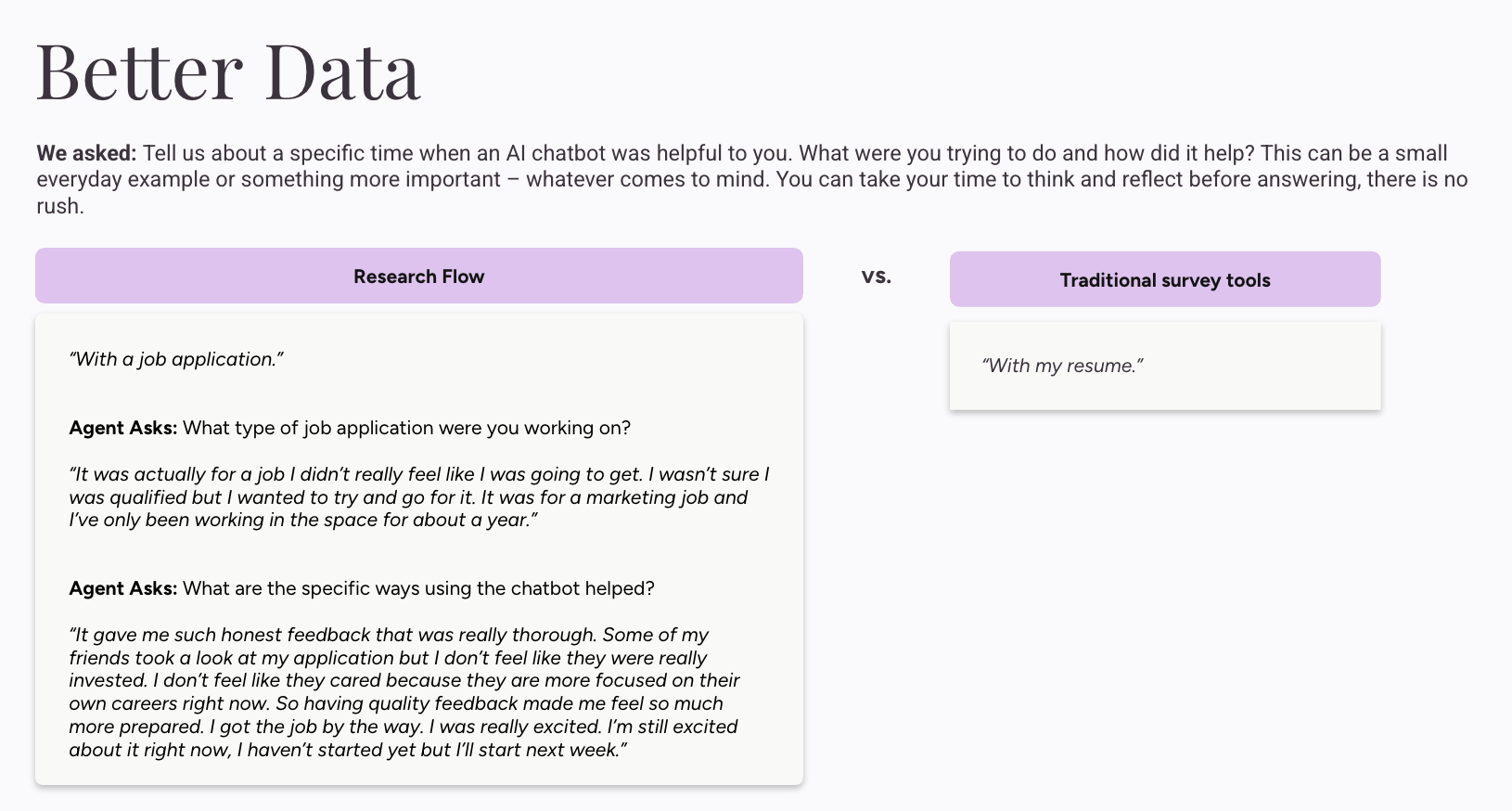
Notice how the Research Flow participant gave an initial brief answer but quickly shared the full story when the AI agent followed up. The AI-moderated survey was able to get the participant to open up, helping Leigh and her team better understand the full experience.
And as Leigh put it, that’s the whole point of Research Flow: “We need a product that can actually help us understand the human experience.”
Typeform: Forms and flows that ignite growth
Typeform started out as a form builder known for its design-forward, one-question-at-a-time format that creators and respondents love. And while forms are still central to what we do, they’re now the trigger for automated flows that drive long-term growth.
Every submission triggers a flow, and Typeform AI handles the manual work—enriching, routing, analyzing—so you don't have to.
Growth Flow turns every response into a fully orchestrated workflow that moves customers from intent to conversion without the dead time. Research Flow gives you a deep understanding of your audience—all at a scale and speed that wasn't possible before.
Aleks summed it up perfectly:
“We're handing you the keys to an integrated engine that turns 'I'm interested' into 'I'm a customer' in seconds, not days.”
Ready to ditch disconnected, manual processes that delay growth? Try Typeform AI, Growth Flow, and Research Flow for yourself.

Liked that? Check these out:


Product
Typeform vs. Google Forms: which should you choose in 2026?
Debating which form builder is better suited to your needs? This article provides a detailed comparison to help you compare Typeform with Google Forms, giving you an in-depth view of how Typeform stacks up against Google Forms so you can decide for yourself.
Read more