Patient Engagement Survey
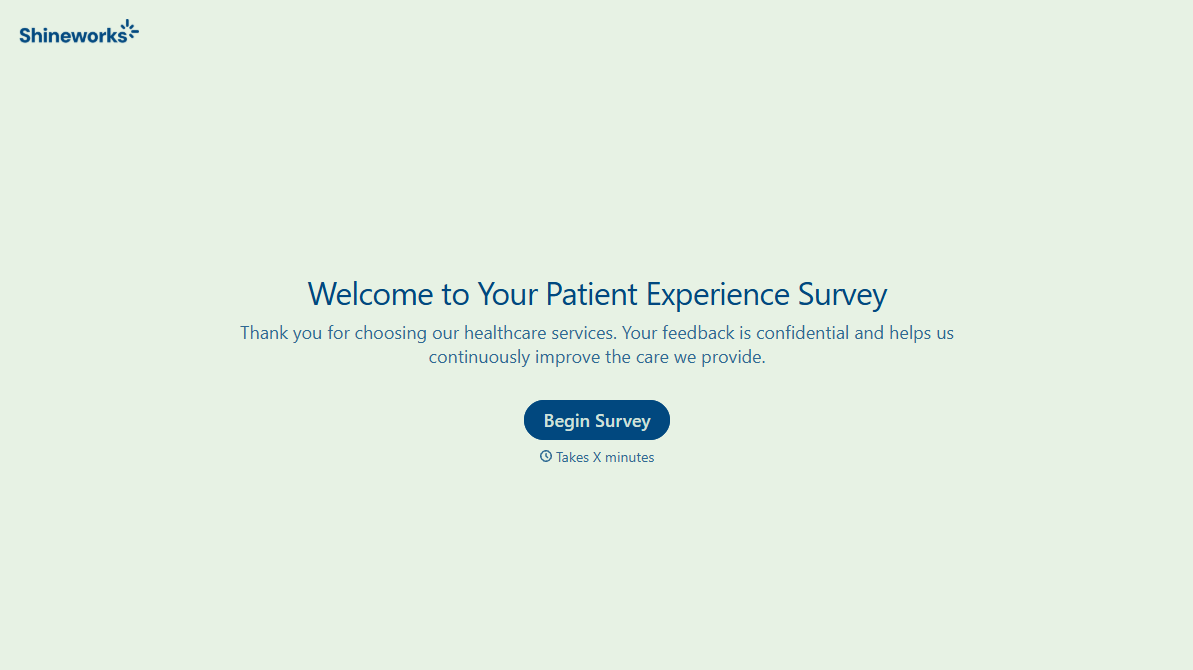
See whether patients are actually taking part in their care, not just what they thought of the visit. Collect how well they understand their care plan, what gets in the way, and where they need support.



A patient can rate a visit five stars and walk out without understanding their treatment plan. Satisfaction measures how the appointment felt, whereas engagement measures whether anything happens afterward. Typeform's patient engagement survey asks about the part that happens after the visit—whether the instructions made sense, whether they're taking the medication, and what's getting in the way.
Patients answer how well they understood their diagnosis, how the plan is going, and what makes it difficult. A patient managing a long-term condition answers about their daily routine and what breaks it, while someone treated for a one-off problem answers about whether the care instructions were clear and if the symptoms were resolved. Both patients answer questions about what would actually help improve their post-visit care, because a patient who isn't following a care plan usually has a reason.
You see which patients understood their plan and which simply nodded through it, and what's stopping the ones who intended to follow it, from following through. That's a different signal from a satisfaction score, and it points at things you can act on: clearer instructions, a follow-up call, a conversation with the patients who said they were unsure.
A patient engagement survey is an online survey that asks patients how actively they're taking part in their own care. It collects how well they understand their diagnosis and plan, whether they're following it, what makes it difficult to follow, and what support they'd want. Practices and health systems use patient engagement surveys to find out where care breaks down after the appointment ends.
Without a patient engagement survey, you measure their visit experience and assume the rest. A satisfaction score tells you the appointment went well, but not whether the patient filled the prescription, understood the dosage, or worse, gave up after the first week. A patient engagement survey asks patients what happened after they left your office, which is often where a treatment plan either works or fails.
Cover what engagement depends on:
- Understanding of the diagnosis and plan
- Whether they're following it
- Barriers like cost, side effects, or complexity
- Confidence managing the condition
- Support they'd find useful
It depends what you plan to do with it. Anonymous responses get you more honest answers about whether someone stopped taking something, but they make it hard to follow up with the patient who needs additional support. If you want to act on individual answers, identify responses and say so up front. If you want an honest read across the whole panel, keep it anonymous and act on the pattern instead.
A week or two after a visit, once a patient has had to actually do something with the care plan. Sending it the same day risks getting a, "everything's fine" response. Send it after three months, and the people who disengaged early have no reason to reply or take your survey. For long-term conditions, repeat it on a cycle, since engagement tends to fall away quietly rather than all at once.
Get inspired by relevant templates and categories
3200+ Templates, 300+ Integrations

With Typeform, you can customize everything
Change text, colors, and even logos to match the look and feel of your brand. Then embed forms smoothly onto web and email.
Make forms feel effortless to fill out. Pace questions, call people by their name, and adapt the flow based on the data they share.
Stay efficient by connecting forms to your workflow. Typeform integrates with 300+ tools including Slack, Zapier, and HubSpot.