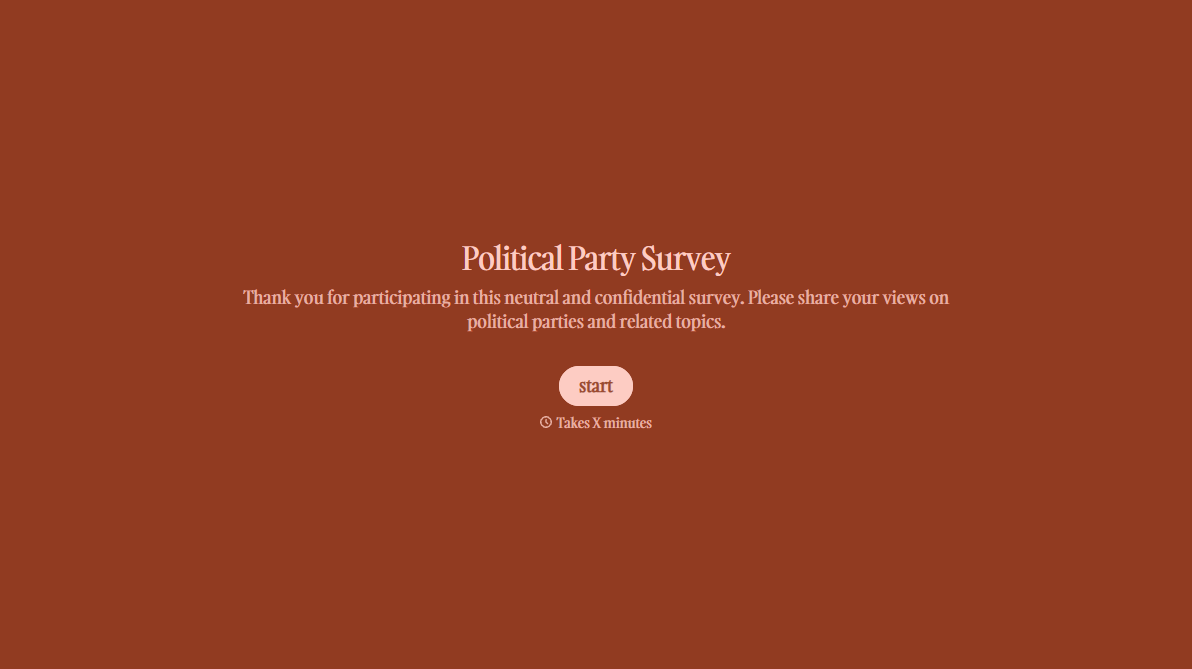
Political Party Survey
Political campaigns that skip constituent input often miss what actually drives turnout. Collect policy priorities, candidate ratings, and platform feedback in one organized survey.



Political parties that set policy positions and messaging without constituent input often learn what actually mattered to voters only after an election. A constituent whose top concern doesn't match the party's messaging rarely has a way to say so. Typeform's political party survey gives campaign teams a structured way to collect input from constituents and party members.
The survey captures policy priority rankings, candidate ratings, platform satisfaction, voter engagement levels, and open-ended constituent feedback in one submission. Questions appear one at a time, so respondents move through each topic without the survey feeling like a ballot. Conditional logic adapts the survey based on a respondent's district, membership status, or voter engagement level. A party member sees questions about platform priorities and internal votes; a constituent sees questions about local issues and candidate awareness.
Customize the survey to match your party's policy focus, constituency, and election cycle. Share it via email, embed it on your party website, or distribute it through community outreach channels. Responses feed into Google Sheets via Zapier, so your team maps constituent priorities across districts and demographics in one organized view. Your campaign messaging reflects what actually resonates with constituents, not what leadership assumed voters care about.
A political party survey collects direct input from constituents on the issues, candidates, and platform positions that shape their vote. Responses reveal where constituent priorities align with the party's platform and where they don't. Use political party surveys to steer your campaign team on messaging around what constituents actually care about.
Voter turnout depends on whether constituents believe a party's platform reflects their priorities. A campaign that focuses on the wrong issues spends resources on messaging that doesn't move voters to act. A political party survey identifies which issues drive your constituency, so resources go where they have the most impact.
Build around what drives voter decisions:
- Policy priority rankings (healthcare, economy, education, environment, etc.)
- Candidate awareness and approval ratings
- Platform satisfaction and areas for change
- Voter engagement level and likelihood to vote
- Local vs. national issue priorities
Yes. Send a political party survey before a platform drafting session to understand which policy areas matter most and where existing party positions need updating. Include a ranking question asking respondents to order policy priorities so your team sees clear consensus, rather than individual opinions. Policy positions informed by real constituent input are more representative and carry more weight with the voters they're meant to reflect.
Segment responses by district and demographic to identify where the party has the strongest and weakest support. Use the policy priority data to tailor messaging so outreach speaks to the issues that matter most in each district. Constituents who indicate low engagement are a signal for direct outreach efforts before the next election cycle.
Get inspired by relevant templates and categories
3200+ Templates, 300+ Integrations
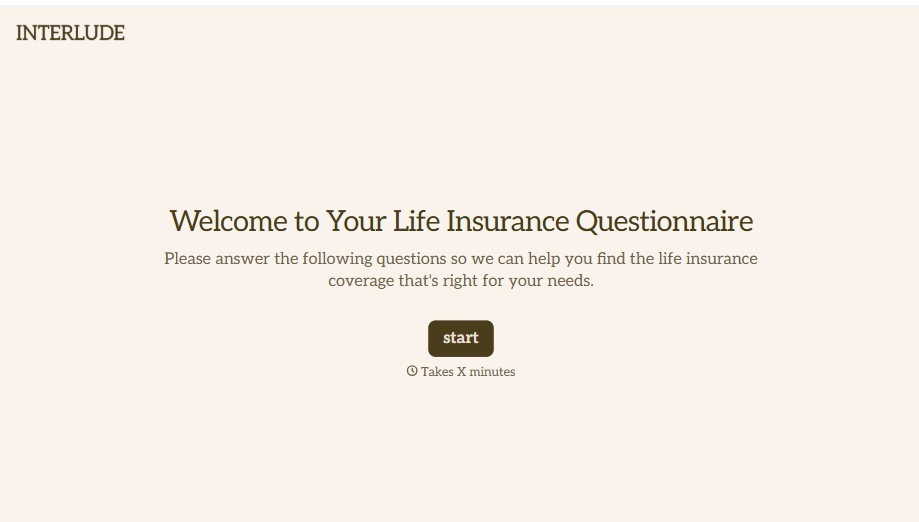
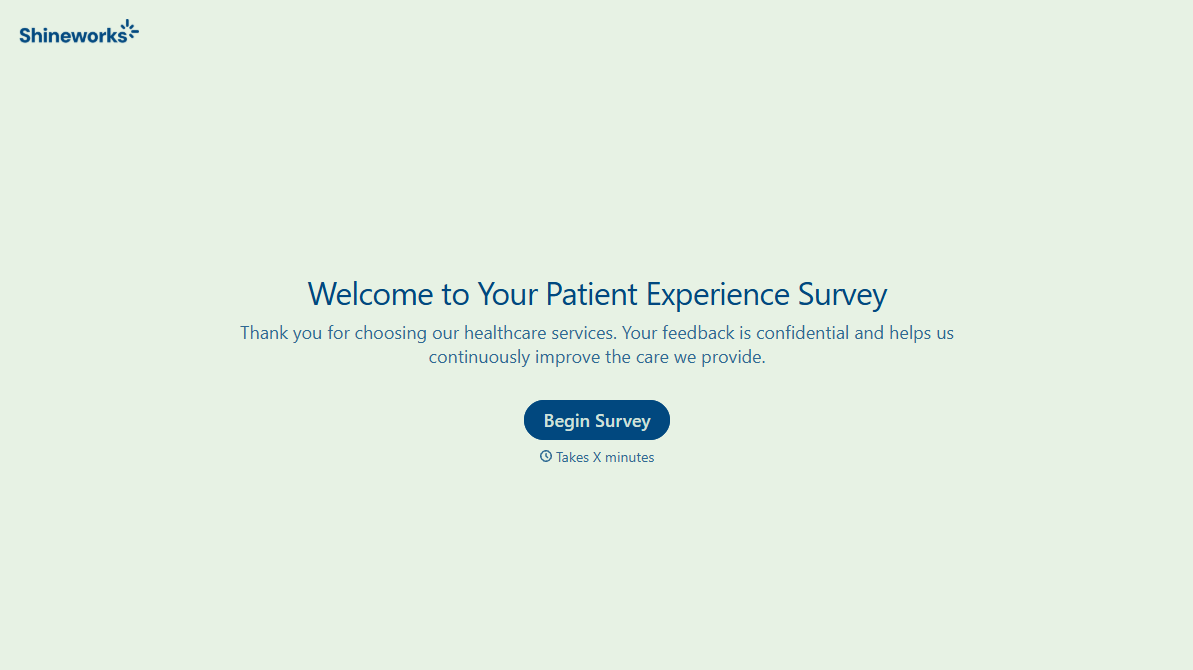
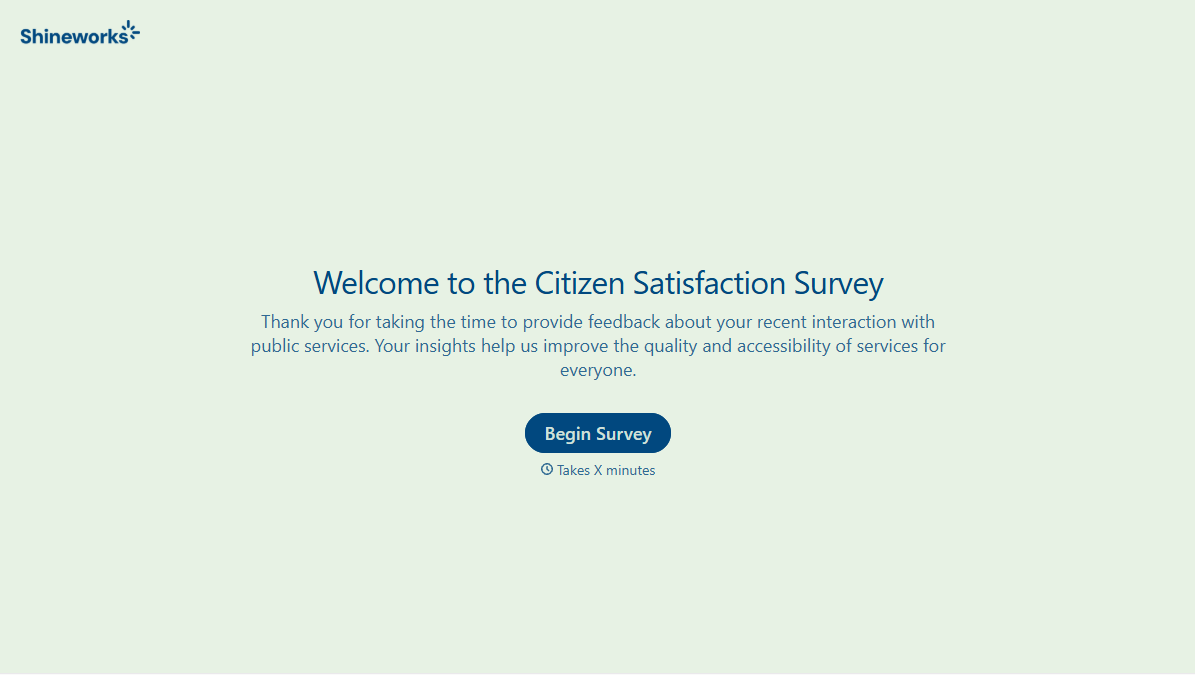

With Typeform, you can customize everything
Change text, colors, and even logos to match the look and feel of your brand. Then embed forms smoothly onto web and email.
Make forms feel effortless to fill out. Pace questions, call people by their name, and adapt the flow based on the data they share.
Stay efficient by connecting forms to your workflow. Typeform integrates with 300+ tools including Slack, Zapier, and HubSpot.