Customer management: 10 strategies that build loyalty
Customer management: 10 strategies to build loyalty. Existing customers spend 67% more and drive 65% of revenue through proactive retention.
Key Takeaways
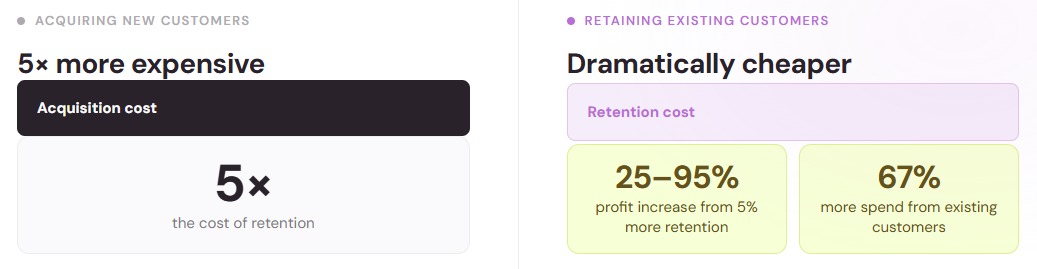
- Retention beats acquisition: Existing customers spend 67% more, drive 65% of revenue, and cost five times less to keep than to replace.
- Loyalty comes from real understanding of customers: Knowing customers' goals and frustrations lets you personalize their experience and build the trust that keeps them around during rough moments.
- Proactive beats reactive: Reaching out before problems occur—through customer onboarding, milestone check-ins, and monitoring customer health—prevents churn before it starts.
- Metrics drive accountability; alignment drives loyalty: Track CSAT and NPS to stay accountable, and make customer loyalty a shared goal across every department, not just support.
Building strong customer relationships isn't a luxury. It's survival. When customers feel valued and understood, they stick around longer, spend more, and recommend you to others. Yet many businesses treat customer management like a checkbox rather than a core strategy.
The numbers tell the story. Customer churn costs US businesses $136 billion annually. At the same time, acquiring new customers costs five times more than retaining existing ones, and a five percent increase in retention can lead to a 25–95% increase in profits. Existing customers already spend 67% more than new ones, and they account for 65% of revenue.
In other words, the customers you already have are your most valuable asset. The question is: how do you keep them?
1. Know your customers beyond the transaction
You can't manage what you don't understand. Effective customer management starts with genuine knowledge of who your customers are: their goals, frustrations, and preferences, not just their purchase history.
Gather data by asking questions. Surveys, interviews, and feedback forms reveal what customers actually think and need. This information becomes the foundation for every other strategy on this list. When you understand your customers at a deeper level, you can personalize their experience and anticipate their needs before they ask.
Document what you learn. Store customer insights in one place so your entire team can access them. The more your organization knows about each customer, the better you can serve them. This centralized knowledge base becomes invaluable as your business grows. It ensures consistency in how different departments interact with the same customer, whether they're in sales, support, or account management. When team members across your organization have access to the same customer context, they can deliver more seamless, informed interactions that feel less like talking to a company and more like talking to someone who actually knows you.
2. Build trust intentionally
Trust is non-negotiable. 81% of consumers need to trust a brand to consider buying from it. What's more, trust has become equal to price and quality in brand purchase decisions: 68% of people say it's very important that brands help them feel safe, confident, and inspired.
Trust is built through consistency, transparency, and follow-through. Keep your promises. Be honest about what your product or service can and cannot do. Admit mistakes and fix them quickly. When customers see that you're reliable and authentic, loyalty follows naturally. In the context of customer management, trust acts as a buffer during difficult moments. If a customer experiences a problem but has built deep trust with your brand, they're far more likely to give you a chance to make it right rather than immediately switching to a competitor.
The good news: 80% of people trust the brands they use more than they trust business, media, government, or NGOs. Once you earn it, trust becomes a powerful retention tool that protects your business and creates a foundation for long-term growth.
3. Listen to feedback and act on it
Feedback is a gift. When customers share their opinions, whether positive or critical, they're giving you a roadmap for improvement.
Create multiple channels for feedback: post-purchase emails, in-app surveys, customer interviews, and social media monitoring. Make it easy for people to share their thoughts. Then—and this is crucial—actually do something with what you hear. If customers consistently mention the same problem, prioritize fixing it. If they praise a specific feature, highlight it in your marketing. The act of soliciting feedback signals to customers that you value their input, which strengthens the relationship regardless of whether their specific suggestion gets implemented.
When customers see that their feedback leads to real changes, they feel heard and valued. This transforms them from passive users into active advocates. Closing the loop by communicating back to customers about how their feedback influenced your decisions creates a powerful sense of partnership and ownership. It shows them that their voice matters and that you're genuinely listening.
4. Personalize every interaction
Generic experiences feel cold. Personalization makes customers feel like individuals rather than account numbers.
Use the data you've collected to tailor your communication. Reference their past purchases. Recommend products based on their interests. Send messages at times that work for them. Use their name. These small touches compound over time and create a sense of genuine care. Personalization extends beyond marketing messages. It should permeate every interaction a customer has with your business, from the welcome email they receive after signing up to the support experience they get when they need help.
Personalization also applies to support and onboarding. New customers need guidance tailored to their specific use case, not a one-size-fits-all tutorial. Long-term customers appreciate proactive outreach that acknowledges their loyalty and offers relevant new features or upgrades. When personalization is done well, customers feel like the company understands their unique situation and is invested in their success, not just in extracting value from them.
5. Deliver consistent quality across every touchpoint
Consistency builds confidence. When customers know what to expect—and get exactly that—they develop trust in your brand.
Quality applies to product, service, support, and communication. If your product works flawlessly but your support team is slow, the inconsistency undermines trust. If your website is polished but your emails are sloppy, customers notice the gap. Every touchpoint in the customer management journey reflects your brand's standards and commitment to excellence.
Audit every touchpoint where customers interact with your business. Document standards and train your team to meet them consistently. Consistency doesn’t mean dull; it means you’re reliable, professional, and dependable. When customers experience the same high standards whether they're interacting with you via email, chat, phone, or in-person, it reinforces that they matter and that your organization takes pride in its work.
6. Reward loyalty explicitly
People appreciate recognition. Loyalty programs don't have to be complex, but they should reward the behavior you want to reinforce.
Brands with strong loyalty programs report 12–18% revenue increases. Millennials are particularly responsive: 79% stay loyal to brands with great loyalty programs. These numbers demonstrate that customers are willing to increase their engagement and spending when they feel their loyalty is being valued and recognized.
Your loyalty program might be points for repeat purchases, exclusive early access to new products, special discounts, or VIP support. The key is making the reward feel meaningful and achievable. Customers should understand exactly what they get for their loyalty and feel like the effort is worth it. The most effective loyalty programs are those that feel like a natural extension of the relationship rather than a transactional scheme. They reward not just purchases, but also referrals, advocacy, and other behaviors that deepen the relationship.
7. Proactive outreach beats reactive support
Waiting for customers to complain is too late. Instead, reach out before problems occur.
Send check-ins after major milestones: post-purchase, one month in, three months in. Ask how they're doing. Offer help. Share useful tips or resources related to their purchase. This signals that you care about their success, not just their money. Proactive outreach demonstrates that customer management is about building a genuine relationship over time, not just completing a transaction.
Proactive outreach also means monitoring customer health metrics. If a once-active customer goes quiet, reach out to see what's changed. If usage drops, offer to help them get more value. These interventions often prevent churn before it happens. By identifying at-risk customers early and reaching out with genuine support and solutions, you show them that their success matters to you and that you're invested in helping them get the most out of your product or service.
8. Make onboarding seamless
First impressions matter. If new customers struggle during onboarding, they're more likely to churn, especially in the first 30 days.
Create a clear, step-by-step onboarding process. Remove friction wherever possible. Guide customers through initial setup, explain key features, and help them achieve their first win quickly. When people see immediate value, they're more motivated to become regular users. Onboarding is the critical moment when new customers form their initial opinions about your company, so investing in a smooth, supportive experience sets the tone for the entire relationship.
Assign a point person for onboarding when possible. Someone who can answer questions, troubleshoot problems, and make new customers feel welcome makes a difference. This dedicated support helps new customers navigate the early stages of their journey with your product and builds a personal connection that extends beyond the transactional nature of the sale.
9. Use satisfaction metrics to stay accountable
What gets measured gets managed. Without metrics, it's hard to know if your customer management efforts are working.
Customer satisfaction (CSAT) is one common metric. The average across industries is 77%, with excellent scores above 80. Tracking your own CSAT over time shows whether you're improving. These metrics provide concrete data about how customers perceive your company and where improvements are needed.
Net Promoter Score (NPS) is another popular metric that measures how likely customers are to recommend you. Both provide valuable signals about customer health and loyalty. When you track these metrics consistently, you're able to identify trends and correlations between specific customer management initiatives and improvements in satisfaction and loyalty.
Set targets for these metrics. Review them regularly with your team. Use the data to inform decisions about where to invest in improvement. Sharing these metrics transparently with your organization keeps everyone focused on the ultimate goal of building and retaining strong customer relationships.
10. Align your entire organization around customers
Customer management isn't just the job of customer success or support teams. Everyone in your organization touches customer experience in some way.
Sales teams influence onboarding expectations. Product teams shape day-to-day experience. Marketing teams set customer expectations. Finance teams impact pricing and billing clarity. Even HR impacts the tone and quality of customer interactions through employee engagement and training. When customer management becomes a shared organizational value rather than a siloed function, the entire company becomes more responsive to customer needs.
Make customer loyalty a shared goal. Communicate customer feedback across departments. Celebrate wins together. When everyone understands that customer retention drives business success, accountability improves and silos break down. This alignment creates a culture where every employee, regardless of their role, sees themselves as part of the customer management effort.
The loyalty payoff
Customer management is an investment, not an expense. It costs less to keep customers than to replace them. The existing customers you have right now are responsible for the majority of your revenue. They're also your best marketing channel.
The strategies above—knowing your customers, building trust, listening, personalizing, and delivering consistency—create a foundation for loyalty that lasts. Rewards and proactive outreach accelerate it. Metrics keep you honest, and organizational alignment amplifies it.
Start with one or two strategies that feel most relevant to your business. Measure the impact. Then layer in others as you build momentum. Over time, you'll create a customer experience that turns people into genuine advocates. Strong customer management doesn't happen overnight, but the long-term returns, both financially and in terms of business stability, make it one of the most important investments you can make.