Product testing surveys: methods, questions, and examples
Product testing surveys show what customers think before launch. Compare research methods, borrow proven questions, and see real survey examples.
Your team spent weeks perfecting a product. The prototype looks polished, the features work, and everyone in the meeting agrees it’s ready.
There’s one opinion missing: your customer’s.
Key takeaways
- Start each product testing project with a specific decision, like choosing a concept or improving onboarding.
- Match your method to the product’s development stage and combine surveys with behavioral research when possible.
- Use a mix of closed-ended questions for comparison and open-ended for context.
- Find people who resemble your target customers, not just anyone who is easy to reach.
- Look for patterns across segments and evidence sources before changing your product.
Product testing brings real users into the development process to replace internal assumptions with evidence. And a well-designed survey captures that evidence at scale, from first impressions and usability issues to purchase intent.
Keep in mind that asking “Do you like the product?” won’t tell you much. That’s why we’re looking at the product testing methods, questions, and practical steps that turn feedback into better decisions.
What is product testing?
This is the process of evaluating a concept, feature, prototype, or product with members of its intended audience. Teams use product testing to understand what works, what causes friction, and whether a product solves a meaningful problem.
That distinction matters. People can’t always predict their own behavior. Someone can say a navigation flow looks easy, but then they struggle to complete a task. For digital products, combine survey responses with observations, completion data, or analytics whenever possible.
The Nielsen Norman Group notes that usability testing uncovers problems and opportunities by observing realistic users as they complete realistic tasks.
Choose the right product testing method
You won’t find one “best” approach. The right method depends on what you have built, what you need to learn, and what decision comes next.
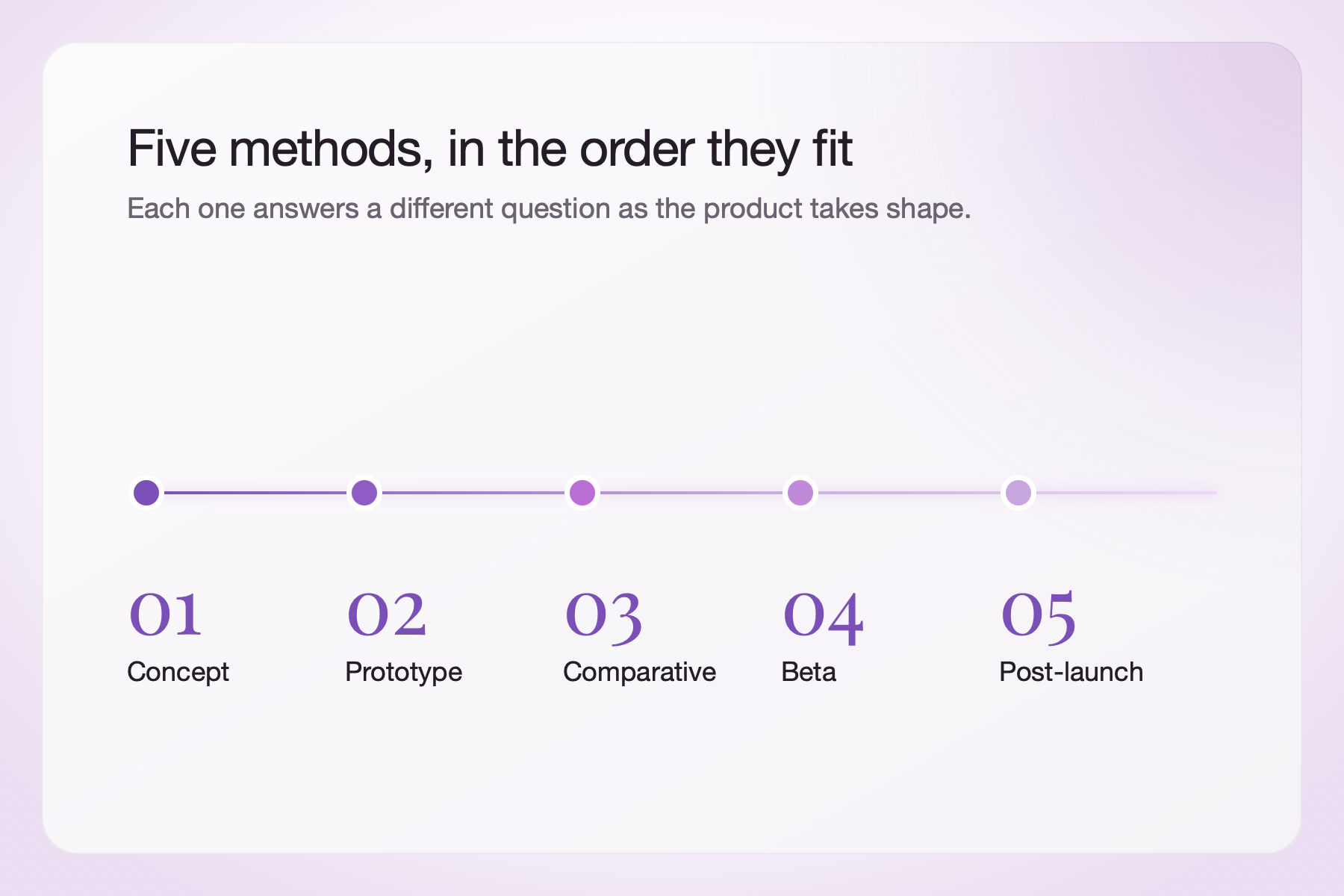
1. Concept testing
This type of testing evaluates an idea before your team invests heavily in building it. Show participants a description, mockup, sketch, advertisement, or value proposition, then ask them about relevance, clarity, uniqueness, and purchase intent.
You’ll use that to answer questions like:
- Which concept has the strongest appeal?
- Does the audience understand the value proposition?
- What concerns might prevent adoption?
- Which benefits matter most?
Want a closer look at study formats and common mistakes? Check out our guide to concept testing.
2. Prototype and usability testing
Prototype testing puts an early version of a product in front of users. Depending on the question, this can involve a clickable app prototype, a sample of a physical product, or a paper sketch.
Ask participants to complete realistic tasks before taking a survey. Their behavior reveals the problems, while their answers help explain why.
Useful measures include:
- Task completion
- Perceived ease of use
- Confidence
- Points of confusion
- Unmet expectations
Avoid explaining the interface while it’s being used. Every rescue mission hides a problem that your future customers have to face alone.
3. Comparative testing
This testing asks participants to evaluate 2 or more options. You might compare designs, names, features, packaging, pricing presentations, or original alternatives your team created without modeling them on a competitor.
A monadic test shows each participant only one option to reduce direct comparison bias. A sequential test shows multiple options to each person to make preferences easier to measure, but it increases the risk of order effects.
Randomize or counterbalance concept order during sequential testing when possible. Pew Research Center notes that the order of questions and response options can influence how people answer.
4. Beta testing
Beta testing gives a near-finished product to a limited group under real-world conditions. It’s particularly useful for finding unexpected technical problems, confusing workflows, and missing functionality before a wider release.
Check in while the test is active instead of waiting until the end. Short surveys triggered after meaningful moments, like finishing setup, trying a feature, or encountering an error, can produce more specific feedback than one large retrospective questionnaire.
Our beta product feedback survey template provides a practical place to get started.
5. Post-launch testing
Your product testing doesn’t end at launch. Follow-up surveys show whether customers are getting value, which features they use, and where expectations don’t match reality.
Track the same core measures over time, but leave room for discovery. A satisfaction score tells you something has changed. An open text response can tell you what.
Our guide to measuring customer satisfaction can help you choose the right metric.
15 product testing survey questions
The questions you ask should map directly to your research objective. If an answer won’t influence a decision, it probably doesn’t belong in the survey.
Here are 15 questions worth adapting.
First impressions and value
- In your own words, what do you think this product does?
- How relevant is this product to your needs?
- Which part of the product is the most valuable to you?
- What, if anything, makes this product different from other ways of solving the same problem?
- How disappointed would you be if this product were no longer available?
Usability and experience
- How easy or difficult was it to complete the task?
- At what point, if any, did you feel unsure about what to do next?
- What did you expect to happen when you selected [button or feature]?
- Which part of the experience took the most effort?
- What is one thing you would change to make the product easier to use?
Features and priorities
- Which feature would be most useful to you?
- Which feature would you be least likely to use?
- Is there anything missing that you’d need before using this product?
- If we could improve only one part of the product, which should it be?
- How likely would you be to use this product for [specific situation]?
“How amazing is our new feature?” is not on this list. Leading questions can make the results look prettier, but they won’t make the product better. Check out our guide to writing survey questions people actually answer for additional advice on keeping questions clear, neutral, and easy to process.
A product testing survey example
Imagine a team testing a mobile budgeting app before it launches. The main research question is: Can first-time users connect an account and create a monthly budget without assistance?
A simple study can look like this:
- Screen participants to confirm they manage their own household budget and use mobile banking.
- Give them two tasks: connect a sample account and create a budget.
- Record behavioral measures: completion, time on task, errors, and requests for help.
- Send a short survey immediately after.
- Interview selected participants to investigate recurring problems.
The post-test survey can ask:
- Were you able to create a budget?
Yes / Partly / No - How easy or difficult was it to connect an account?
Very easy to very difficult - Where did you feel least confident?
- Which part of the setup felt unnecessary?
- What information did you expect to see but didn’t?
- How likely are you to use this app for your own budget?
0-10 - What is the main reason for your answer?
The results could reveal that 80% of participants finished the task, but many of them hesitated when granting account permissions. The team now has a specific action: clarify why access is needed and what data the app can see.
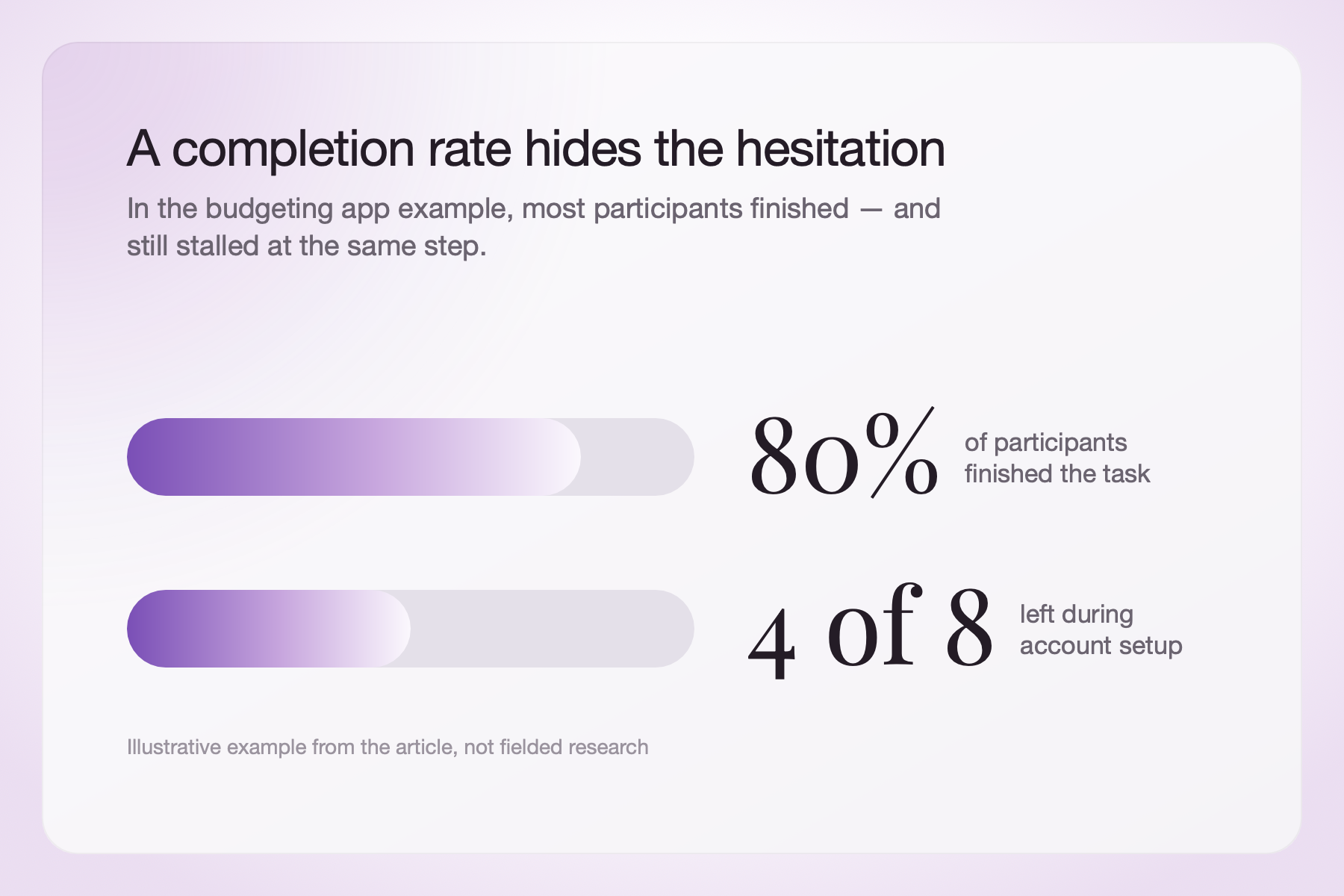
That’s more useful than a vague finding like “Most participants liked the app.”
Building a better product testing survey
Begin with the decision
Write down what the team will decide after the research. “Learn what users think” is too broad. “Choose which onboarding flow to develop” gives your study a job.
Then identify the evidence needed to make that choice.
Find the right participants
Feedback is most useful when it’s from relevant people. Define eligibility using behaviors, needs, experience, or buying roles, not demographics alone.
Existing customers can be valuable, but they may understand your product better than first-time users. If the test concerns first-time use, find first-time users.
Ask one question at a time
“How attractive and easy was the packaging to use?” is 2 questions wearing one coat. A participant might love its appearance but struggle to open it.
Separate the attributes so each answer has a clear meaning.
Test the test
Before launching, ask a few representative people to complete your survey and explain how they interpret each question. The U.S. Census Bureau’s questionnaire-testing guidance recommends respondent-based pretesting methods like cognitive interviews and usability techniques to identify confusing wording, faulty sequences, and burdensome questions.
Check the survey on multiple devices. A flawless desktop experience can fall apart on a mobile device.
Turn product feedback into action
Once responses arrive, start with the decision you defined at the beginning.
Compare your quantitative results by relevant segments, like new versus experienced users. Then code open-ended answers into themes and connect those themes to behavioral evidence.
A useful finding combines 3 things:
- What happened: 4 of 8 participants left the account setup.
- Why it happened: They didn’t understand the permission request.
- What to do next: Rewrite the explanation and retest the flow.
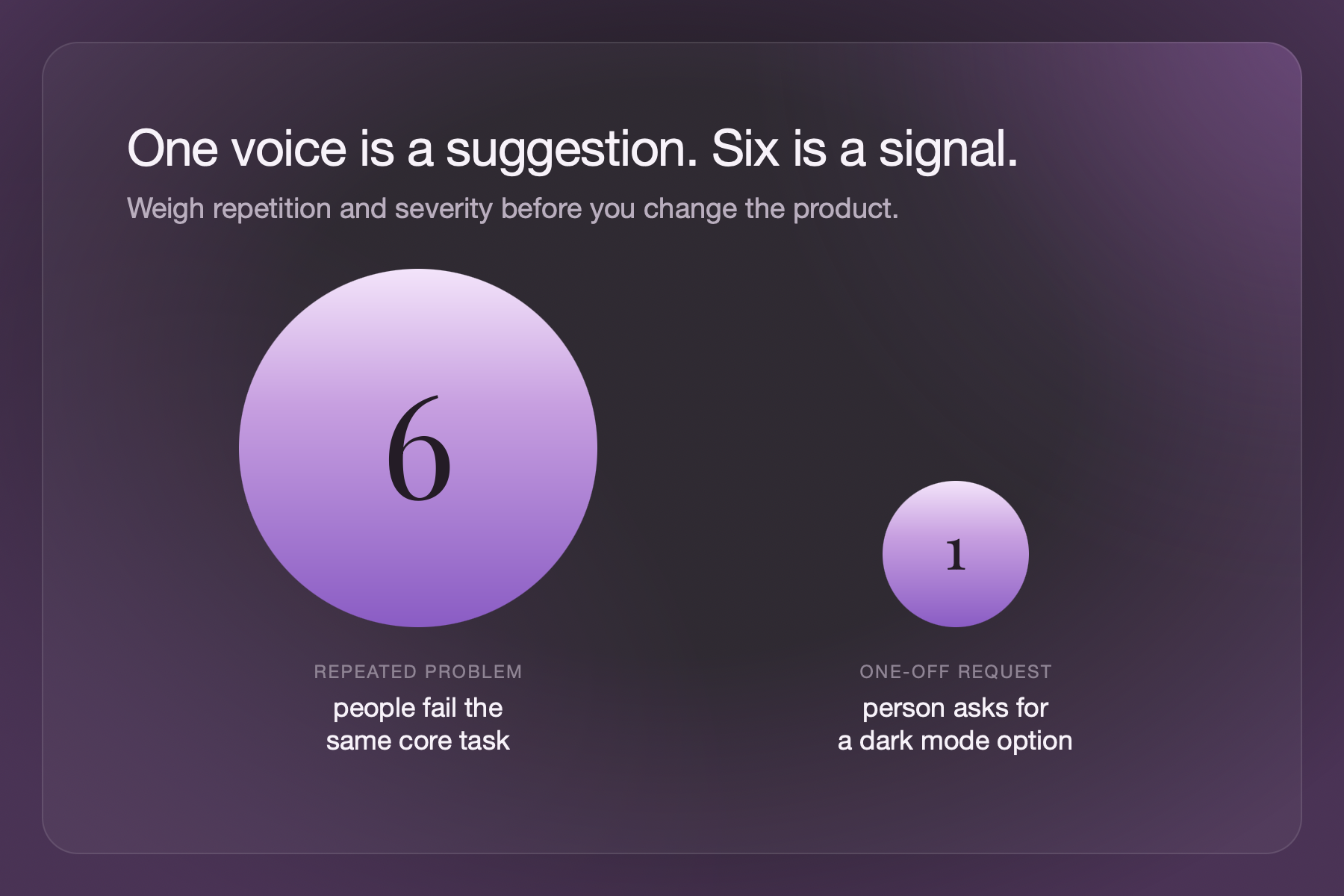
Don’t treat every comment as a product requirement. Look for repeated problems, consider how severe they are, and weigh them against your strategy. One person requesting dark mode is a suggestion. 6 people failing the same core task is a signal.
Finally, close the loop. Share what the team learned, what it will change, and what it won’t change yet. Product testing works best as a repeatable conversation, not a one-off verdict.
Build your next product testing survey with Typeform
Ready to start asking questions? Build a focused, conversational study with our survey maker, then turn what you learn into a product people don’t just say they want, but actually use.