How to craft a unique brand name
Not sure how to come up with a brand name? Get brainstorming tips, naming methods, and a trademark checklist to find a name that’s memorable and available.
Crafting a brand name that resonates for years to come leaves little room for error. William Shakespeare famously wrote in his play Romeo and Juliet, the famous line about a rose by any other name. While it’s become a popular adage, coming up with a brand name that works is no small task. In fact, we all surely know brand names and rebrands that have gone terribly awry.
Twitter’s rebrand to "X" was estimated to cost between $4 billion and $20 billion in brand value, according to analysts and brand agencies cited by Bloomberg. Words can take on different meanings across languages and cultures. Pee Cola, for example, is reportedly popular in Ghana, but its name would likely raise eyebrows among English-speaking consumers in North America.
Key takeaways
- The importance of crafting a brand name that works can’t be overstated. A brand name can make or break a company, so crafting one that reflects your brand’s persona well and is evergreen rather than trendy is key.
- If you’ve got a marketing team, make it an “all hands on deck” exercise. Coming up with a brand name that will work in the long term but is also one that your team agrees upon is ideal. Plus, the exercises can be fun!
- Once you’ve got a brand name, make sure it’s not already taken. You can perform an availability audit to ensure the uniqueness of your brand name.
- Test the brand name on a sample audience. Try the brand name out on friends and family members to ensure the ease of pronunciation and spelling, and conduct some tests to see what sample audiences think of it.
Alternatively, as Shopify notes, “A creative business name can reflect your brand identity, help your customers remember your business, and set you apart from competitors. For men’s grooming brand Manscaped, the right name became more than a label. Founder Paul Tran says that ‘manscaping’ has now become synonymous with the category. ‘We are kind of the Kleenex of the space.’”
It can be challenging to know how to come up with a brand name that resonates with potential clients for years to come—and isn't already tied to another company—so let’s dive in.
How to come up with a brand name that works
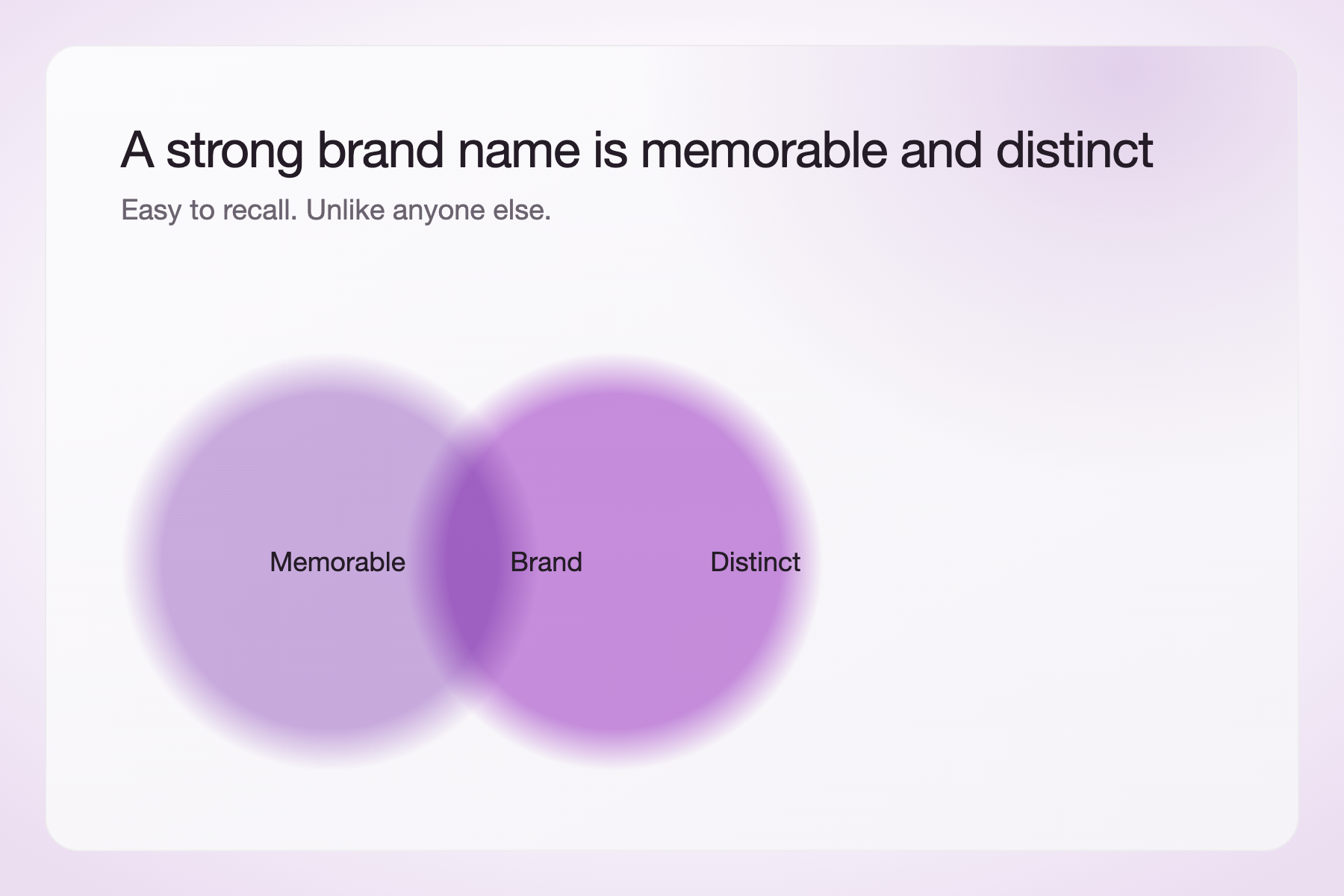
Coming up with a brand name is not something to take lightly, as it can make or break its long-term success, especially since it’s essentially your chance at a solid first impression. Some core tenets to consider when starting this process are: finding a name that’s memorable and easy to spell, ensuring it reflects your brand values and personality, and that it’s distinguishable from other brands in existence. Let’s explore some methods to find the perfect brand name below.
Brand names need to vibe
The word “vibe” is thrown around a lot these days, and it’s essentially the basis for how to start the process of finding a brand name. You need to find the vibe that best represents your brand and what it will project to consumers. Do you want your brand name to be symbolic? Are you looking for something concrete/descriptive or more abstract? Is it important that your brand name evokes an associated feeling? These are all questions to ask yourself as you get the process started.
Spitballing 101: How to brainstorm brand name ideas
Hopefully you’ve got a team of people to involve themselves in the process, as this really is the fun part. The website Foundr recommends a 20-minute brainstorm in which you set a timer and write down 15 to 20 words that represent the core of your mission. While AI can run the risk of making your brand name derivative, generators like Canva Business Name Generator or Namelix can be a great way to get the ball rolling.
Tap into the zeitgeist
“Zeitgeist” is a German word that translates literally to “the spirit of the time.” The Manscaped grooming brand example above perfectly illustrates tapping into the zeitgeist, creating a sort of inside joke that the consumer is in on. Of course, because you’re tapping into the current pop culture and can’t be sure of what’s to come, you run the risk of this going out of style, so to speak, if you go too niche or trendy.
Can you mash it up?
As this Wix article notes, “Combining two existing words can result in a fun, distinct and captivating business name. Mash-ups (also called portmanteaus) work surprisingly well for a business name, since they can creatively communicate your company’s greater mission.” For example, Groupon combines “group” and “coupons,” and “instant camera” and “telegram” for Instagram.

To create your own, have everyone in your company write down words that are associated with your brand, and go about the process of seeing whether any of these words “mash up” to create something catchy.
Use your own name
This approach has pros and cons, and they mostly depend on your kind of business. As Wix points out, “A design studio or law firm can do well with a personal name, but it might not work as smoothly for a global brand.”
An example of using this with wild success is the ice cream brand “Ben & Jerry’s”, but this also speaks to another approach to brand naming, which is that it should tell your company’s story. As such, “Ben & Jerry’s” has it all.
Try incorporating other languages
This is a relatively common approach to finding a brand name, as it helps companies widen their nets to names that are unique. Proceed with caution, however (remember the “Pee Cola” mentioned above!), as words can translate differently from country to country. This LinkedIn article by the company Brand-Aid.io offers three tips that might help:
- Linguistic Analysis: Understand your proposed brand name's phonetic and semantic aspects. Is it easy to pronounce? Does it convey the right message?
- Cultural Context: Consider cultural nuances and taboos. A word in one language might be offensive or awkward in another.
- Local Testing: Test your brand name within the target culture to ensure it's received positively and doesn't carry unintended meanings.
How to ensure your brand name isn’t already in use
You’ve gone through three pots of coffee, five pizzas, and a few minor disagreements, and your group is confident that they’ve come up with the perfect brand name. Unfortunately, you’re not finished, as the last thing you want to have happen is to find out that you’ve registered for a name that’s already in use.
It’s time to run an availability audit
As this Squarespace article notes, “Before getting too attached to a name, make sure it’s available for use. Check for trademarks, domain availability, and any legal considerations. Look up your brand name in the United States Patent and Trademark Office’s database. This will help you avoid potential conflicts or confusion down the line.”
You’ll want to do a Google search, a domain and handle check, and again, check the USPTO's Trademark Search tool.
Try the brand name on for size
Experts also recommend some other simple techniques in the final stages of coming up with a brand name, and one of them is what’s been called “The Out Loud Test.” Just as expectant parents might do before the baby comes, try bouncing the name off of friends and family members. Ask them to pronounce it and spell it to ensure those are easy enough things to do. Use thesauruses and translation tools to look up roots and suffixes along with their translations. Lastly and most importantly, take the time to try the brand name out on a test audience.
Have you tested the brand name on a sample audience?
Just as with product research, putting in the time and effort to test your brand name is critical. As Voxco notes, three reasons for testing your brand name on a sample audience are as follows:
- It can significantly impact brand perception.
- A strategically evaluated brand name that aligns with brand values will help build strong brand-consumer relationships and drive loyalty in consumer behavior over time.
- Choosing a brand name without testing with the target audience will lead to a lack of interest and engagement.
Brand name FAQs
How do you come up with a brand name?
Start by defining the vibe: what your brand stands for and how it should feel. Then brainstorm with a team, set a timer, and write down 15 to 20 words tied to your mission. Try mash-ups, personal names, or other languages, then check availability and test the shortlist.
What makes a good brand name?
A good brand name is memorable, easy to spell and pronounce, and reflective of your brand’s values and personality. It should also be distinct from existing brands. Names that tell a story, like Ben & Jerry’s, tend to stick with customers.
How do you check if a brand name is already taken?
Run an availability audit. Search the USPTO trademark database, do a Google search, and check domain and social media handle availability. Do this before getting attached to a name, since discovering a conflict after registering can be costly.
What is a portmanteau brand name?
A portmanteau (or mash-up) combines two existing words into one new name. Groupon blends “group” and “coupon,” and Instagram blends “instant camera” and “telegram.” These names can communicate your mission at a glance while staying distinctive.
Should you use your own name for your business?
It depends on the business. Personal names often work well for design studios and law firms, but they may be harder to scale for a global brand. Ben & Jerry’s shows the upside when a founder-name brand also tells a story.
Can you use a foreign word as a brand name?
Yes, but proceed carefully. Words can carry different meanings across languages and cultures, as Pee Cola found when it moved beyond Ghana. Do a linguistic analysis, consider cultural context, and test the name with native speakers in your target market.
What is the “out loud test” for brand names?
The out loud test means saying your name to friends, family, or colleagues and asking them to pronounce and spell it. If people stumble or misspell it, customers will too. It’s a quick check before you commit.
Why should you test a brand name with a sample audience?
Testing shows how your name affects brand perception before you launch. A name that aligns with your values helps build loyalty over time, while an untested one can lead to low interest and engagement.
Can you use an AI name generator to name your brand?
Yes, tools like Namelix and Canva’s Business Name Generator are useful for getting ideas flowing. Just be aware that AI suggestions can feel derivative, so treat them as a starting point and refine from there.
What are examples of brand naming mistakes?
Twitter’s rebrand to “X” was estimated to cost $4 billion and $20 billion in brand value, and Pee Cola’s name would raise eyebrows in English-speaking markets.
Build a brand that starts with an unforgettable name
When it comes to the loaded question, “What’s in a name?”, it turns out the answer is, “A lot!” Make sure to spend the time and effort coming up with a brand name that will work in your favor for years to come.