Stay interview questions: 30 that uncover why people stay
These 30 stay interview questions are organized by career, culture, autonomy, and compensation, so you can catch disengagement before it becomes a resignation.

Employee retention is a real business challenge. Companies spend thousands replacing people who leave, only to watch new hires take months to ramp up. But here’s what’s rarely discussed: the people who do stay have invaluable insights about what keeps them engaged, supported, and motivated.
Stay interviews are conversations with current employees—not exit interviews with people already walking out the door. They’re a chance to ask what’s working, what needs to shift, and what might push someone toward the exit if you don’t act now. The best part? These conversations often happen too late, or not at all.
This guide gives you 30 stay interview questions designed to unlock the real reasons people remain committed to your company. Use them to identify retention risks early, strengthen your culture, and build a workplace people actually want to stay in.
Why stay interviews matter
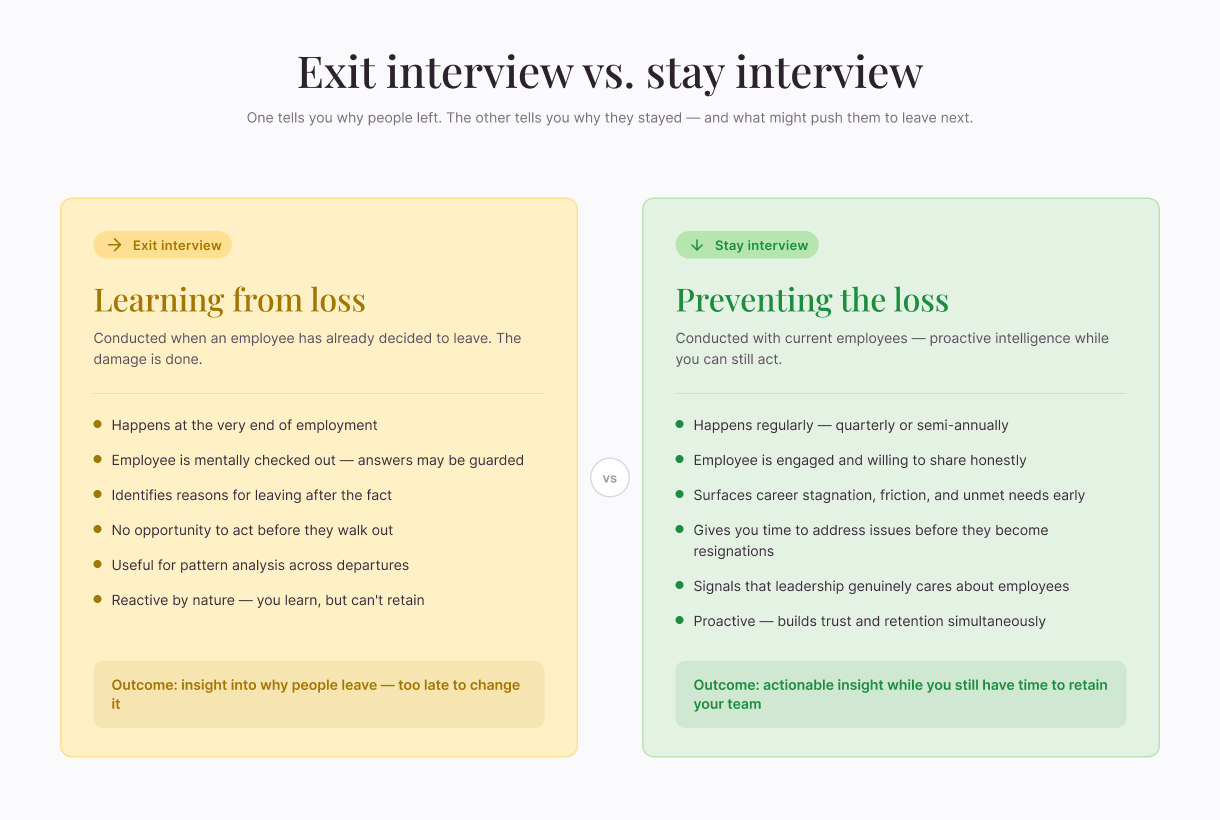
Exit interviews tell you why people left. Stay interviews tell you why they didn’t. That’s the difference between learning from failure and preventing it.
When someone resigns, they’re often already mentally checked out. The damage is done. But the people still in your organization? They’re making an active choice every day to show up. Understanding that choice gives you actionable intelligence about what’s driving satisfaction, what’s causing friction, and where you might lose people before they even start looking elsewhere.
The value of this early insight cannot be overstated. Rather than waiting for an employee to update their LinkedIn profile or accept an offer elsewhere, stay interviews let you identify dissatisfaction while you still have time to address it. A person who mentions career stagnation in a stay interview is giving you a roadmap to keep them engaged. That same person, six months later, might have already accepted another job.
Stay interviews also send a powerful message: you care enough to ask. Employees who feel heard tend to feel more valued, more trusted, and more connected to the organization. That alone can shift retention metrics. Beyond the direct benefits, regular stay interview conversations demonstrate organizational maturity. They show that leadership is proactive, not reactive—that you’re interested in learning what works before people walk out the door. This cultural signal matters, especially to high performers who have options and are evaluating whether their employer genuinely invests in them.
How to run an effective stay interview
Before you launch into questions, create the right environment. Stay interviews work best when:
- They happen regularly, not just once a year. Schedule them quarterly or semi-annually so you catch shifts in sentiment early. Consistency signals that feedback is genuinely valued and that this isn’t a one-time initiative.
- They’re confidential. Employees need to know their honest feedback won’t be used against them. Consider having HR or a neutral manager conduct them. When people worry their candid answers might affect their performance review or standing, they clam up.
- You listen more than you talk. Ask the question and let silence do the work. Don’t interrupt or defend. Let people fully express their thoughts. This is harder than it sounds—most managers feel the urge to explain or justify. Resist it.
- You follow up. If someone mentions a problem, come back to them in a month and tell them what you did about it. Empty conversations breed cynicism. People need to see that their input actually moves the needle.
- You actually make changes. Nothing kills trust faster than staying silent after collecting feedback. Even small changes matter if they’re directly connected to what people said.
The tone matters too. This isn’t an interrogation or a performance review. It’s a conversation between people who care about the same organization. Informal settings help. A walk around the block, a coffee chat, or even a video call where you’re both in comfortable environments works better than a formal meeting room.
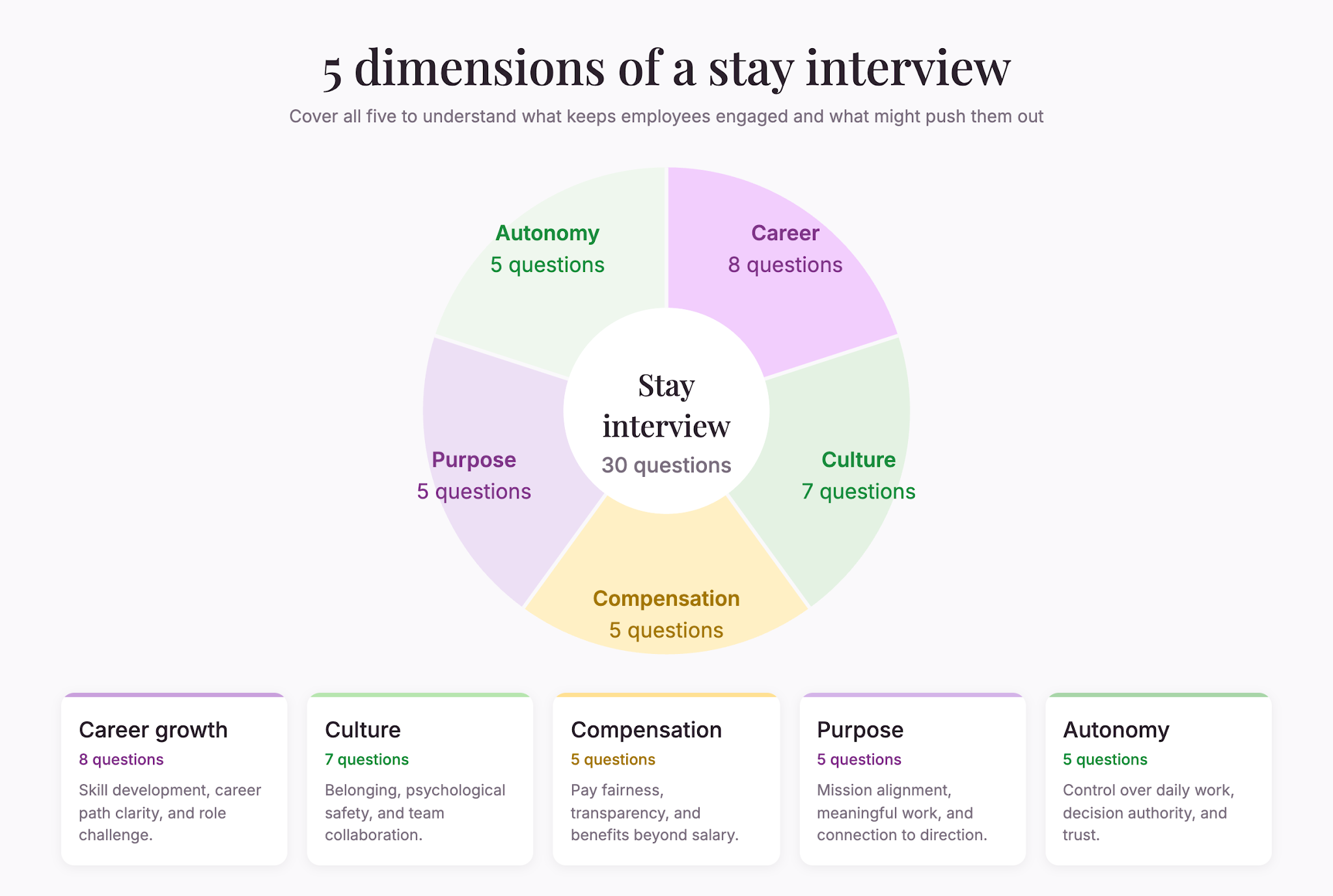
30 stay interview questions organized by category
Career growth and development
- What skills or experiences have you gained since joining us that you’re most proud of?
- Where do you see your career going in the next 2–3 years?
- What opportunities for growth would make you more excited about your future here?
- Have you had the chance to work on projects that challenge you and stretch your abilities?
- What training or skill development have you found most valuable?
- Is there a role or department you’ve been curious about that we could help you explore?
- What would a clear career path look like to you in your role?
- Have you received feedback or recognition that made you feel valued recently?
Career development is one of the top reasons people stay—or leave. When employees see a path forward within your organization, they’re more likely to invest in it. These stay interview questions help you understand not just whether someone feels stuck, but what kind of growth actually matters to them. A junior developer might crave technical depth, while a team lead might be hungry for broader business exposure.
Work environment and culture
- What aspects of our team culture keep you engaged?
- If you could change one thing about how we work together, what would it be?
- Do you feel like you belong here? Why or why not?
- How well do you know your colleagues outside of immediate projects?
- What does psychological safety mean to you, and do you feel it exists here?
- Are there any unspoken rules or norms that frustrate you?
- How would you describe the balance between collaboration and individual focus in your role?
Culture questions reveal whether someone feels like part of a cohesive team or like an outsider pushing work through a system. Belonging—the genuine sense that you fit here and people value you—is a major retention driver. These stay interview questions dig into that directly. Listen for whether people mention specific colleagues, team rituals, or shared values. Those details tell you what’s actually working in your culture.
Autonomy and decision-making
- How much control do you feel you have over your daily work and priorities?
- Are there decisions you’d like to make that currently require approval from higher up?
- What would give you more freedom to do your best work?
- Do you feel trusted to make decisions in your role, or does it feel micromanaged?
- What’s one process or rule that slows you down that you wish we’d change?
Autonomy is critical for engagement, especially for experienced employees. People want to feel trusted to do their jobs without constant oversight. These questions help you identify where decision-making authority has become bottlenecked or where processes have created unnecessary friction. A person who feels micromanaged might be technically satisfied with their work but emotionally disconnected from the organization.
Compensation and benefits
- Do you feel your compensation is fair for the work you’re doing?
- Are there benefits or perks that would make a meaningful difference in your life right now?
- How transparent is our compensation structure to you?
- What would make you feel more appreciated from a financial standpoint?
- Beyond salary, what matters most to you in a benefits package?
Compensation questions are straightforward but nuanced. Someone might say their salary is fair while still feeling undervalued if they lack transparency around how it was determined. Others might be willing to accept slightly lower pay in exchange for flexibility, remote work options, or better parental leave. These stay interview questions help you distinguish between actual pay dissatisfaction and deeper feelings of being undervalued.
Purpose and meaning
- Why did you choose to work here in the first place, and is that still true?
- Do you understand how your work contributes to our larger mission?
- What aspects of your job feel most meaningful to you?
- Is there anything about what we do as a company that you’re less excited about?
- If you left tomorrow, what would you miss most about working here?
Purpose questions get at something deeper than day-to-day satisfaction. They explore whether someone’s connection to your mission has strengthened, weakened, or changed. Someone might be great at their job, but increasingly misaligned with company direction. These stay interview questions surface that before it becomes a resignation.
How to use the answers
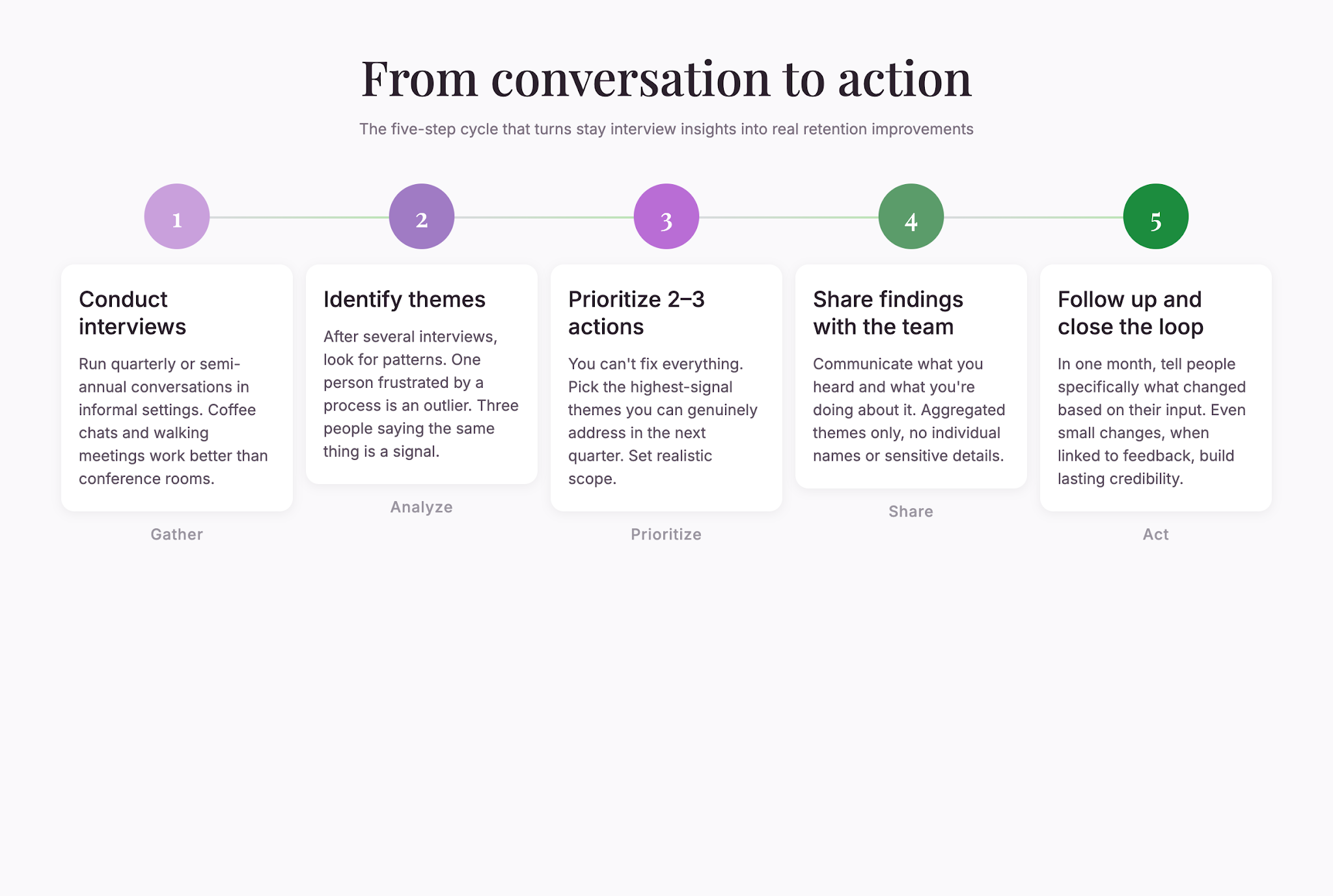
Asking questions is only half the work. The real value comes from what you do next.
After you’ve conducted several stay interviews, look for patterns. Are multiple people mentioning the same career bottleneck? Do people feel disconnected from the company’s mission? Is compensation a recurring concern? Write these down. Patterns matter more than individual complaints. One person frustrated by a process might be an outlier. Three people frustrated by the same process is a signal.
Then, prioritize. You won’t fix everything at once, and you shouldn’t pretend you will. Pick 2–3 themes you can actually address in the next quarter. Communicate what you heard and what you’re doing about it. People don’t need solutions to every concern, but they do need to see that you’re listening and acting. Even small changes, when visibly connected to feedback from stay interviews, build credibility and trust.
Share the findings with your team, too. Transparency builds trust. When people know that leadership is paying attention to their concerns and making changes based on what they say, engagement climbs. You don’t need to share individual names or sensitive details, but aggregated themes and action items should be visible to the organization.
Common mistakes to avoid
Asking but not acting. If you run stay interviews and then do nothing, you’ve taught people that their feedback doesn’t matter. Don’t start this process unless you’re genuinely willing to listen and change. The reputational damage from hollow stay interviews is worse than not conducting them at all.
Making it too formal. Stay interviews feel like performance reviews when they’re conducted in a stiff, corporate way. Keep it conversational. Coffee, walking meetings, or casual settings help people relax and be honest. The goal is genuine dialogue, not a checklist.
Only talking to high performers. You need feedback from your whole team—quiet contributors, newer hires, and people who might be at flight risk. Cast a wide net. High performers often have options and are evaluating opportunities regularly, but so are solid mid-level employees who might slip away quietly.
Asking leading questions. “You love it here, right?” is not a stay interview question. Ask open-ended questions that give people room to be truthful, even if the truth is uncomfortable. Leading questions defeat the purpose entirely.
Ignoring trends. If 8 out of 10 people mention the same frustration, that’s a signal you need to address. Don’t write it off as one person’s complaint. Patterns reveal systemic issues worth tackling.
Making stay interviews part of your retention strategy
Stay interviews are a tool, not a band-aid. They work best as part of a broader commitment to understanding and supporting your team. Pair them with regular 1-on-1s, transparent communication, and a genuine willingness to evolve how you work. When combined with responsive management and clear opportunities for growth, stay interview questions become part of a comprehensive retention ecosystem.
The goal isn’t to ask perfect questions or uncover hidden secrets. It’s to create space for honest conversation about what matters—career growth, culture, autonomy, compensation, and purpose. When people feel heard on those fronts, they’re far more likely to stick around. They’re also more likely to speak positively about your organization to others, which improves recruitment and reputation.
And you’ll have the insights you need to build a workplace where staying isn’t just the default—it’s the choice.