How to build a style quiz that turns browsers into buyers
A style quiz works like a digital personal shopper, matching customers to products they’ll love and turning casual browsers into confident buyers.

Online shopping allows customers the chance to have more choices than ever before. It also gives them additional opportunities to wonder, “Wait, which one is actually right for me?”
Key takeaways
- A style quiz acts like a digital personal shopper that guides customers toward relevant products and reduces decision fatigue.
- Start with clear outcomes, then ask focused questions about shoppers’ preferences, needs, and buying context.
- Use conversational copy, visual choices, and branching logic to create a shorter, more personalized experience.
- Build trust with transparent data collection and recommendations that genuinely reflect each shopper’s answers.
- Track completion, product clicks, and purchases to continually improve your quiz and its impact on sales.
That uncertainty can become expensive. When shoppers have to compare dozens of similar products, decode unfamiliar terminology, or imagine how something will fit into their lives, it’s easier to close the tab than reach the checkout.
A style quiz changes the experience. Instead of leaving visitors alone with a catalog, it asks a few thoughtful questions, learns what they like, and guides them toward products best suited for them. Think of it as your best in-store associate that’s available to every shopper, at any hour.
And the appeal goes well beyond fashion. A quick style quiz can help people find their ideal furniture, glasses, jewelry, beauty products, stationery, or home decor. If taste affects the buying decision, a quiz helps make that decision feel easier and more personal.
Learn how to build one that shoppers will enjoy taking, and that helps your business turn more browsers into buyers.
Why a style quiz works
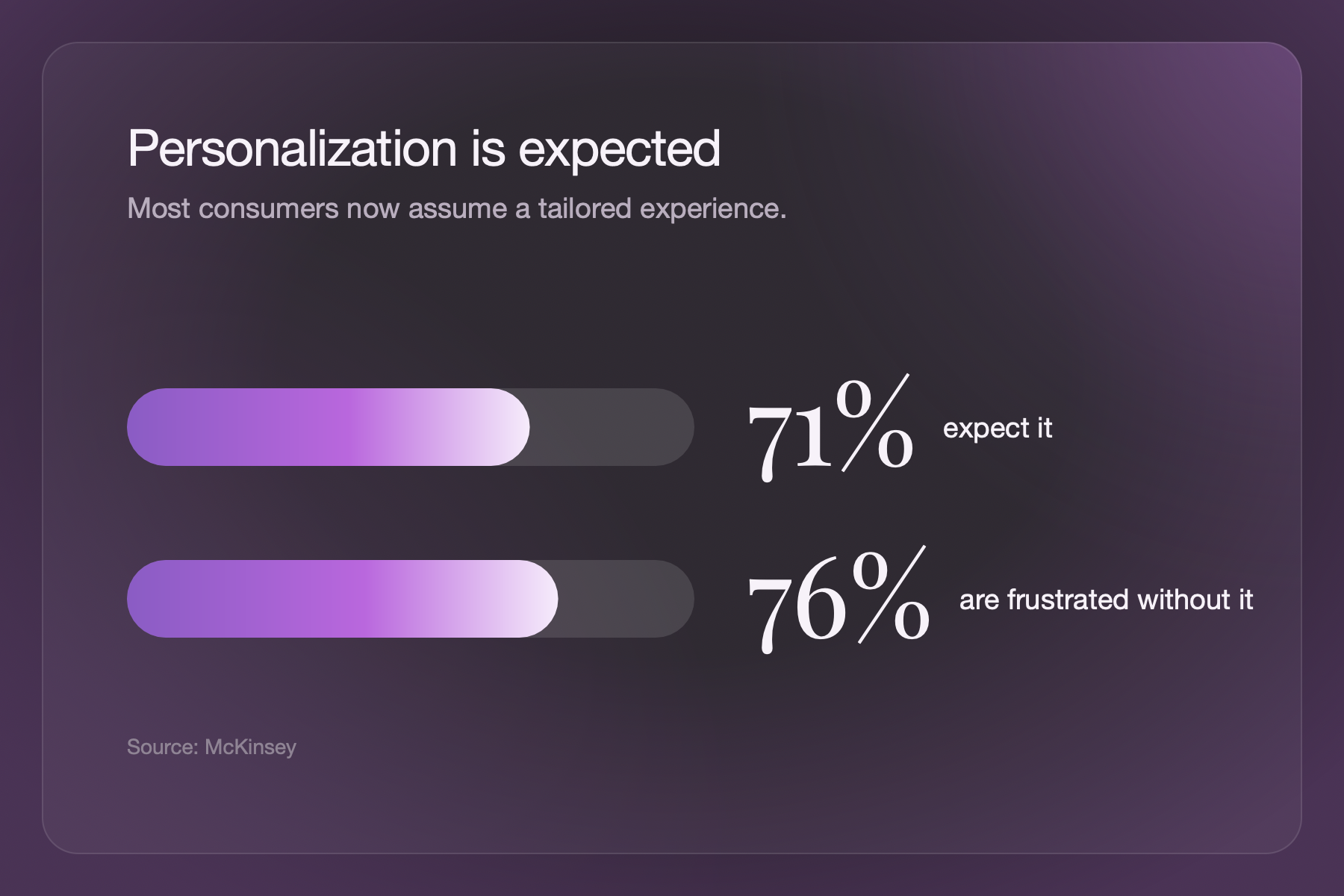
People want personalization. According to McKinsey research, 71% of consumers expect personalized interactions, while 76% become frustrated when they don’t receive them.
But personalization only works when it’s helpful. A recommendation that reflects someone’s actual preferences feels like good service. A random “You might also like” carousel? Not so much. A well-designed style quiz creates value on both sides.
For shoppers, it:
- Reduces the effort required to explore a large catalog
- Replaces generic suggestions with relevant recommendations
- Builds confidence before a purchase
- Makes product discovery feel fun rather than overwhelming
For brands, it:
- Collects preference data directly from customers
- Reveals why people choose certain products
- Supports more useful audience segmentation
- Creates opportunities for personalized follow-up
- Moves undecided visitors closer to a purchase
The need for that guidance is real. Baymard Institute’s product-list research stated that poor browsing, filtering, and sorting experiences make it harder for shoppers to find the right product, even when the product is available.
A style quiz provides another route for customers. Rather than saying, “Here are 200 options, good luck,” you are saying, “Tell us what you like, and we’ll narrow things down for you.”
Start with the buying decision
It’s always tempting to start with playful questions. Avoid doing that, for now.
First, decide what your style quiz needs to help someone choose. A clothing store might recommend a capsule wardrobe. A furniture brand may identify a design aesthetic before suggesting a collection. An eyewear company could match frame shapes to a shopper’s tastes, daily routine, and desired look.
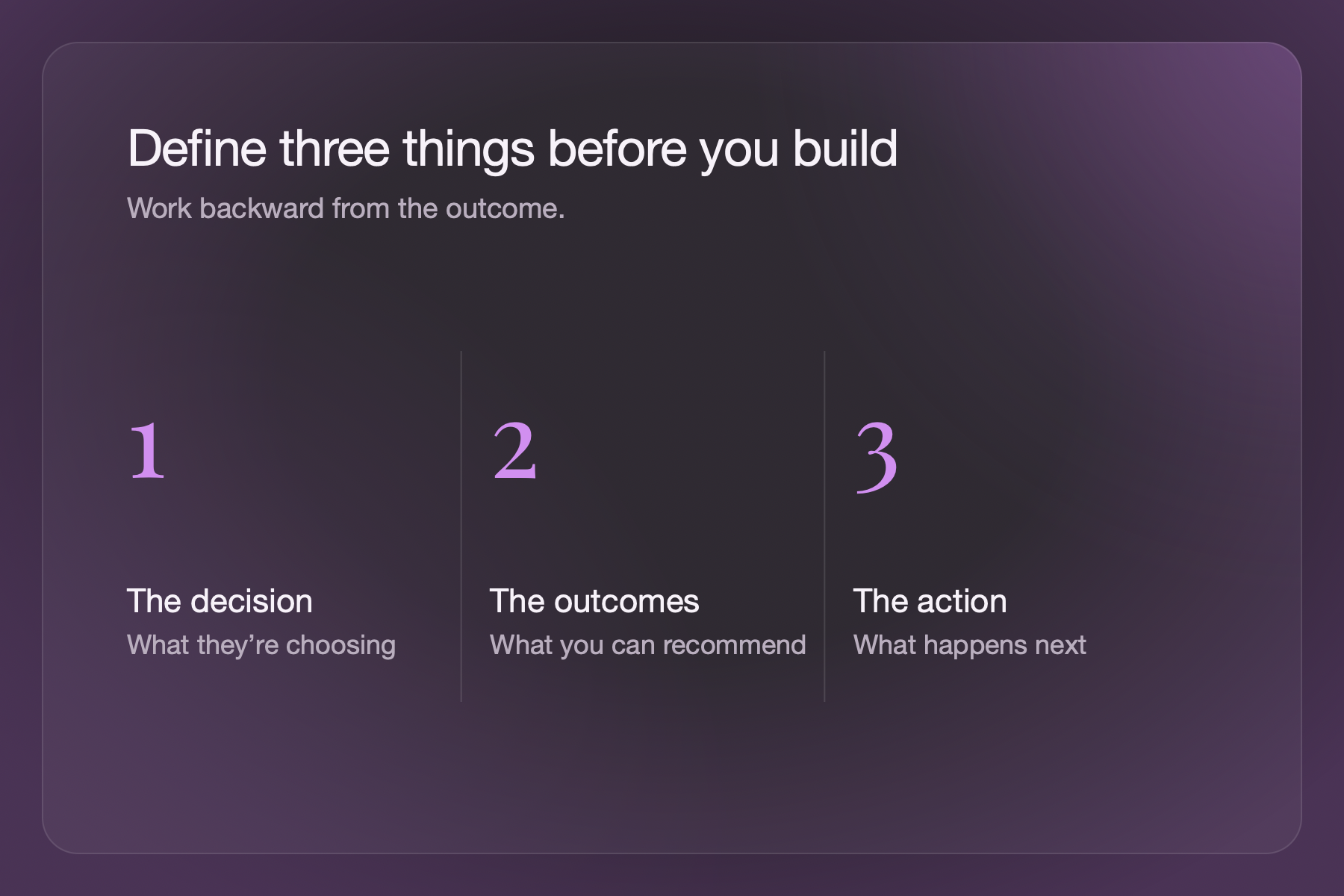
Define these 3 things before building your style quiz:
- The decision: What will the shopper feel more confident choosing?
- The outcomes: Which products, collections, or style profiles can the quiz recommend?
- The action: What should someone do after seeing their result?
Work backward from your outcomes. If the result is “Warm minimalist,” for example, which answers distinguish that profile from “Modern industrial” or “Color electric”?
This keeps the quiz useful. Every question earns its place by improving the final recommendation. If you need inspiration, explore these product recommendation quiz examples to see how other brands connect customer answers with meaningful outcomes.
Ask about preferences, not just demographics
Age, location, and budget help shape a purchase, but they rarely capture someone’s style on their own. Ask questions that reveal taste, context, and priorities. Depending on what you sell, that could include:
- Colors they wear or use most often
- Patterns they love or try to avoid
- Favorite materials and textures
- The mood they’re trying to create
- How they plan on using the product
- Their non-negotiable features
- How adventurous or classic their taste is
Scenario-based questions work especially well because they are easier to answer than abstract ones. “Choose your ideal Saturday” may reveal more than “How would you describe your aesthetic?”
Visual questions can make choices feel more intuitive. Show rooms, outfits, palettes, or product details and ask shoppers to select the image that feels most like them. Just be sure that each image represents a genuinely different preference, not four nearly identical shades of beige.
Aim for about 5 to 10 focused questions. Your quiz should collect enough information to make a credible match without becoming a personality assessment worthy of a psychology lab.
Make it feel like a conversation
A good style quiz responds. It doesn’t interrogate.
Start with a welcome screen that sets clear expectations. Tell shoppers what they’ll receive and about how long it will take:
Find your signature interior style, and the pieces that bring it home. Answer 5 quick questions to get your personalized edit.
Then keep the experience moving with short questions, friendly language, and one clear task at a time. Match the copy to your brand voice, whether that’s polished, understated, playful, or bold.
Use branching logic to make the journey more relevant. If someone says they’re shopping for workwear, for example, they don’t need questions about festival outfits. If they are renters, you can skip permanent renovation options.
Branching allows you to ask useful follow-up questions. A shopper who chooses “I love color” could see a question about favorite palettes, while someone who prefers neutrals could be asked about texture and contrast.
The result is a shorter, smarter quiz. One that feels as though it’s listening.
Build a recommendation people can trust
The reveal is the moment your quiz has to deliver on its promise.
A weak result says, “You’re a classic,” then drops the shopper onto a generic category page. A strong result explains that match, reflects key answers, and gives the shopper an obvious next step.
Include:
- A memorable style name
- A short explanation of why it fits
- 2 or 3 defining characteristics
- A curated selection of relevant products
- A clear call to action
- Optional alternatives for shoppers who want to keep exploring
For example:
Your style is Soft Structure
You like clean lines, but you don’t want your space to feel cold. Warm neutrals, natural materials, and gently curved shapes give you the balance you’re looking for.
Follow that with a small, intentional product edit, not your entire catalog. Baymard’s research shows that too many visible products can overwhelm shoppers. Your quiz should reduce decision fatigue, not relocate it to the results page.
Be honest about the match, too. Do not route everyone to your highest-priced item or newest collection. Recommendations should solve the shopper’s problem first. That credibility is what earns you the click.
Ask for an email at the right time
A style quiz also generates leads, but an email address shouldn’t feel like an entry fee for a result someone has already earned.
Explain why sharing it is worthwhile:
- “Send my personalized edit”
- “Save my results”
- “Get my style guide and product picks”
- “Email me a copy, plus styling tips”
If you can, let people see a useful result without submitting their email. Then offer additional value in exchange for opting in. This creates a more generous experience and can produce a higher-quality list of people who genuinely want to hear from you.
Be transparent about how you’ll use customer information. The Federal Trade Commission recommends collecting only the data your business needs and retaining it only as long as necessary. Avoid asking sensitive or irrelevant questions simply because you can.
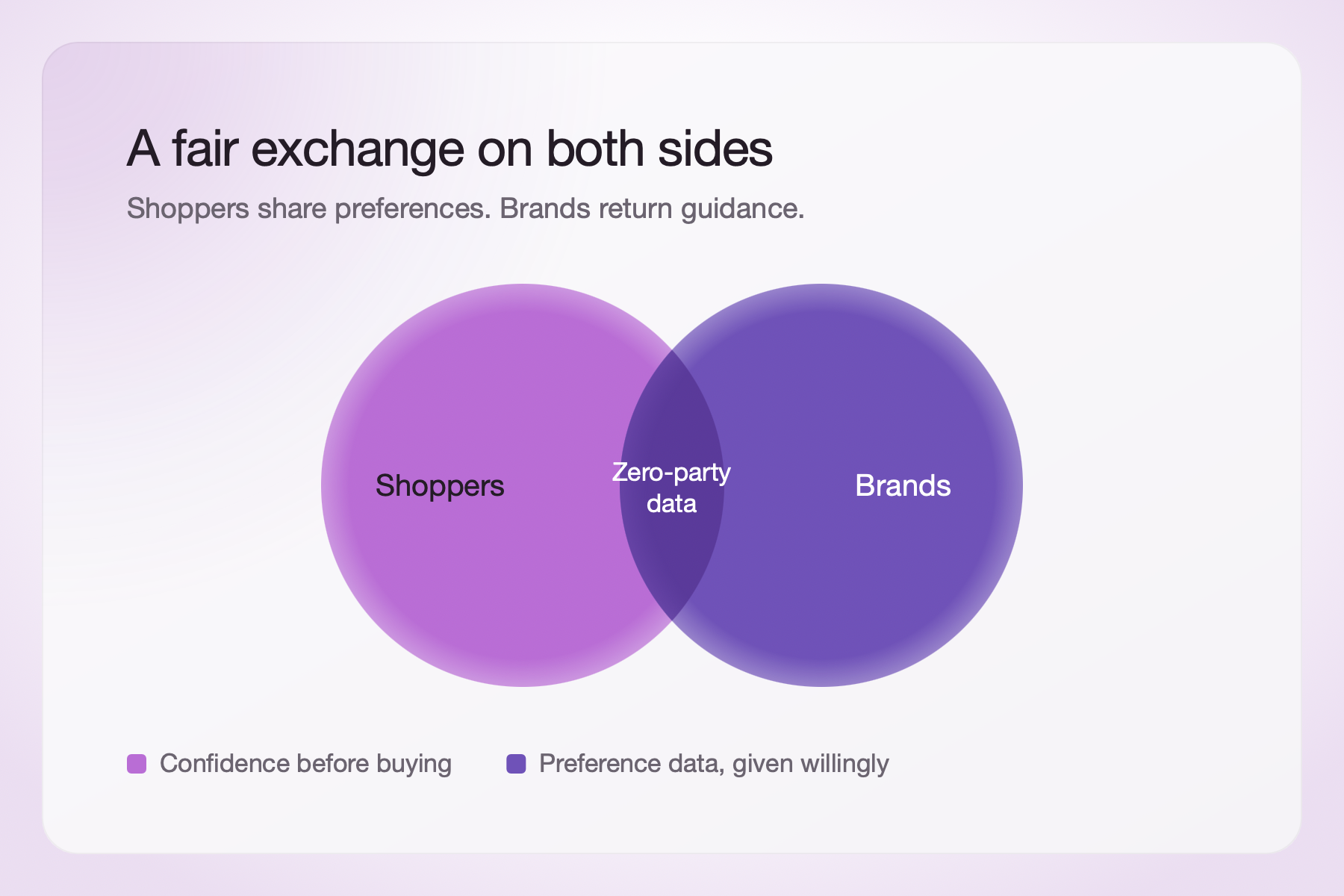
The best zero-party data, the information customers intentionally share, is collected through a fair exchange: shoppers tell you what they want, and you give them something meaningfully better in return.
Connect the quiz to the rest of the customer journey
The quiz result shouldn’t be the end of the conversation.
Use answers to personalize what comes next. A shopper matched with a “Relaxed coastal” interior style could receive an email featuring natural fabrics, light woods, and styling advice. Someone identified as a “Bold maximalist” should get a very different edit.
You can use quiz data to:
- Segment subscribers by style, need, or budget
- Send a personalized result email
- Recommend complementary products
- Tailor educational content and buying guides
- Trigger cart reminders featuring matched items
- Inform future product development
- Create more relevant retargeting campaigns
Our product recommendation quiz guide explains how conversational questions, logic, and tailored outcomes can work together. You can also connect Typeform with the tools you already have in your workflow so responses don’t sit untouched in a spreadsheet.
Just keep in mind that personalization should stay consistent. If the quiz recommends understated essentials, the follow-up email shouldn’t lead with neon statement pieces.
Test the paths before publishing
You know your product catalog. Your shoppers don’t. Test the quiz from their perspective. Complete it several times using completely different answer combinations. You’ll want to check whether:
- Each result feels accurate and distinct
- Similar answer patterns produce consistent matches
- Logic sends people down the right paths
- Every recommended product is available
- Buttons and links work on mobile devices
- The result explains why it was chosen
- The full experience feels quick and coherent
See if people outside the project can take a look at it. Have them describe what they expected to receive and whether the result made sense. Are they surprised? If they are for the wrong reasons, revisit your questions or matching rules.
Then publish and keep learning. Monitor starts, completions, question-level drop-offs, clicks from result pages, email opt-ins, add-to-cart activity, and purchases. Our guidance on using quizzes for e-commerce growth offers more ideas for connecting quiz engagement with business outcomes.
Improve the quiz with real response data
Your first version of the quiz is a hypothesis. Customer behavior tells you what to change.
If many people leave at the same question, it could be confusing, too personal, or difficult. If one result appears far more often than the others, your scoring could be unbalanced, or you have discovered a real preference in your audience.
Look beyond completion rate. A short quiz that everyone finishes but no one purchases from isn’t doing its job. Measure the entire path from quiz start to recommended-product click and, where possible, purchase.
Useful questions to ask include:
- Which outcomes generate the most product clicks?
- Which recommendations convert?
- Do quiz takers spend more than other visitors?
- Which questions best predict a purchase?
- Are customers returning to their saved results?
- Do certain segments respond better to follow-up emails?
Take these insights and refine questions, rebalance outcomes, update product selections, and sharpen your post-quiz messaging.
Provide customers a shortcut to “that’s the one”
The best style quiz doesn’t feel like a lead-generation form wearing a fun outfit. It feels like useful guidance. It asks just what it needs to know. It respects the shopper’s time and privacy. It turns their answers into recommendations they can understand, trust, and act on.
Build that experience, and your quiz can do more than collect clicks or email addresses. It can replace uncertainty with confidence, and help more browsers find a product that feels as though it was chosen just for them.
Ready to create your own? Build a quiz with Typeform and turn a product discovery into a conversation.