How to measure customer satisfaction the right way
Most people ignore customer satisfaction surveys. See how to create CSAT surveys people actually complete—with smarter questions, precise timing, and workflows that close the customer feedback loop fast.
.webp)
"If I’m giving feedback, that means it’s an investment of my time—not a courtesy. If you want insights, show me how they’ll be used. Without a clear path from my input to your action, my participation is just wasted effort. Tell me why my time is worth your growth."
Amy Carlson, Senior Manager of Customer Success at Typeform, verbalized what consumers have been thinking for a while now: customer satisfaction (CSAT) surveys aren't worth our time.
The irony? Customer feedback tools are meant to measure customer satisfaction, but people are so dissatisfied with how companies handle feedback that they won't even start the survey.
CSAT measures how satisfied customers are with your product, service, or their interactions with your brand. Done right, they help you create a better customer experience (CX).
But customer satisfaction doesn't explain the why behind (dis)satisfaction or give you a big-picture view—it focuses on specific interactions—which is why you have to treat CSAT as an ongoing, perfectly-timed motion throughout the customer journey.
By treating CSAT as a continual, strategic initiative, you show customers their feedback matters. You get more nuanced insights by asking the right questions at the right time.
We're breaking down how and when to measure customer satisfaction, how to write CSAT questions that drive responses, and how to create a CSAT survey in Typeform.
How to measure customer satisfaction: 4 crucial elements

Sending a customer satisfaction survey is easy. But creating one that customers complete and brings in useful data? That's where most organizations struggle.
Anywhere between 5 and 30% is considered a good response rate for CSAT surveys—meaning that "good" leaves behind between 70 and 95% of your customers.
So how do you measure customer satisfaction when no one's filling out your surveys? Build better CSAT surveys.
It comes down to these four elements, working together to get customers to share more meaningful insights that drive real change:
- Asking the right questions
- Asking at the right moment
- Combining answers with follow-up context
- Closing the customer feedback loop—fast
Without every element, you're back to collecting scores without the context needed to deliver a better CX.
1. Ask the right customer satisfaction questions

Want insightful answers? You need to ask better questions. "Better" starts with choosing the right question type for what you're trying to measure.
Rating questions give you quantifiable data. They're quick and help you track customer satisfaction trends over time, but don't tell you why someone's (dis)satisfied.
That's where open-ended questions come into play. They help you understand the why that's critical to delivering a stellar CX over time. Video surveys can be especially helpful, letting customers share in their own words what could be better.
The open-ended questions are where the real insights live... the answers you can't predict and the ones that don't fit into a rating or multiple-choice question. The best customer satisfaction surveys are those that combine rating and open-ended questions.
They keep questions short, specific, and clearly connected to what you're measuring (a support interaction, a recent purchase, product onboarding). And remember: generic customer satisfaction questions = generic answers (or none at all).
2. Ask at just the right moment

Timing is everything, especially when it comes to sending your customer satisfaction surveys. When you ask at the exact right moment and pair CSAT questions with personalized follow-ups, you get a clear picture of what's actually going on.
Let's say a customer onboarded a month ago. You send a CSAT survey, but they don't bother responding because they don't remember onboarding at this point.
But if you send it right after they get set up with your product, chances are you'll get actionable customer feedback while it's still fresh in their mind.
Bottom line: send your customer satisfaction survey at the wrong time, and you're asking customers to remember something they've already forgotten.
3. Add meaningful follow-up context

A CSAT score without context is just a number. But when you combine it with a follow-up question that probes a little deeper, you get the full story without having to guess the why.
And if you've got a smart form, you can adapt what you ask next based on their response.
If someone's not satisfied with a recent support interaction, that's your cue to ask why—helping you uncover what went wrong and how to fix it.
This turns a basic score into a personalized conversation. Instead of forcing every customer through the same set of questions, you adapt based on their experience. And that context becomes the foundation for turning customer feedback into action.
4. Close the customer feedback loop

If a customer takes time to share their feedback and nothing changes, they won't bother next time. Closing the feedback loop is about showing customers that their input matters and led to action—and fast.
Automated workflows let you close the loop by acting on responses. Instead of waiting for your customer success team to review responses a week later, customer feedback triggers the next action in the flow, like routing responses to the right team in Slack, so you can send a follow-up email immediately to address concerns.
The same goes for positive feedback. A customer who rates your product or service above a certain score could automatically receive an email requesting a review. The feedback they give should determine what happens next—without anyone manually sorting through responses.
“What I see is the organizations that can collect and understand a lot of customer information, that’s great, but the ones that actually have the ability and the capability to act upon it is even better, and that’s what makes a difference." - Jeff Mango, Managing Director of US Customer Experience, KPMG
When to measure customer satisfaction
You already know that timing's paramount, but it's also about knowing which interactions warrant a CSAT survey. These are the moments that'll give you the most actionable insights.
After onboarding
Was setting up your product confusing? Ask customers about their experience once they complete onboarding:

After support interactions
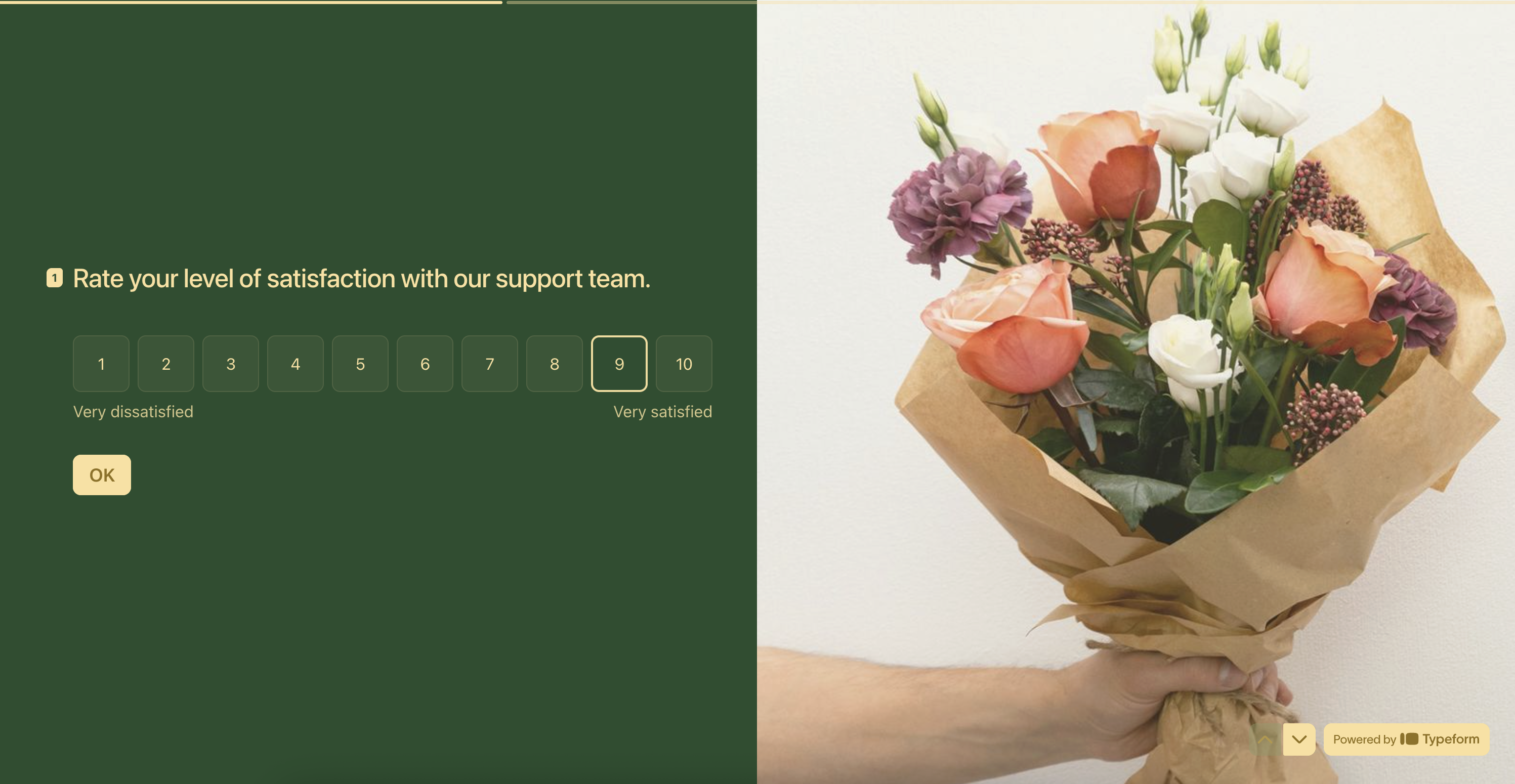
Measure customer satisfaction while the experience is still fresh:
After feature releases
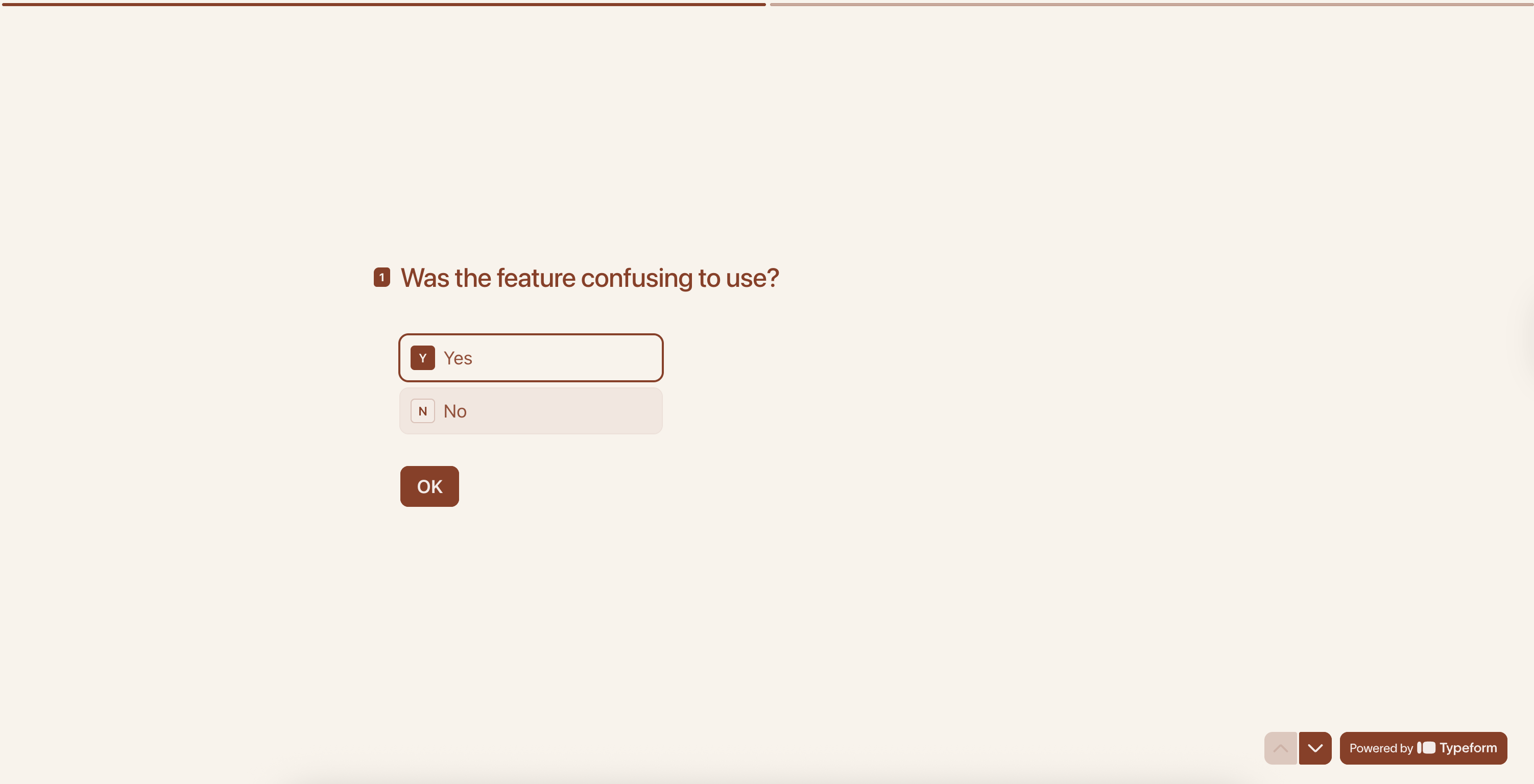
Make sure you're not releasing product features that frustrate customers more than help them. Ask:
After purchases
Nothing slows sales faster than friction at checkout. See if or where customers struggle:
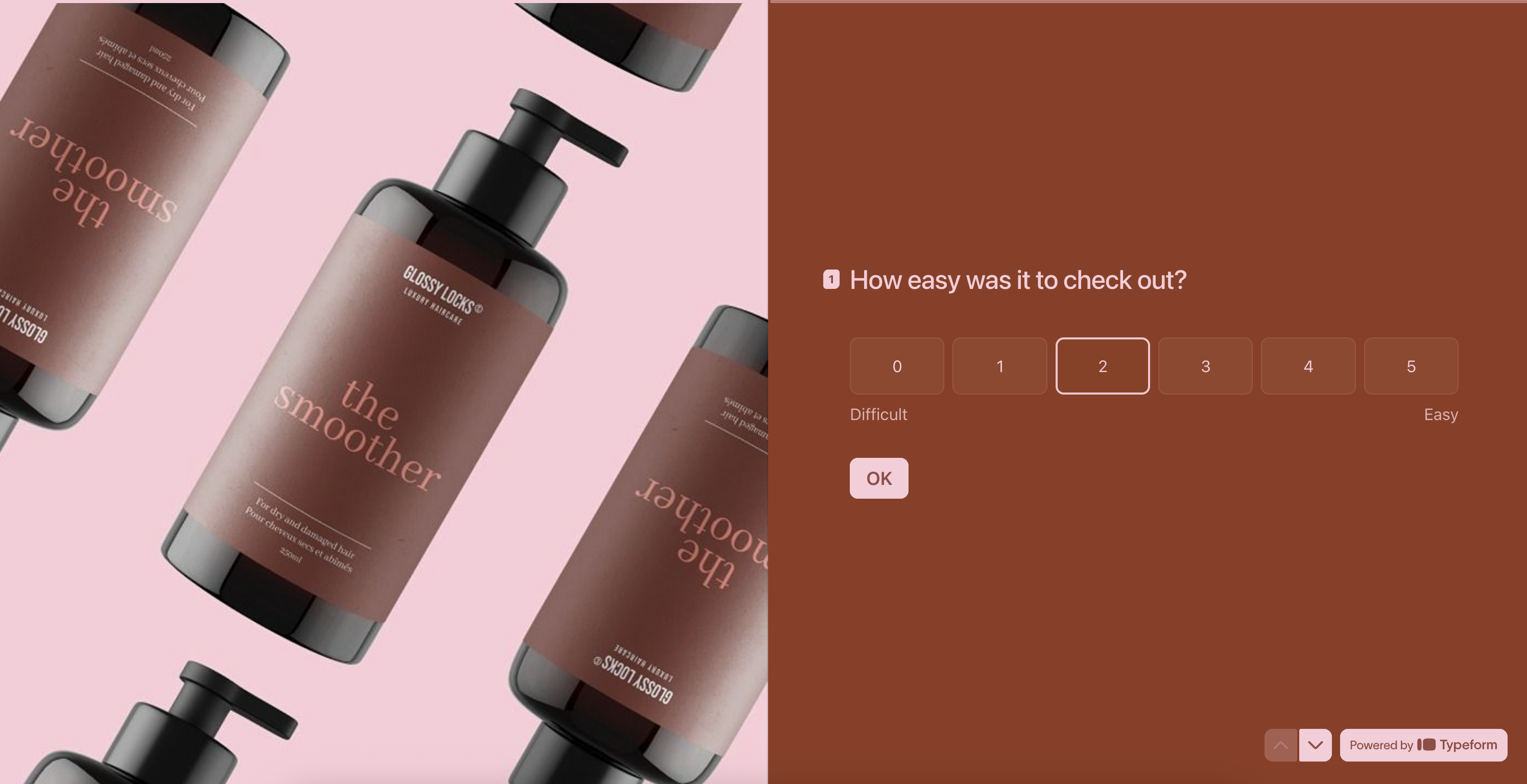
After cancelations
Don't skip your last chance to learn why a customer churned. Ask:
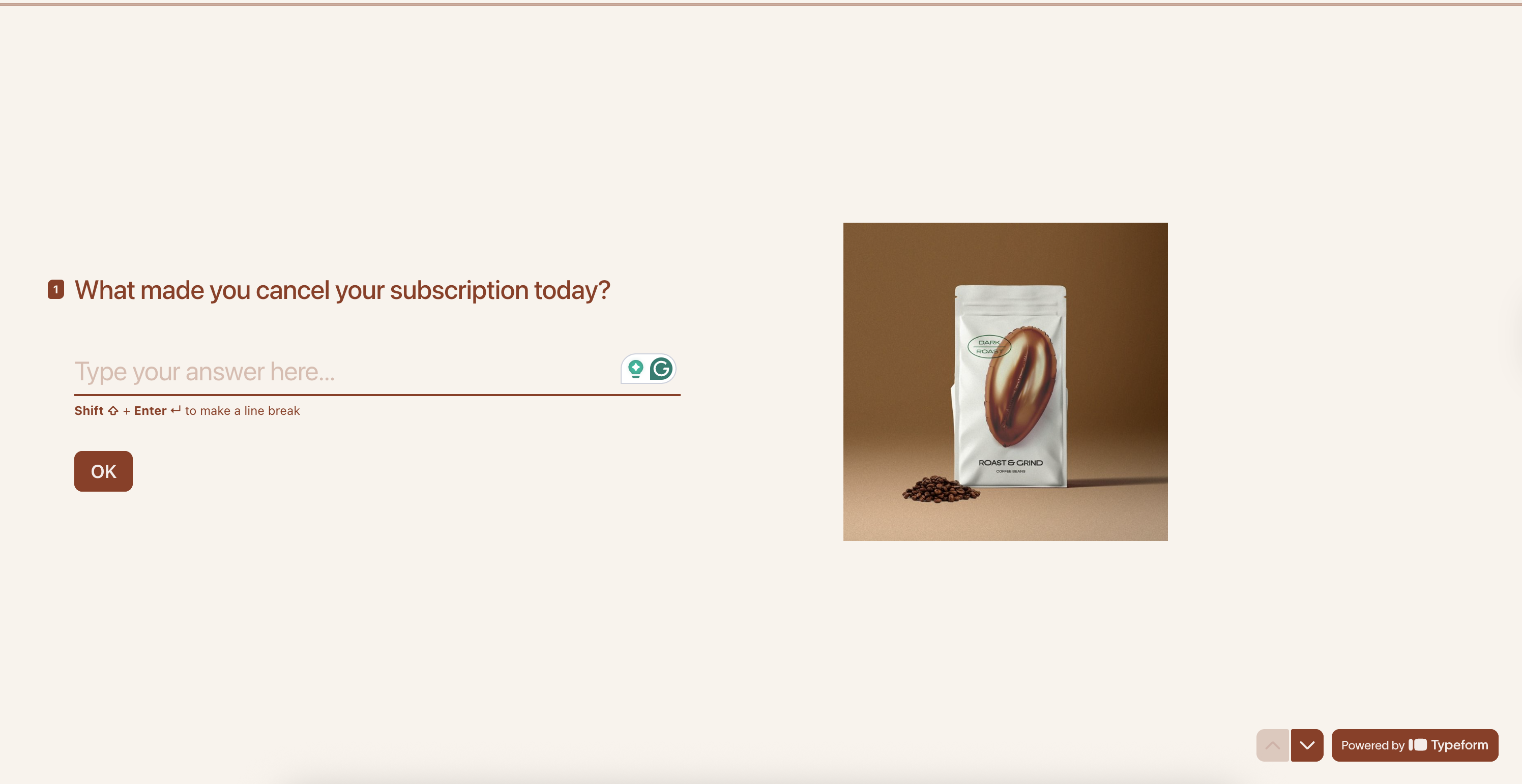
Each of these moments gives you a snapshot of a specific experience. Combine them with the four elements above, and you turn customer feedback into a system that actually improves CX.
How to write great customer satisfaction questions
Great CSAT questions are clear, to the point, and sound like a human wrote them. They're also specific to what you're measuring.
The best part? Clarify with AI asks follow-up questions automatically. For example, if someone says their experience was poor, Clarify with AI asks what made it a poor experience—automatically.
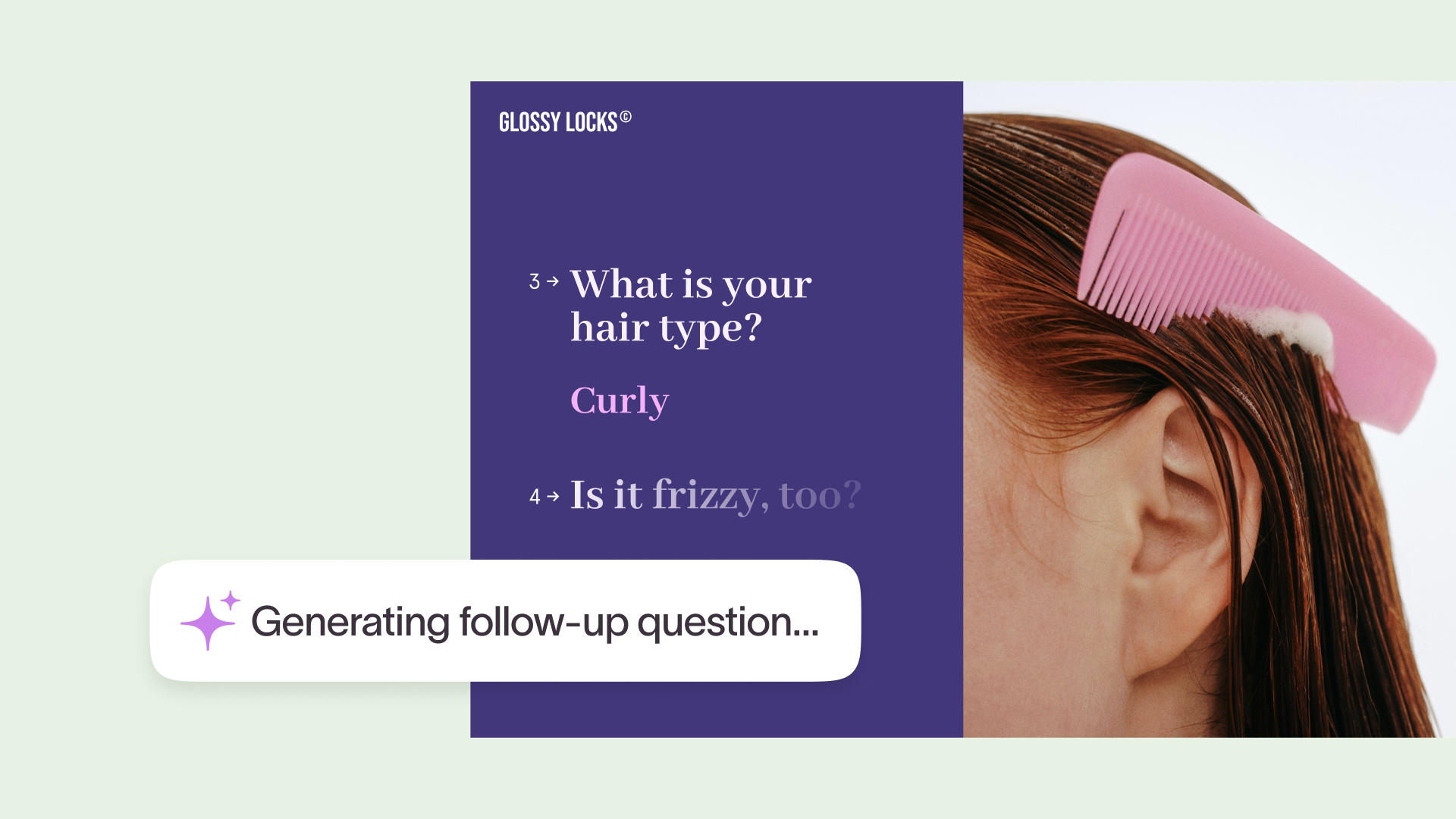
Remember, your customer feedback is only as good as the questions you ask.
How to build a CSAT survey in Typeform
Creating a customer satisfaction survey doesn't have to be complicated. Here's how to do it in Typeform.
Step 1: Start with a template
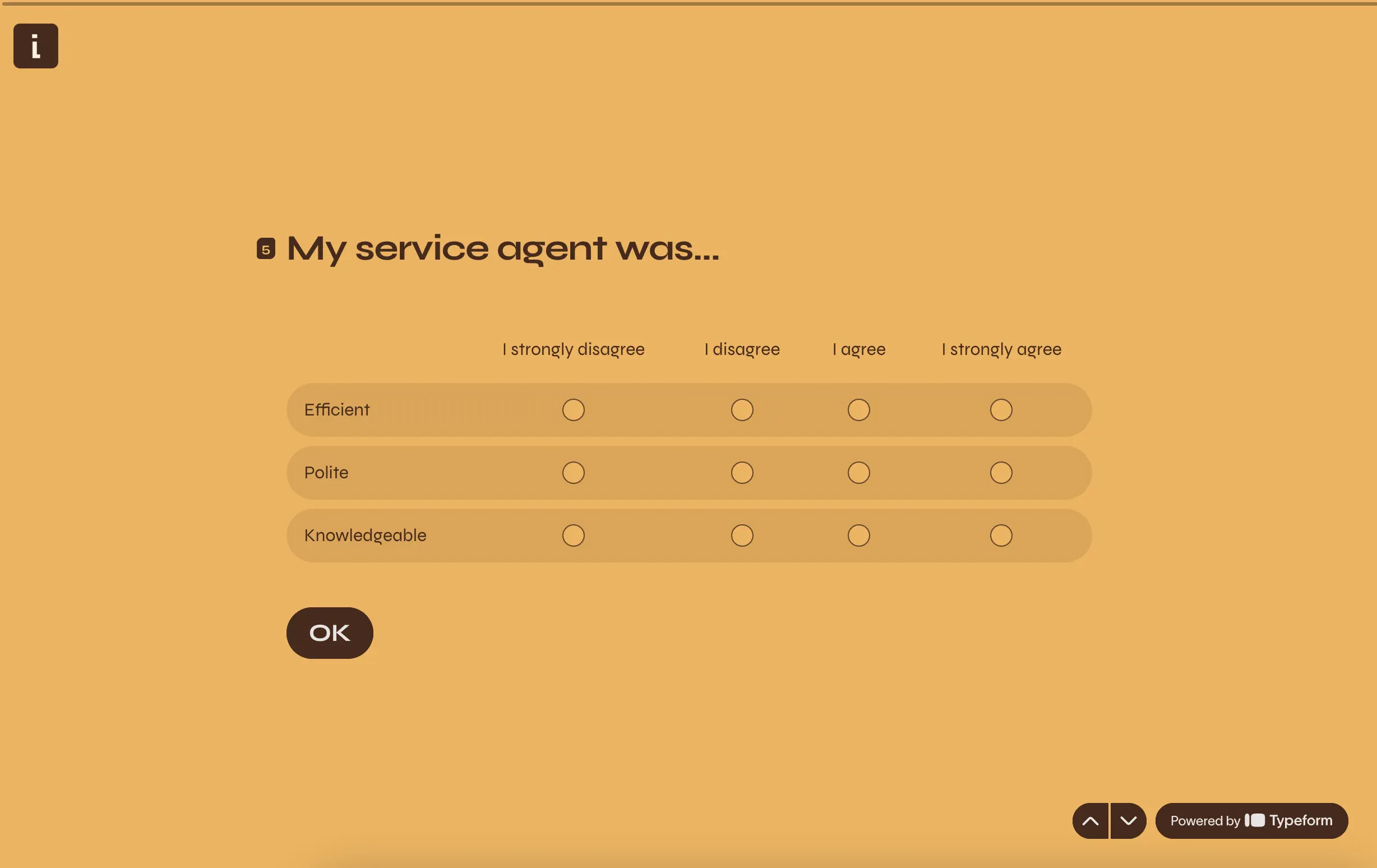
We've got dozens of templates—start with this CSAT template to skip the blank page. With questions already structured around customer satisfaction, all you have to do is brand it and edit based on your specific use case.
Step 2: Refine questions with AI
Use Creator AI to build your survey for you. This AI-powered assistant can create questions from prompts, suggest follow-ups, brand your survey, and more. Get better responses from better questions—without starting from scratch.
Step 3: Add logic
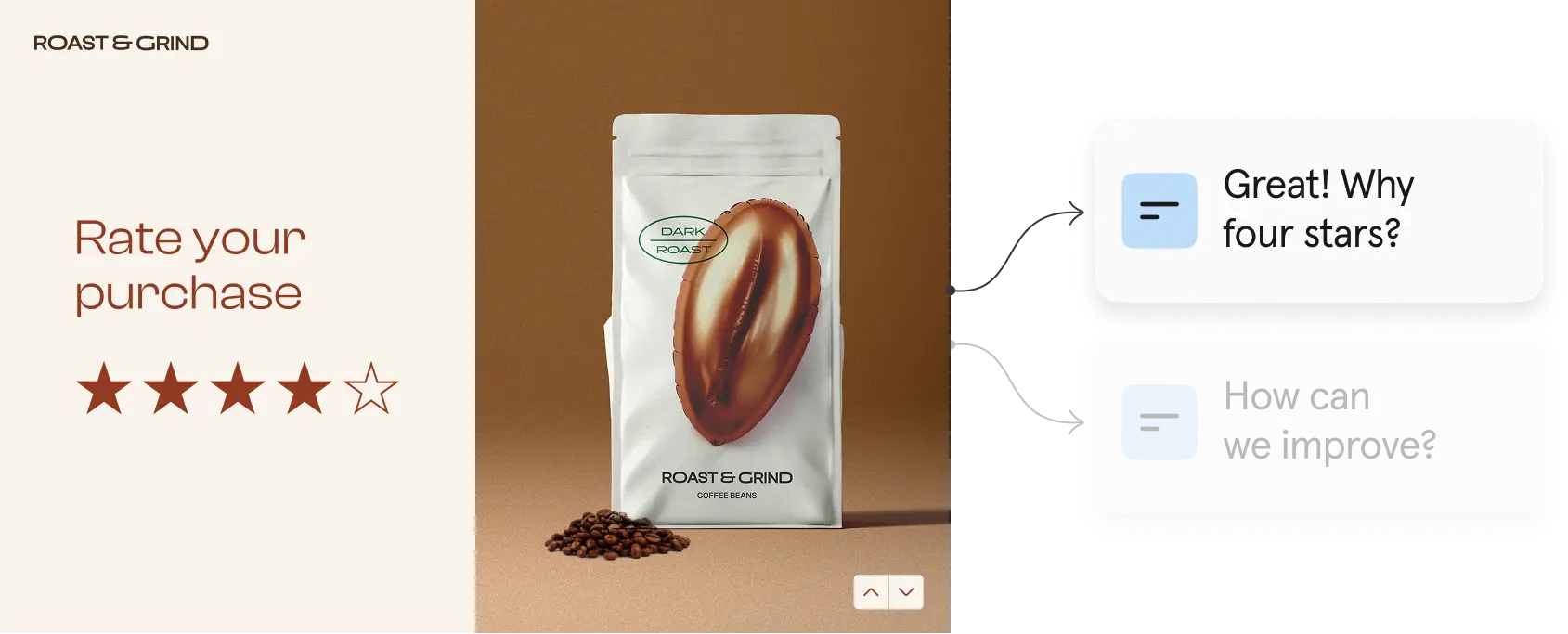
Logic lets you adapt questions (automatically) based on the previous answer. If a customer rates you 4 out of 5 stars, you can ask for more details with a follow-up question.
If they gave you a 1, you can send them down a path focused on understanding what went wrong.
Step 4: Add an automated flow
Don't let customer feedback sit unused. Set up automated workflows that route low customer satisfaction scores to your customer success Slack channel for immediate follow-up.
Automated workflows let you capture the moment and act immediately, not days later.
Step 5: Share your survey
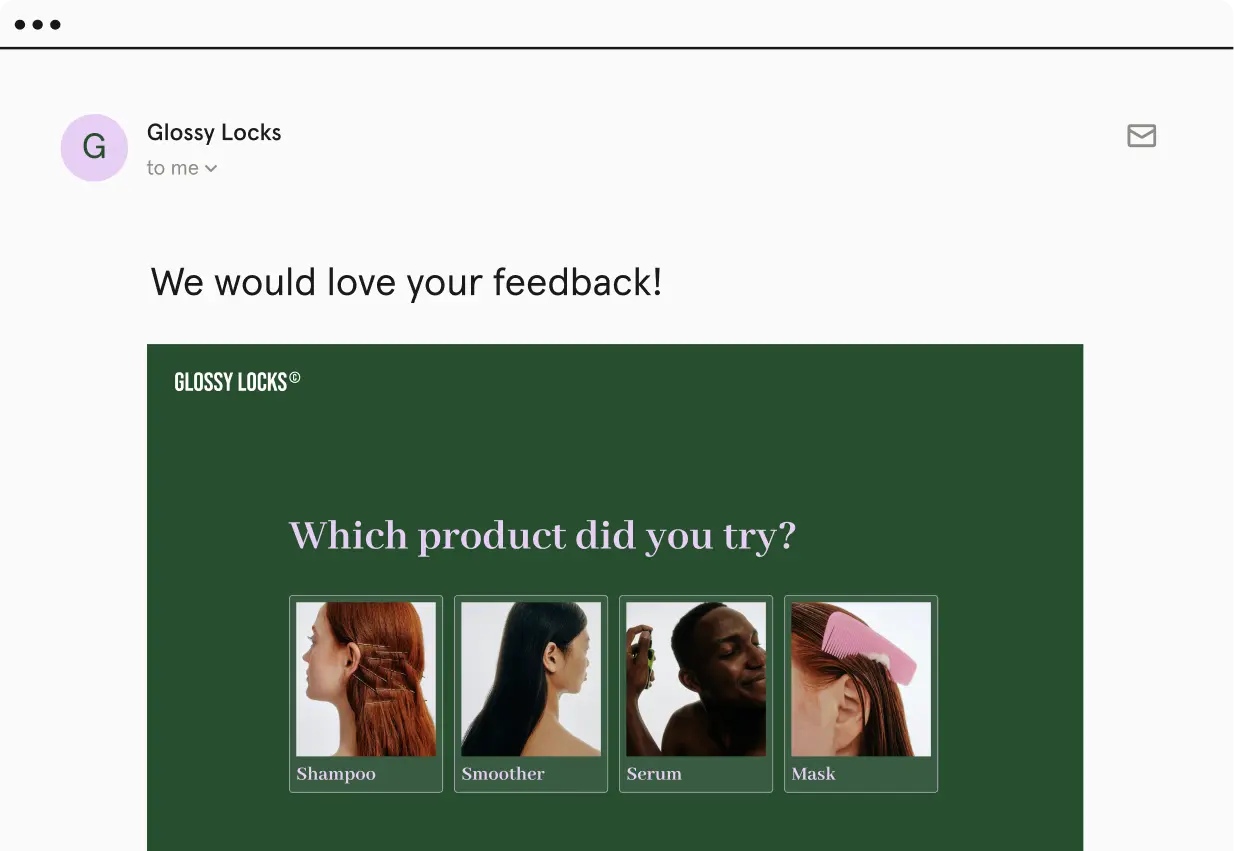
Embed your CSAT survey in emails or on your website, share it via a link, or create a QR code. And connect Typeform with your tech stack to set up triggers that automatically send customer satisfaction surveys after certain interactions.
Step 6: Let AI handle analysis
Once responses start rolling in, use Typeform AI to get instant AI summaries of the responses, plus:
- Trends and patterns
- Key themes and sentiment
- Qualitative and quantitative analysis
- Autogenerated reports and visualizations
With AI, you don't have to manually comb through every answer—move from data collection to informed action faster.
Meet the new standard of customer satisfaction with Typeform
Measuring customer satisfaction isn't about sending more surveys—it's about sending smarter ones.
The difference between a CSAT survey that delivers insights and one that collects dust comes down to intentionality.
When you ask the right questions at the right moments, adapt follow-ups based on responses, and close the loop with automated workflows, you're doing more than data collection: you're building a system that turns customer feedback into action.
Typeform makes it easier to get all of this right, with AI-powered question and analysis tools, logic that responds to each customer, and automated workflows that route responses where they need to go.
Want to create a CSAT survey customers actually complete? Try Typeform.