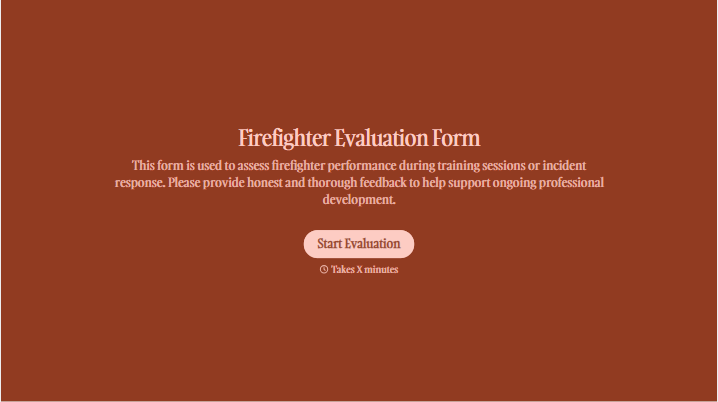
Firefighter Evaluation Form
Give evaluators a clear way to document firefighter performance. Record observed skills, examples, and development needs so feedback leads to specific follow-up actions.



A drill ends with “good work,” but one firefighter needs more practice with equipment checks while another gives clear, timely updates throughout the exercise. Neither gets much direction from a general comment. A firefighter evaluation form helps evaluators capture what they observed while the details are fresh.
Evaluators identify the activity or review period, assess performance against defined criteria, and provide examples. You can include equipment use, communication, teamwork, and adherence to departmental procedures. Leave room to distinguish tasks performed independently from those that required prompting or support.
Your department gets a consistent record for reviewing progress. Firefighters get feedback tied to their actions, with clear expectations for improvement. The next training session can address a documented need and provide an opportunity to reassess it.
A firefighter evaluation form records observations about a firefighter’s performance during training, exercises, or a defined review period. It organizes ratings, supporting examples, and development actions. Departments and training teams use it to structure feedback and track progress against their established expectations.
General feedback can leave someone unsure about what to keep doing or improve. A structured evaluation asks reviewers to connect their assessment to observed behavior. It also helps supervisors identify recurring training needs and follow up on earlier feedback.
Align the form with your department’s procedures and the activity being evaluated:
- Firefighter’s name, role, and assignment
- Evaluator’s name and role
- Evaluation date, activity, or review period
- Defined performance criteria and rating scale
- Observations of relevant skills and procedural adherence
- Communication and teamwork examples
- Strengths and areas needing improvement
- Agreed training or development actions
- Follow-up date and responsible person
- Space for the firefighter’s comments
Include a “Not observed” option so evaluators do not have to rate skills they did not assess.
Define what each rating means and use criteria relevant to the assignment. Ask evaluators to describe what the firefighter did, the conditions involved, and any guidance provided. Review expectations with evaluators before they use the form so ratings have a shared basis.
Yes. Refer to previous development actions and document what was observed during the follow-up. Note changes in the activity or conditions so comparisons have context. Keep a completed evaluation distinct from any formal qualification or authorization process your department requires.
Get inspired by relevant templates and categories
3200+ Templates, 300+ Integrations


With Typeform, you can customize everything
Change text, colors, and even logos to match the look and feel of your brand. Then embed forms smoothly onto web and email.
Make forms feel effortless to fill out. Pace questions, call people by their name, and adapt the flow based on the data they share.
Stay efficient by connecting forms to your workflow. Typeform integrates with 300+ tools including Slack, Zapier, and HubSpot.