17 best ad campaigns that defined modern marketing
Ad campaigns aim to promote a particular product, service, or brand message. Check out the best ad campaigns that made headlines here.
Key Takeaways
- Sell emotion, not features: Nike, GoPro, and Coca-Cola won by connecting to aspiration, personal moments, and connection, not by selling product specs.
- Authenticity beats polished: Dollar Shave Club, Taco Bell, and Domino's succeeded by speaking honestly—even bluntly—instead of chasing a manufactured brand persona.
- Taking a stance builds loyalty: Patagonia, Gillette, and Ben & Jerry's proved that values-driven marketing deepens customer trust when the conviction is backed by real action.
- Invite participation instead of demanding attention: Spotify Wrapped and Coca-Cola's "Share a Coke" turned customers into willing promoters by making the campaign about them.
Great advertising doesn't just sell products. It shifts how people think, feel, and act. The best campaigns linger in memory long after you've seen them, spark conversations, and set new benchmarks for what's possible in marketing.
These 17 campaigns show why strategic creativity, authentic messaging, and sharp targeting matter.
Dove's Real Beauty campaign
Dove's "Real Beauty" initiative launched in 2004 and spent over a decade redefining beauty standards in advertising. Instead of featuring only conventionally attractive models, Dove showed real women of different ages, sizes, and ethnicities.
Why it worked: Dove went beyond advertising and committed to systemic change. The brand partnered with researchers, launched the Self-Esteem Project, and kept pushing the message consistently. Purpose-driven marketing builds loyalty beyond a single product sale.
Nike's "Just Do It"
Launched in 1988, "Just Do It" became one of the most iconic slogans in advertising history. Nike paired the message with stories of real athletes, both famous and everyday people, pushing themselves.
Why it worked: Nike didn't focus on shoe features. It sold aspiration and the idea that potential lives inside everyone. By connecting emotion to movement, Nike turned sneakers into symbols of personal drive.
Apple's "Think Different"
Apple's 1997 "Think Different" campaign featured visionary figures—Einstein, Gandhi, Audrey Hepburn, Martin Luther King Jr.—associating the brand with innovation and nonconformity.
Why it worked: Apple created a halo effect without dwelling on technical specs. The campaign positioned the brand as a movement for creative thinkers, helping Apple survive a near-death experience and later dominate new markets.
Old Spice's "The Man Your Man Could Smell Like"
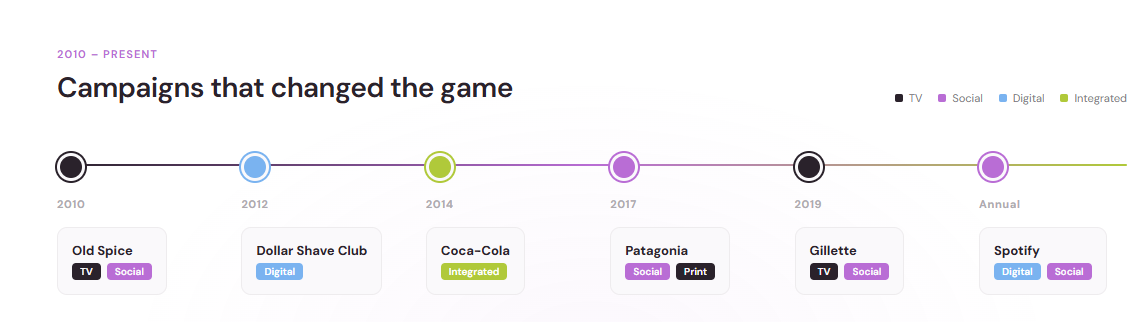
In 2010, Old Spice was seen as a product for older men. The "Man Your Man Could Smell Like" campaign flipped the script with absurdist humor and a confident, comedic spokesman.
Why it worked: Old Spice used humor to rejuvenate a dated brand. The social media follow-up, where the character responded to fans in real time, turned the commercial into a conversation.
Skittles' "Taste the Rainbow"
Simple and memorable, Skittles' "Taste the Rainbow" campaign (launched 1994) turned product features into aspirational messaging. The colorful candy became synonymous with variety and joy.
Why it worked: The slogan was memorable and easy to recall, making the product feel exciting.
Coca-Cola's "Share a Coke"
Coca-Cola's "Share a Coke" campaign (2014) personalized bottles with individual names and encouraged people to find their own bottle and share it with friends.
Why it worked: The campaign tapped into two powerful human drives: self-recognition and social connection. By putting names on bottles, Coca-Cola made the product personal.
Airbnb's "Belong Anywhere"
Launched in 2014, "Belong Anywhere" positioned Airbnb as a gateway to authentic human connection. The campaign focused on experiences, not transactions.
Why it worked: Airbnb reframed its value proposition beyond competing on price with hotels. By showing real stories of people connecting across cultures, the brand tapped into the desire for authenticity.
Taco Bell's "Taco Bell Effect"
Taco Bell flipped the script on fast-food marketing by owning its position as fun, irreverent, and unapologetically indulgent. Instead of pretending to be health-conscious, Taco Bell spoke to its actual audience in their actual language.
Why it worked: Authenticity sells. By refusing to be something it wasn't, Taco Bell built loyalty among younger audiences who valued honesty.
Spotify's "Wrapped"
Each year, Spotify's "Wrapped" campaign gives users personalized summaries of their listening habits as shareable, often funny snapshots. Users voluntarily spread the campaign across social media every December.
Why it worked: Spotify turned user data into entertainment. By giving people a reason to celebrate what they already do, Wrapped became a cultural moment, generating billions of organic impressions.
GoPro's "Peak Positions"
GoPro stopped making ads about the camera and started showing what the camera captures. "Peak Positions" featured real footage of extreme athletes in breathtaking moments.
Why it worked: GoPro understood that people don't buy cameras. They buy the ability to capture meaningful moments. By showing what the camera could capture, GoPro inspired people to imagine themselves as filmmakers.
Gillette's "The Best a Man Can Be"
Gillette's 2019 "The Best a Man Can Be" campaign shifted from celebrating hypermasculinity to questioning toxic behavior, showing men stepping in to stop harassment and bullying.
Why it worked: Gillette entered a cultural conversation that mattered to its audience. By taking a stance on masculinity, the brand deepened loyalty among aligned customers.
Patagonia's "The President Stole Your Land"
In 2017, Patagonia bought a full-page New York Times ad criticizing a decision to reduce national monument protections, taking a political stance aligned with its values.
Why it worked: Patagonia proved that activism can be marketing when it's authentic. Customers saw conviction backed by investment.
Airbnb's "We Accept"
Following the 2016 election, Airbnb launched "We Accept," emphasizing its commitment to welcoming guests and hosts from all backgrounds.
Why it worked: When external events threatened the brand's mission, Airbnb responded with clarity, reassuring key audiences.
Domino's Pizza's "Pizza Turnaround"
In 2009, Domino's admitted its pizza wasn't good enough and apologized directly to customers. The campaign showed the company changing its recipe and rebuilding trust.
Why it worked: Consumers respect honesty more than perfection. By acknowledging the problem, Domino's turned a weakness into strength.
Warby Parker's "Home Try-On"
Warby Parker's "Home Try-On" program let customers order frames online, try them at home, and return unwanted pairs without pressure or commitment.
Why it worked: Warby Parker solved a real problem in eyeglass shopping, making the purchase process simpler and less risky than competitors.
Ben & Jerry's "Lick Global Warming"
Ben & Jerry's uses its platform to advocate for causes aligned with its values. Campaigns like "Lick Global Warming" make the stakes clear while staying playful.
Why it worked: Ben & Jerry's proved that values-driven marketing doesn't require sacrificing personality or humor.
Dollar Shave Club's "Our Blades Are F***ing Great"
Dollar Shave Club disrupted the razor market in 2012 with a single YouTube video. The founder, in a bathroom, spoke directly about why the company's razors were better, using refreshingly honest language.
Why it worked: Dollar Shave Club ignored traditional advertising rules. No polished production, no celebrity endorsers. Just a real person talking to real people.
What these campaigns teach us
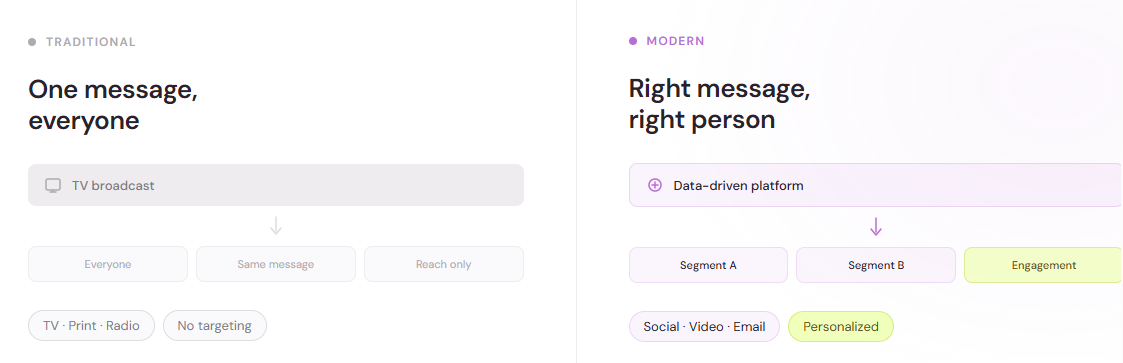
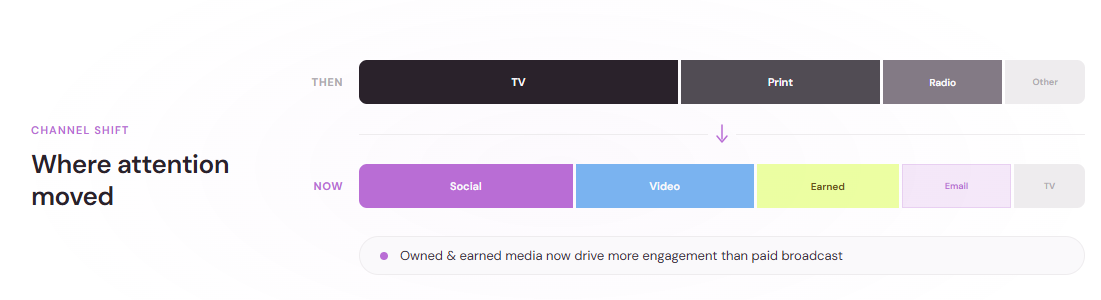
The campaigns that defined modern marketing connect emotionally, not just rationally. They reflect authentic brand values rather than manufactured personas. They invite participation instead of demanding attention.
The best campaigns understand their audience deeply—not just demographics, but values, pain points, and aspirations.

.png)