Favorite things questionnaire: a template for team gifting
A favorite things questionnaire takes the guesswork out of team gift exchanges. Get the template, key questions to ask, and tips to boost participation.
Getting gifts for your coworkers shouldn’t feel like a guessing game. You want to give something they’ll actually use and enjoy, not another generic mug collecting dust on a shelf.
This is where a favorite things questionnaire comes in.
This simple tool lets you ask teammates directly what they like, what they need, and what brings them joy. You gather real preferences, not assumptions. Then, when gift-giving time rolls around, you have solid information to work with. Everyone walks away with something they genuinely appreciate.
Whether you’re organizing a Secret Santa swap, a holiday gift exchange, or just want to celebrate your team with thoughtful presents, a structured questionnaire removes the stress and guesswork. Let’s walk through how to build one, what to ask, and how to make the whole process feel less like work and more like genuine appreciation.
Why a questionnaire beats guessing
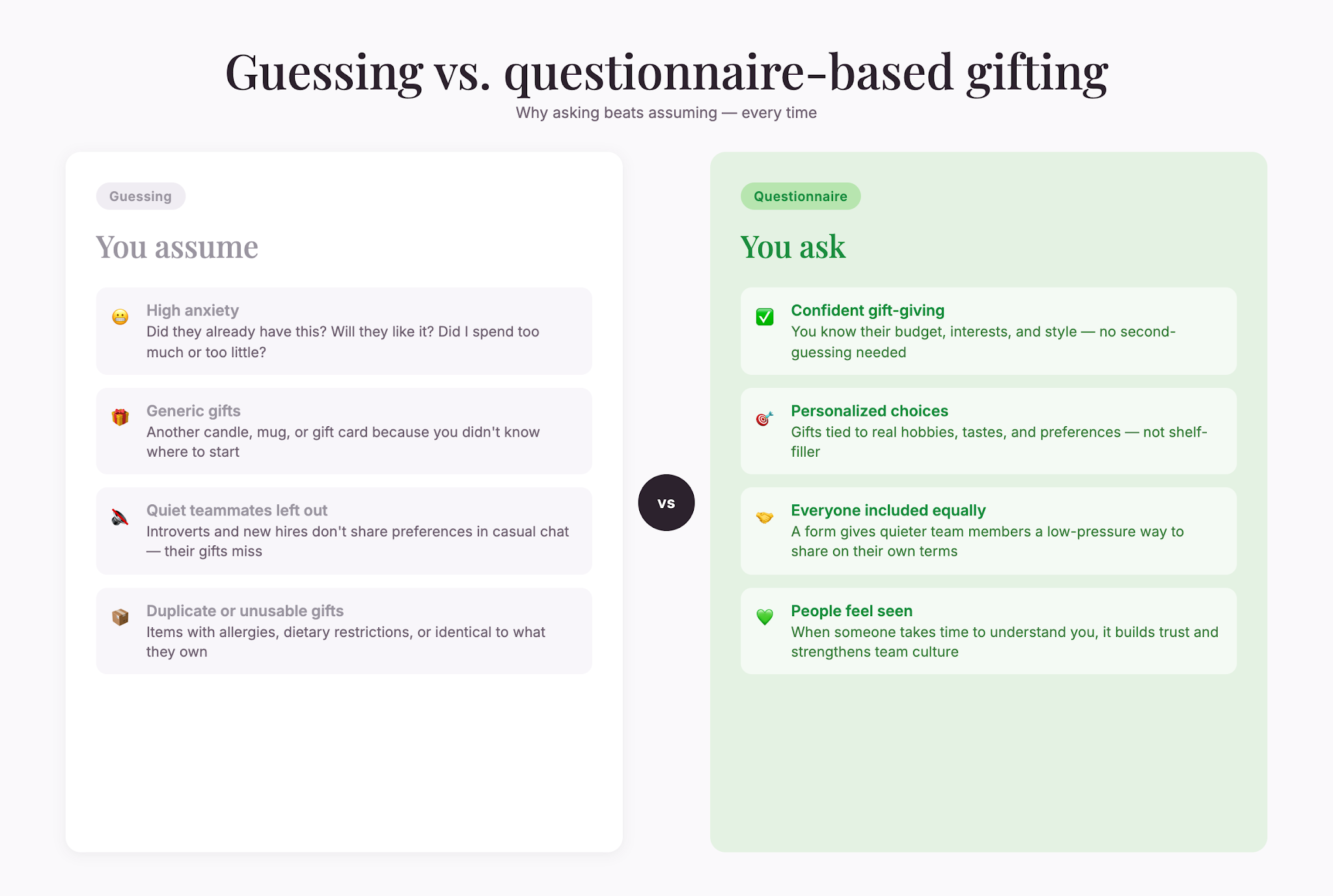
Getting to know your coworkers’ tastes takes intention. Without asking, you’re left making assumptions based on brief conversations or what you think someone might like. Those assumptions often miss the mark.
A questionnaire flips the script. Instead of guessing, you ask. People tell you exactly what interests them: their hobbies, dietary preferences, style, budget comfort level, anything relevant to gift selection. This directness eliminates the anxiety that comes with hoping you’ve picked something someone will love. Instead, you can confidently give thoughtful, personalized gifts that strengthen your workplace relationships and boost team morale, simply because they demonstrate genuine care and attention.
This approach also levels the playing field. Not everyone opens up easily in casual conversation. A questionnaire gives quieter team members a chance to share their preferences on their own terms. It’s low-pressure and clear: fill in your favorite things, and your Secret Santa or gift-giver knows what to look for. Introverts, people new to the team, or those who prefer written communication can express their preferences without feeling put on the spot during team conversations.
guessing-vs-questionnaire
Plus, there’s a respect factor. When someone takes the time to understand you, you feel seen. That matters, especially in workplace settings where personal connection can sometimes feel distant. It signals that your team cares enough to ask rather than assume, which builds trust and strengthens team culture over time.
What to include in your favorite things questionnaire
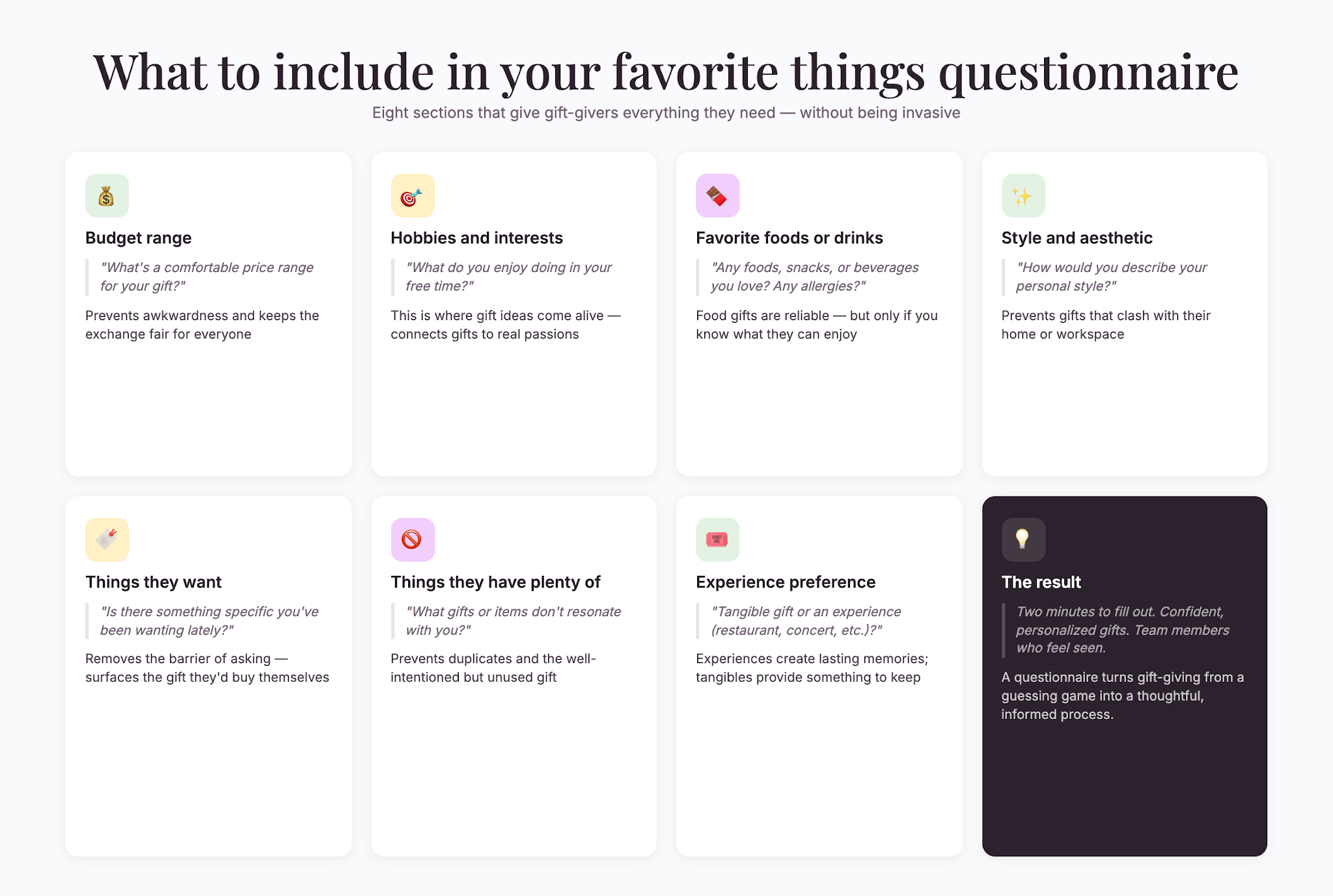
A strong questionnaire doesn’t need to be long or invasive. Aim for clarity and specificity. Here’s what works:
Budget range. Ask for a comfortable spending range upfront. This prevents awkwardness and keeps the exchange fair for everyone. Something like: “What’s a comfortable price range for your gift?” with options ($25–$50, $50–$75, $75–$100, etc.) makes it easy. When everyone knows the budget parameters, gift-givers feel more confident, and recipients know what to expect. It also prevents the discomfort that can arise when gift values are wildly uneven.
Hobbies and interests. Open the door for people to share what they do outside of work. Do they cook? Garden? Read? Game? Collect vintage records? This is where gift ideas come alive. A single sentence like “What hobbies or activities do you enjoy in your free time?” is enough to spark ideas. People often feel energized when they receive gifts connected to their passions, because it shows someone took time to understand what matters to them beyond their job title.
Favorite foods or drinks. Food gifts are reliable—coffee, chocolate, specialty snacks, wine. But preferences vary wildly. Ask: “Are there any specific foods, snacks, or beverages you love?” Include space to mention dietary restrictions or allergies. This is critical: a gift that someone can’t eat due to allergies, dietary choices, or personal preference becomes awkward quickly. Making room for these details prevents hurt feelings and shows genuine thoughtfulness.
Style and aesthetic. What does someone’s personal style say about them? Do they prefer minimalist, colorful, rustic, modern, vintage? A simple question—“How would you describe your personal style?”—helps guide gift selection toward things they’d actually display or use. Understanding someone’s aesthetic preferences prevents gifts that clash with their home or workspace, making the present feel more like it was chosen for them specifically rather than grabbed randomly.
Things they need or want. This might feel too direct, but it works. Ask: “Is there something specific you’ve been wanting or needing lately?” People often hesitate to ask for things, so giving them the space to mention it removes that barrier. You might uncover a book they’ve been eyeing, a kitchen tool they’d find useful, or a hobby item they’ve been wanting to try. Sometimes the best gift is the one someone has been waiting to justify buying for themselves.
Things they already have plenty of. This question is gold. Ask: “What gifts or items don’t resonate with you?” or “What do you already have too much of?” This prevents duplicate gifts and shows that you’re paying attention. If someone says they have too many scarves, you don’t buy them a scarf. This question is especially useful because it addresses common gift-giving pitfalls: the desk items, the generic accessories, the well-intentioned but ultimately unused presents that clutter drawers.
Experience preferences. Some people light up at physical gifts; others prefer experiences. Ask: “Would you prefer a tangible gift or an experience (like a gift card to a restaurant, concert tickets, etc.)?” This simple split tells you which direction to go. Experiences often create lasting memories and connection, while tangible gifts provide something useful or beautiful to keep. Knowing someone’s preference ensures your gift aligns with what they actually value.
How to frame the questionnaire for your team
The way you introduce a favorite things questionnaire shapes how people respond. Frame it as what it is: a tool to make gift-giving easier and more thoughtful, not a surveillance instrument.
A good introduction might sound like this:
“Hey team, we’re doing a gift exchange this year, and we want to make sure everyone gets something they’ll love. We’ve put together a short questionnaire—just a few questions about your interests, preferences, and style. This helps your gift-giver pick something you’ll actually enjoy. It takes about 2 minutes to fill out. Thanks for helping us nail this!”
Notice the tone: friendly, brief, and clear about the purpose. People are more likely to fill it out if they understand why you’re asking. A transparent introduction builds buy-in and encourages honest, thoughtful responses.
Make sure to set a deadline that gives people time without dragging the process out. Something like “Please fill this out by Friday” works. And make it easy to complete, whether that’s a shared document, a simple form, or even a chat message thread. Removing friction increases participation rates significantly.
Finally, keep responses confidential until it’s time to match people with their gift-givers. People are more honest when they know only their assigned person will see their answers. Confidentiality also protects privacy and prevents any awkwardness around personal preferences being shared widely.
Sample questions to adapt for your team
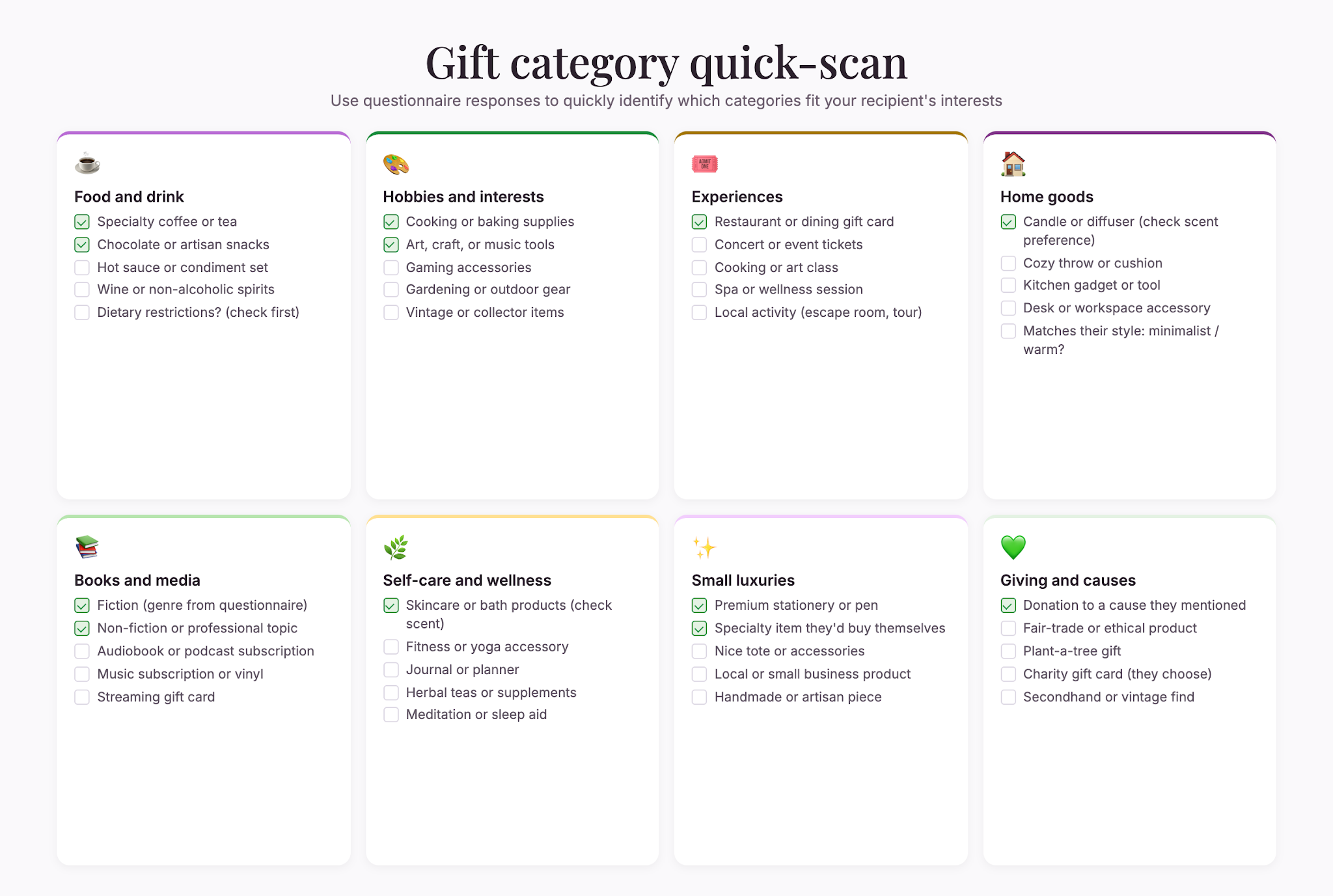
Here are a few more specific questions you can pick and choose from, depending on your team’s culture and the gift exchange format:
- “What’s your favorite color or color palette?”
- “Do you prefer practicality or something just for fun?”
- “What’s a small luxury you enjoy or would like to try?”
- “Are there any local or small businesses you love?”
- “What’s one thing that always makes you smile?”
- “Do you prefer new or vintage/secondhand items?”
- “What’s your go-to music, podcast, or audiobook genre?”
- “Any particular scents or products you’re loyal to?”
- “Would you prefer something handmade or store-bought?”
- “Are there charities or causes close to your heart?” (Useful if gifting donations instead of objects.)
Adapt these to fit your team’s personality. A creative team might dive deep into art preferences; a remote team might focus on home office items. The goal is flexibility—you’re creating a starting point, not a rigid script. The most effective questionnaires feel customized to the team’s unique culture and values.
Collecting and distributing responses
Once you have your questions picked out, it’s time to collect and distribute responses. To ensure a smooth process, keep these tips in mind:
Timing matters. Send the questionnaire well before your gift exchange deadline. If your event is December 20th, send the form by early December. People procrastinate; building in a buffer avoids last-minute scrambling and ensures thoughtful gift selection rather than rushed choices.
Choose a collection method that fits your team. A shared Google Form is frictionless. A Word document works fine too. Some teams even use Slack or email. Consider your team’s own habits—if most communication happens in Slack, that might be the most natural channel for collecting responses. The easier you make it, the higher the response rate.
Make it optional. While you want participation, some people may feel uncomfortable sharing personal details, even anonymously. Respecting that choice is important. You can include a note like: “This is optional. If you’d prefer not to fill it out, let me know and we’ll figure out another approach.” Removing pressure creates a more inclusive experience.
Confirm receipt. A quick acknowledgment—“Thanks for filling out your questionnaire!”—shows you care and closes the loop. It also reassures people that their responses have been received and will be used appropriately.
Tips for gift-givers using the questionnaire
Once you’re matched with your gift recipient, the questionnaire is your roadmap. But use it wisely.
Read between the lines. If someone says they love cooking and lists a budget of $50–$75, a high-end kitchen tool or specialty ingredient set might be perfect. You’re connecting the dots and showing that you understood not just what they said, but what it implies about their interests and needs.
Don’t overthink it. The questionnaire is a guide, not a mandate. If someone says they like mystery novels and you spot the perfect mystery thriller, you don’t need to second-guess yourself. Trust your instincts once you have solid information to work from.
Keep it personal. A gift with a brief handwritten note—something like “You mentioned liking this author, and I thought you’d enjoy it”—shows you paid attention. That personal touch matters as much as the gift itself. It transforms a nice present into a meaningful gesture.
Ask for clarification if needed. If a teammate’s favorite things questionnaire is vague or you want to get more specific, it’s okay to ask their manager or a mutual friend for context. Just be respectful and discreet. A brief, thoughtful clarification can be the difference between an okay gift and a perfect one.
Making the exchange meaningful
A favorite things questionnaire is just the beginning. The real magic happens when people feel seen and appreciated through the gifts they receive.
Create space at your gift exchange—whether it’s virtual or in person—for people to share their reactions. Let them talk about why a gift resonates with them. That moment of connection is often more valuable than the gift itself. These shared moments build team cohesion and reinforce the culture of appreciation you’re cultivating.
If you’re running this exchange regularly (annual or seasonal), keep notes on what worked. Did people appreciate the questionnaire format? What questions got the best responses? What would you add or change next time? A little reflection helps you refine the process and make future exchanges even better. Over time, your team will develop a rhythm that feels natural and genuinely celebratory.
A favorite things questionnaire is a simple but powerful tool. It turns gift-giving from a stressful guessing game into a thoughtful, informed process. Your team gets better gifts, people feel valued, and everyone wins. That’s more than worth the two minutes it takes to fill out the form.