Forced-choice questions: when to remove the neutral option
Learn when to use forced-choice questions, when to keep a neutral option, and how forced-choice can affect the accuracy of survey responses.
Key takeaways
- Forced-choice questions require respondents to choose between available options without selecting a neutral response.
- Removing the neutral option can encourage respondents to express a preference when they might otherwise choose the midpoint.
- Forced-choice questions work best when respondents are likely to have enough knowledge or experience to form an opinion.
- A neutral option can be useful when neutrality represents a genuine and meaningful response.
- “Not applicable” and “don’t know” options serve different purposes than a neutral response and may still be necessary in a forced-choice question.
Survey respondents often choose a neutral answer when they do not lean clearly in either direction. But sometimes researchers need participants to make a choice rather than settle on the midpoint.
Forced-choice questions remove the neutral option and require respondents to express a preference, agreement, or disagreement. This approach can produce clearer results in the right situations, but it can also misrepresent respondents who genuinely feel neutral.
Understanding when to use forced-choice questions can help you collect more useful data without sacrificing response accuracy.
What are forced-choice questions?
Forced-choice questions require respondents to select from a set of answers without providing a neutral option. In rating or agreement questions, this typically means using an even number of response choices so respondents must lean toward one side.
For example, a survey could ask respondents to rate their agreement with a statement using these options:
- Strongly disagree
- Disagree
- Agree
- Strongly agree
Without a neutral midpoint, respondents must indicate whether they generally agree or disagree. Forced-choice questions can also ask participants to choose between products, features, priorities, or other alternatives when researchers need a clear preference.
Forced-choice vs. neutral-option questions
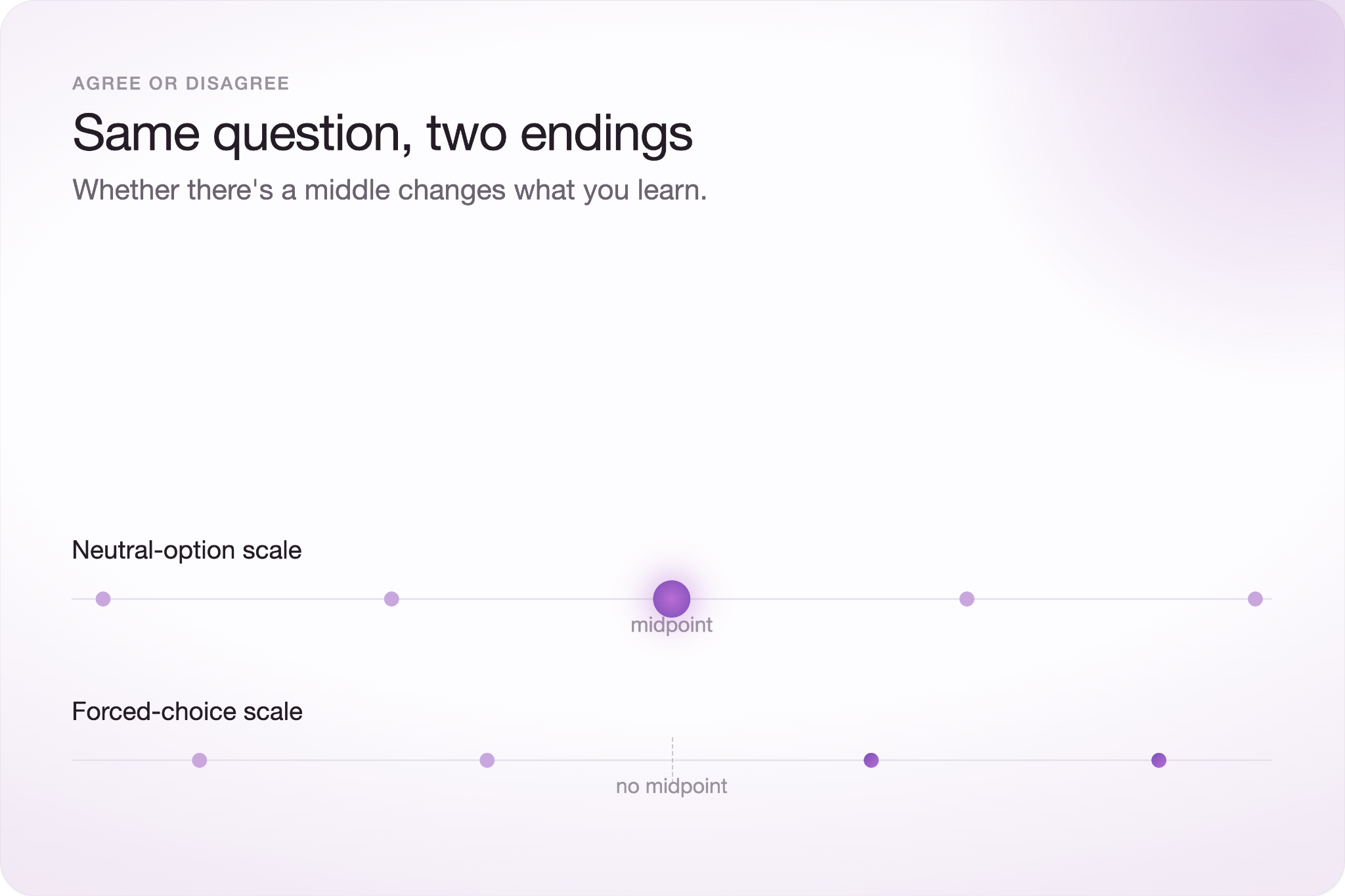
The main difference between forced-choice and neutral-option questions is whether respondents can select a midpoint. Forced-choice questions require respondents to choose a side, while neutral-option questions allow them to indicate that they do not lean in either direction.
For example, a five-point Likert scale might include “Neither agree nor disagree” between positive and negative responses. A four-point forced-choice scale removes that midpoint.
Neither format is appropriate for every survey. The right approach depends on whether a neutral response provides useful information or prevents researchers from identifying a meaningful preference.
When should you remove the neutral option?
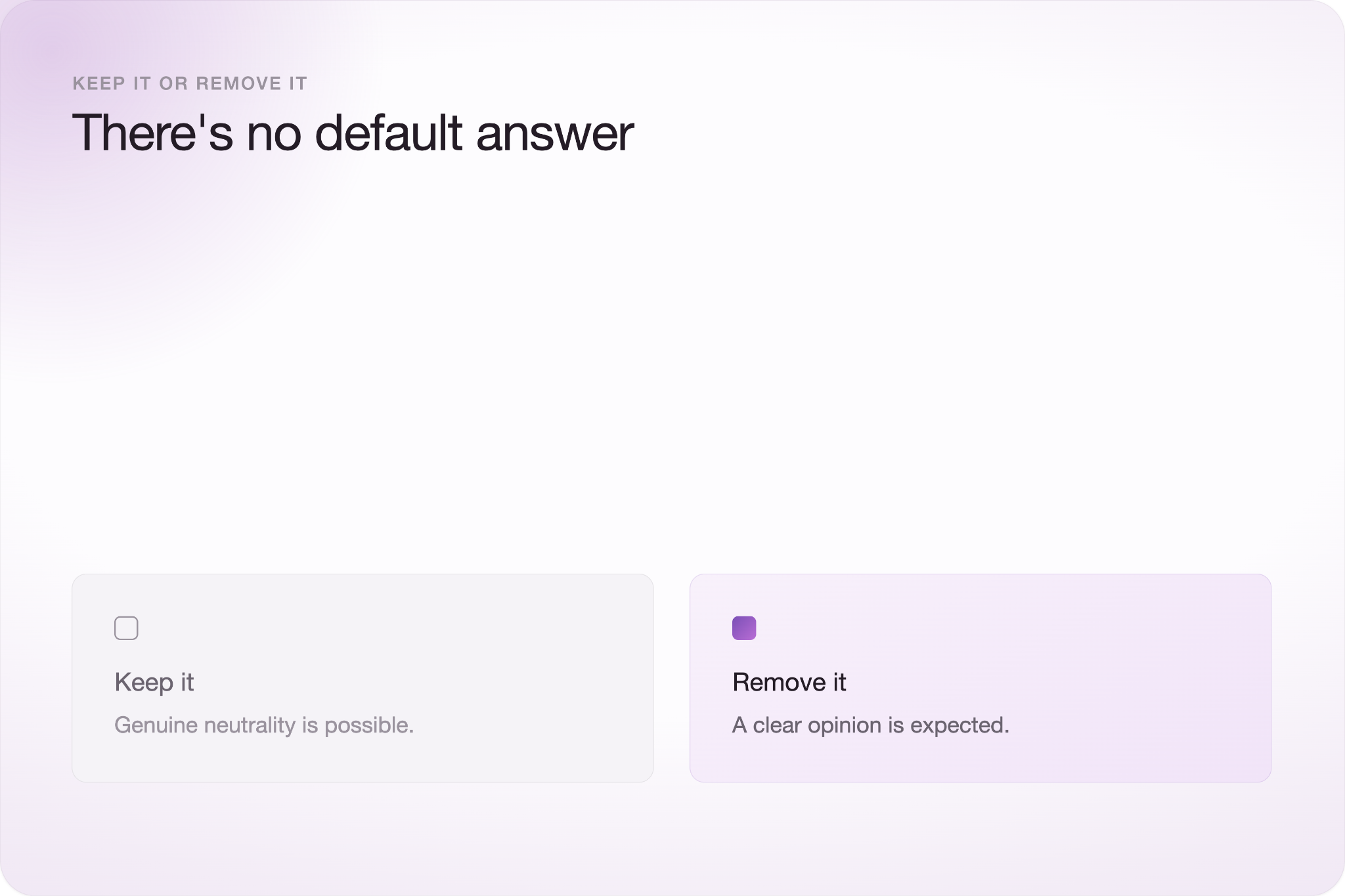
Remove the neutral option when respondents are likely to have an informed opinion and your research requires a clear preference. Before using forced-choice questions, consider whether requiring participants to choose a side accurately reflects the decision you want to measure.
When respondents should have an opinion
Forced-choice questions can work well when participants have enough experience with a topic to reasonably form an opinion. For example, employees who regularly use an internal tool may be able to indicate whether they are satisfied or dissatisfied with it without needing a neutral midpoint.
Removing the neutral option also prevents respondents from selecting the midpoint when researchers need them to indicate which direction they lean. However, researchers should avoid assuming that every participant has an opinion when genuine neutrality is possible.
When you need a clear preference
Forced-choice questions can also help when the research requires participants to choose between alternatives. A product team might ask customers which of two proposed features they would rather have, while an employee survey might ask workers to identify which of two benefits they value more.
Requiring a choice can make priorities easier to identify when the purpose of the question is to determine which option respondents prefer.
When should you keep a neutral option?
Keep a neutral option when respondents may genuinely have no positive or negative opinion about the topic. Requiring these participants to choose a side can produce responses that do not accurately reflect what they think.
Neutral options can be especially useful when surveying people with different levels of experience. For example, a customer may have used a product enough to answer questions about its design but have no opinion about a feature they rarely use.
Researchers should also distinguish neutrality from a lack of knowledge or experience. “Neither agree nor disagree” indicates a neutral position, while options such as “Don’t know” or “Not applicable” indicate that a respondent may not be able to answer the question.
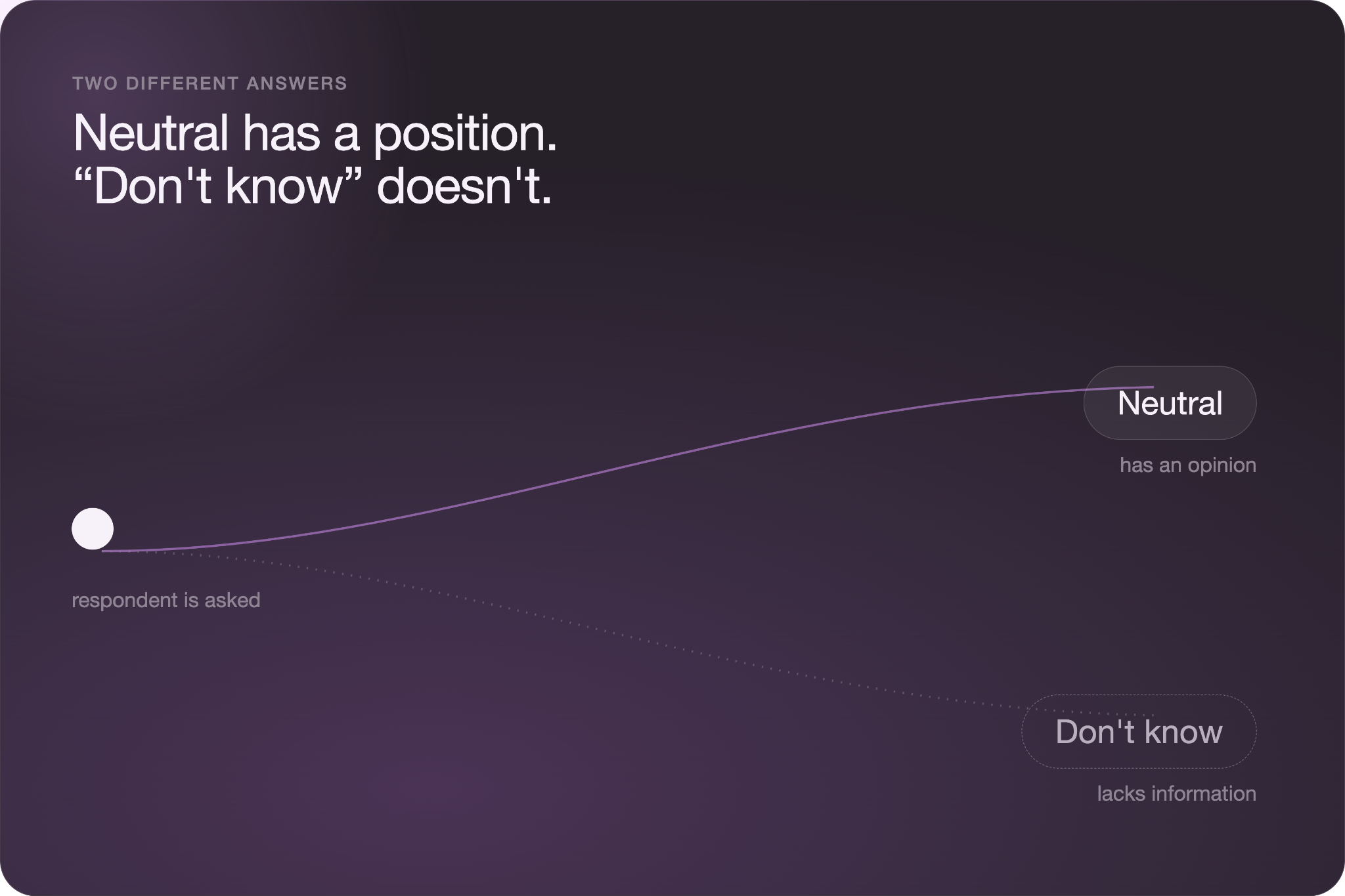
Include these options when they represent valid responses, even if you remove the neutral midpoint.
Benefits and drawbacks of forced-choice questions
Forced-choice questions can provide clearer preferences, but removing the neutral option can also affect response accuracy.
Benefits of forced-choice questions
Removing the midpoint requires respondents to indicate which direction they lean. This can make it easier to compare preferences, identify priorities, and determine whether responses are generally positive or negative.
Forced-choice questions may also reduce the number of respondents who select the midpoint simply because it is an easy choice rather than an accurate reflection of their opinion.
Drawbacks of forced-choice questions
Forced-choice questions can create inaccurate data when respondents genuinely have no preference. Participants may choose an answer that does not reflect their opinion simply because the survey requires one.
Removing the neutral option can also frustrate respondents when none of the available choices accurately represents their position. Researchers should use forced-choice questions because they fit the research goal, not simply to eliminate neutral responses.
How to write effective forced-choice questions
Effective forced-choice questions give respondents clear, balanced options that match the information researchers need to collect.
Keep the wording neutral and avoid framing one response as more desirable than another. Response options should also cover both sides of the scale evenly. For example, a question with two levels of agreement should provide two comparable levels of disagreement.
Use “Not applicable” or “Don’t know” when respondents may lack the knowledge or experience needed to answer accurately. These options do not serve the same purpose as a neutral midpoint.
Finally, consider which survey question types best fit your research goal and use forced-choice questions selectively. Typeform supports multiple question types, allowing researchers to choose a format that fits the information they need to collect.
Removing the neutral option should help answer a specific research question rather than become the default format for every question in a survey.
Frequently asked questions
What is an example of a forced-choice question?
A four-point agreement scale is one example of a forced-choice question. Respondents might choose from “Strongly disagree,” “Disagree,” “Agree,” and “Strongly agree.” Because the scale does not include a neutral midpoint, respondents must indicate whether they lean toward agreement or disagreement.
Are forced-choice questions biased?
Forced-choice questions are not inherently biased, but they can produce misleading responses when participants genuinely have no preference or opinion. Researchers should make sure respondents can reasonably choose between the available answers before removing a neutral option.
Should surveys include a neutral option?
Surveys should include a neutral option when neutrality is a valid and meaningful response to the question. Researchers can remove the midpoint when respondents are expected to have an informed opinion and identifying a clear preference supports the research goal.